Insulated Fish Boxes for Seafood Transport: Benefits, Uses and Buying Guide
Leave a message
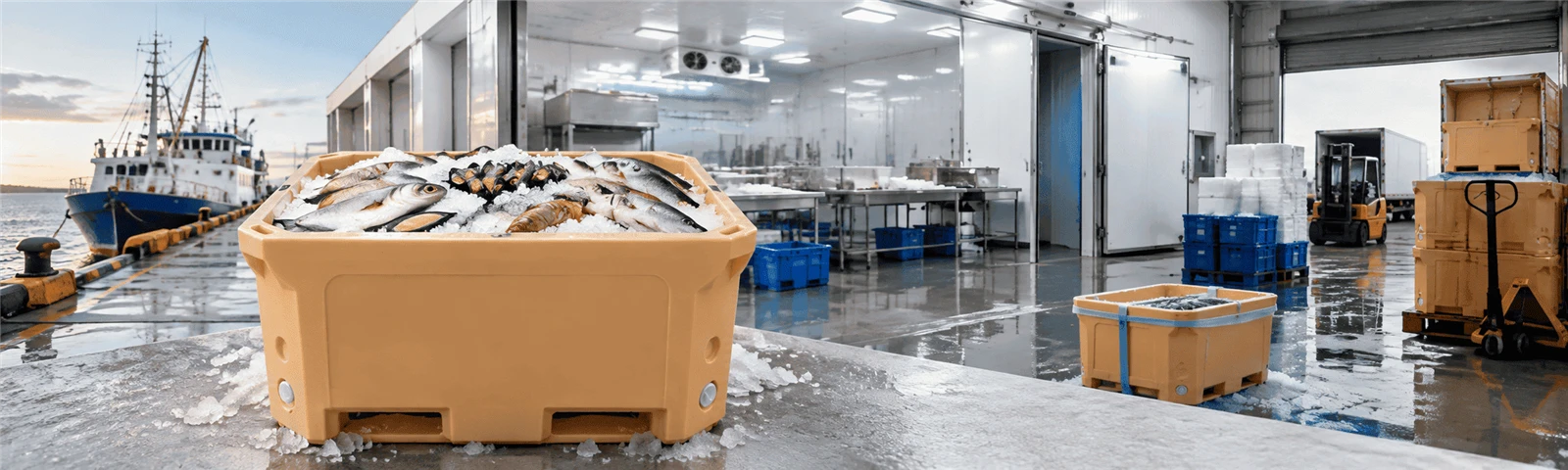
Fresh fish and seafood need careful temperature control from the fishing vessel to the processing plant, cold room, market, or distribution center. An insulated fish box provides a strong and reusable way to store fish with ice while reducing the effect of outside temperature changes.
These containers are also called fish totes, insulated fish totes, seafood containers, fish storage containers, or fish transport containers. They are widely used in commercial fishing, seafood processing, aquaculture, food processing, and cold chain logistics.
What Is an Insulated Fish Box?
An insulated fish box is a reusable plastic container designed for storing and transporting fresh fish, frozen seafood, shellfish, ice, and other temperature-sensitive products.
Most commercial models use a strong plastic outer body with an insulated core. Large plastic fish boxes may also include lids, drainage outlets, reinforced corners, stacking structures, and forklift entry points.
Unlike a standard plastic crate, an insulated container slows heat transfer between the product and the outside environment. This helps ice last longer and supports more stable conditions during seafood handling and transportation.
Why Are Insulated Fish Boxes Used in the Seafood Cold Chain?
Temperature changes can affect seafood quality during harvesting, processing, storage, and transport. A reliable seafood container helps keep fish together with ice while protecting the load from direct exposure to warm air.
Better Temperature Control
Insulated walls help slow temperature changes inside the container. This is useful when seafood moves between fishing vessels, docks, processing plants, cold storage rooms, and refrigerated vehicles.
The actual cooling time depends on the insulation, amount of ice, seafood load, outside temperature, lid condition, and handling method.
Stronger Protection
Commercial fish totes are designed for repeated industrial use. Thick plastic walls and reinforced corners help protect seafood during loading, unloading, stacking, and internal transport.
This makes reusable plastic containers a practical choice for seafood processors and commercial fishing operations with frequent container circulation.
Easier Cleaning
A smooth plastic interior is easier to wash than porous or easily damaged packaging materials. Drain outlets can also help remove melted ice, water, and cleaning liquid from the bottom of the box.
For seafood plants, simple cleaning is important because containers often move through several production cycles each day.
Reusable for Repeated Transport
A reusable fish storage container can return to the fishing vessel, farm, processing plant, or distribution center after unloading. This makes it suitable for closed-loop seafood supply chains.
For high-volume users, reusable containers can also reduce dependence on single-use packaging.
Insulated Fish Box vs Styrofoam Fish Box

Styrofoam boxes remain common for small shipments because they are light and inexpensive. However, they can break during rough handling and usually have a shorter service life.
A reusable plastic insulated fish box has a stronger body and is designed for repeated washing, stacking, and material handling. Large models can also be moved by forklifts, which makes them more practical for bulk seafood processing.
Styrofoam may still suit small, lightweight, one-way shipments. Reusable insulated fish totes are usually a better option for commercial seafood operations that need larger capacities and frequent reuse.
The right choice depends on shipment size, transport distance, return logistics, cleaning requirements, and total use frequency.
Where Are Fish Totes and Seafood Containers Used?
Commercial fish boxes can support several stages of the seafood supply chain.
Fishing vessels: Fresh catch can be placed into fish totes with ice after harvesting.
Fishing ports and docks: Large boxes help collect, sort, and move fish before processing or transport.
Seafood processing plants: Insulated seafood containers can hold fish, shrimp, shellfish, squid, and other products between processing steps.
Cold storage: Fish storage containers can hold chilled or frozen seafood inside cold rooms.
Aquaculture: Fish farms can use suitable containers for harvested fish and other aquatic products.
Seafood transportation: Fish transport containers can move products by refrigerated truck, container, or other cold chain systems.
Food processing: Large insulated containers can also handle meat, frozen food, ice, and other temperature-sensitive food products.
For more applications, see our Seafood & Cold Room Storage solution.
Important Features of a Commercial Insulated Fish Box
Not every seafood transport box is designed for the same job. Commercial buyers should check the container structure before ordering.
Food-Grade Plastic Body
The container material should match the intended food handling application. HDPE, PE, and other suitable plastic materials are commonly used for industrial seafood containers.
Buyers should confirm the required food-contact standard with the supplier before placing a bulk order.
Insulated Wall Construction
Many bulk fish containers use double-wall construction with insulating material between the walls. This structure helps reduce heat transfer and protects the insulation from direct contact with the seafood.
Tight-Fitting Lid
A suitable lid reduces direct exposure to warm outside air and helps protect seafood during handling and transport.
Some fish shipping containers also use straps, locks, or rubber latches to hold the lid in place.
Drainage Outlet
Fish and seafood are often stored with ice. As the ice melts, water needs a controlled drainage route.
A drain plug allows workers to empty water and makes the fish box easier to wash after use.
Stackable Design
Stackable containers can make better use of floor space in processing plants, warehouses, cold rooms, and refrigerated transport.
Buyers should always check the recommended stacking load before stacking filled containers.
Forklift Access
Large bulk insulated containers can hold several hundred liters of product, so manual handling may not be practical.
Forklift entry makes it easier to move loaded containers around docks, seafood factories, warehouses, and cold storage facilities.
How to Choose the Right Fish Box Size
Capacity should match both the seafood load and the handling system.
Smaller fish totes are easier to handle in limited spaces and may suit sorting, grading, or smaller batches. Large insulated containers are better for bulk fish, shrimp, salmon, tuna, shellfish, and high-volume seafood processing.
Enlightening Pallet supplies insulated fish containers in different capacities, including large models for industrial seafood storage and transport.
Before buying, check:
- Required internal capacity
- External container dimensions
- Fish or seafood type
- Ice quantity
- Maximum loaded weight
- Forklift compatibility
- Truck or reefer dimensions
- Cold room layout
- Stacking requirements
- Drainage requirements
Do not choose a container based only on liter capacity. The external dimensions must also fit your warehouse, vehicle, processing line, and handling equipment.
How to Use Insulated Fish Containers More Effectively
Keep the container clean before loading fresh seafood. When required by the process, pre-cool the container and use the correct amount of ice or another approved cooling method.
Distribute seafood and ice according to the product requirements. Avoid overloading the container, because excessive weight can affect the box, lid, and stacking stability.
Keep the lid closed during storage and transportation whenever possible. Check drainage plugs before moving the container to prevent unwanted liquid leakage.
After unloading, remove remaining seafood, ice, and liquid. Wash and sanitize the fish storage box according to the hygiene procedure used by your facility.
What Should B2B Buyers Check Before Ordering?
A commercial seafood operation may use hundreds of containers, so purchasing decisions should cover more than the unit price.
Ask the fish box supplier about material, insulation structure, capacity, dimensions, weight, stacking load, forklift entry, drainage design, lids, replacement parts, color, logo, and order quantity.
For international projects, buyers should also check container loading quantity and shipping cost. A slightly different box size can sometimes change the number of units that fit into a shipping container.
As a China insulated fish box manufacturer and wholesale supplier, Enlightening Pallet provides different sizes and customization options for seafood processing, commercial fishing, aquaculture, food storage, and cold chain projects.
You can also view our Advanced Insulated Fish Storage Solutions for more product information.
Choosing Insulated Fish Boxes for Commercial Seafood Operations
A good insulated fish box does more than hold seafood. It needs to fit the cold chain, handling equipment, cleaning process, transport system, and daily production volume.
For seafood processors, fishing companies, aquaculture farms, distributors, and cold storage operators, reusable fish totes and insulated seafood containers provide a practical solution for bulk seafood storage and transport.
Enlightening Pallet supplies plastic fish boxes and bulk insulated containers for B2B projects. Contact us with your required capacity, seafood type, quantity, destination, and customization needs to receive a suitable product recommendation and wholesale quotation.
FAQ About Insulated Fish Boxes
What is an insulated fish box used for?
It is mainly used to store and transport fresh fish, seafood, shellfish, ice, and other temperature-sensitive food products.
What is another name for an insulated fish box?
Common names include fish tote, insulated fish tote, fish bin, seafood container, fish storage container, and fish transport container.
Can fish totes be used in cold storage?
Yes. Suitable models can be used for seafood handling in cold rooms, but buyers should confirm the operating temperature of the specific container.
Can an insulated fish box be moved by forklift?
Many large models include forklift entry. Always check the base design, entry direction, and rated load before handling a filled container.
Can the fish boxes be customized?
Yes. Bulk orders can usually discuss options such as size, color, logo, lid, drainage configuration, and other project requirements.
How should an insulated seafood container be cleaned?
Remove fish, ice, and liquid first, then wash and sanitize the smooth internal surfaces according to the food safety procedure used by the facility.