Open Deck vs Solid Deck Plastic Pallets: Which Design Fits Your Operation?
Leave a message

Introduction
Plastic pallets come in different structural designs, with open deck and solid deck pallets being two common options for warehousing and logistics. Although both are designed for the same basic purpose of supporting and moving goods, their deck structures are suited to different operating requirements. Understanding these differences can help buyers select a pallet that matches their goods, storage environment, handling process, and operational needs.

Why Does Deck Design Matter When Choosing a Plastic Pallet?
The deck is the main surface that directly supports the load, so its structure can affect how goods sit on the pallet and how the pallet performs during handling and storage. Openings in the deck create a different contact pattern from a continuous surface, which can influence load stability, airflow, drainage, and cleaning requirements. These structural differences can become particularly important when pallets are used with specific types of goods or in environments with particular hygiene, storage, or handling requirements. For this reason, deck design should be considered as part of the pallet's overall suitability rather than as a purely structural feature.
What Is the Difference Between Open Deck and Solid Deck Plastic Pallets?
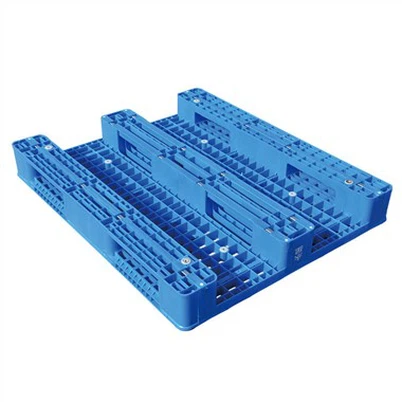
Open deck and solid deck pallets differ mainly in their deck structure, airflow and drainage characteristics, load-supporting surface, and suitability for different operating environments.
|
Aspect |
Open Deck Plastic Pallet |
Solid Deck Plastic Pallet |
|
Deck Structure |
Uses openings or a grid-style surface across the deck. |
Provides a continuous or largely enclosed deck surface. |
|
Airflow and Drainage |
Allows greater airflow and easier drainage through deck openings. |
Provides limited airflow through the deck and a more enclosed surface. |
|
Load Contact |
Openings can create gaps between the pallet and certain types of loads. |
Provides a more continuous supporting surface for cartons, bags, and packaged goods. |
|
Cleaning |
Openings allow water and debris to pass through but may require attention around the deck structure. |
Fewer openings can make the surface easier to wipe and clean. |
|
Hygiene Requirements |
Suitable when ventilation and drainage are important to the operation. |
Often better suited to applications where cleanliness and a clean load surface are priorities. |
|
Load and Storage Needs |
Available in different load capacities and structural configurations depending on the pallet design. |
Can be designed for demanding static, dynamic, or racking applications depending on the construction. |
|
Overall Selection Focus |
Best evaluated according to ventilation, drainage, handling, and general logistics requirements. |
Best evaluated according to cleanliness, load support, storage, and controlled operating conditions. |
How Should Buyers Choose Between Open Deck and Solid Deck Plastic Pallets?
Selecting between open deck and solid deck plastic pallets requires considering the operating environment, storage conditions, and types of goods being handled.
Choose an open deck plastic pallet when
• The pallet will be used in general warehousing, logistics, or distribution operations
• Ventilation and airflow around stored goods are important
• Drainage is needed during handling or storage
• The operation involves varied warehouse and material-handling conditions
• A pallet with an open or grid-style deck is suitable for the goods being handled
Choose a solid deck plastic pallet when
• The pallet will be used in pharmaceutical, food-related, cleanroom, or other hygiene-conscious environments
• A continuous and enclosed load-bearing surface is preferred
• Easy surface cleaning and routine maintenance are important
• Cartons, bags, or other goods require more continuous deck support
• The pallet will be used in storage and handling operations where a clean, stable load surface is a priority
What Are the Benefits of Choosing the Right Plastic Pallet Deck Design?
Selecting the appropriate deck structure can affect both pallet performance and the efficiency of the wider handling process.
- Better Load Support - A deck structure matched to the load can provide more consistent contact and support during storage and handling.
- Improved Warehouse Efficiency - The right pallet configuration can work more effectively with stacking, racking, and available warehouse space.
- Easier Cleaning and Maintenance - A suitable deck structure can simplify routine cleaning where hygiene and contamination control are important.
- More Reliable Material Handling - Matching the pallet structure with forklifts, pallet trucks, and other handling equipment can support smoother internal movement.
- Better Long-Term Reuse - A properly selected plastic pallet can withstand repeated handling, cleaning, and storage cycles while maintaining consistent dimensions and structural performance.
Conclusion
Open deck and solid deck plastic pallets serve different operational needs, so the right choice depends on the required balance between ventilation, drainage, cleanliness, load support, stacking, and handling conditions. Buyers should also consider load capacity, runner configuration, material, dimensions, and compatibility with existing warehouse equipment when selecting a pallet rather than evaluating the deck design alone. Enlightening Pallet provides plastic pallet solutions including open-deck, solid-deck, stackable, rackable, and full-perimeter designs for different warehouse, pharmaceutical, manufacturing, and logistics applications. Contact us to discuss your pallet requirements and find a suitable plastic pallet design for your operation.