Types of Medical Waste Bins: A Complete Guide for Healthcare Facilities
Leave a message
Introduction
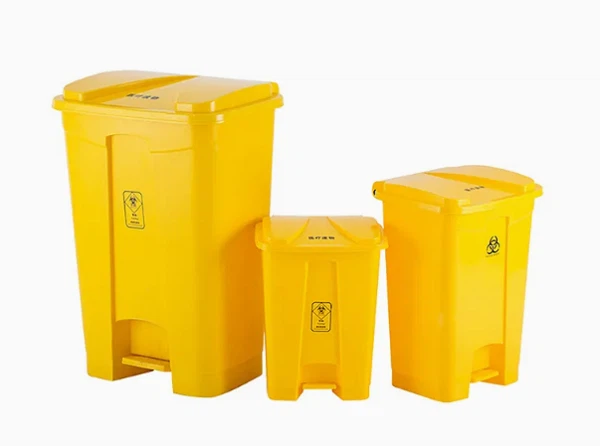
Medical waste bins are an important part of waste segregation in hospitals, clinics, laboratories, dental offices, nursing facilities, and other healthcare environments. However, different medical waste streams require different containers. A sharps container used for needles is very different from a pedal bin used in a hospital ward or a 660L wheeled bin used for centralized waste collection.
For healthcare facilities, distributors, contractors, and bulk buyers, choosing the right medical waste bin requires more than comparing capacity and price. Waste type, container material, lid design, color coding, local regulations, mobility, cleaning requirements, and daily waste volume should all be considered before purchasing.
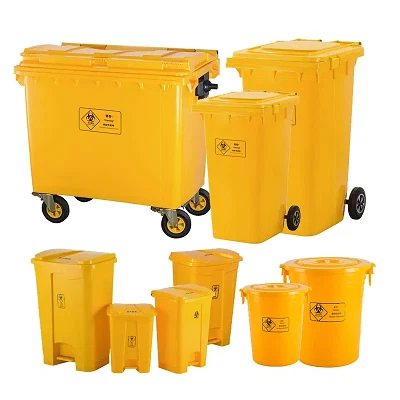
Our complete range of medical waste bins includes small pedal bins, biohazard containers, wheeled hospital waste bins, and large-capacity medical waste containers for different stages of healthcare waste collection.
What Is Medical Waste?
Medical waste refers to waste generated during healthcare activities such as diagnosis, treatment, laboratory testing, vaccination, surgery, pharmaceutical handling, and medical research.
Medical waste can generally be divided into hazardous medical waste and general non-hazardous waste.
Biomedical and hazardous medical waste may include blood-contaminated materials, infected bodily fluids, dressings, laboratory waste, pharmaceutical waste, sharps, needles, blades, and other potentially hazardous materials.
General healthcare waste includes paper, packaging materials, plastic bottles, food waste, and other items that have not been contaminated by infectious materials, chemicals, biological fluids, or sharps.
Correct segregation at the point where waste is generated helps healthcare facilities reduce mixing between hazardous and general waste and makes internal collection, storage, transportation, and final treatment easier to manage.
Types of Medical Waste Bins
Different waste streams should use containers designed for their specific risks and handling requirements.
|
Medical Waste Type |
Recommended Container |
Common Capacity |
Important Buying Features |
|
Sharps |
Rigid sharps container |
0.1–30L |
Puncture resistance, secure lid, fill line |
|
Infectious waste |
Pedal or lidded biohazard bin |
16–100L |
Leak resistance, hands-free opening, labeling |
|
Pharmaceutical waste |
Clearly identified waste container |
Depends on project |
Secure closure, correct labeling |
|
Pathological waste |
Sealed medical waste container |
Depends on local rules |
Leakage control, secure lid |
|
General clinical waste |
Pedal waste bin |
20–100L |
Easy cleaning, convenient operation |
|
Internal hospital collection |
2-wheel medical waste bin |
120–360L |
Wheels, handle, durable HDPE body |
|
Central waste collection |
4-wheel medical waste bin |
660–1100L |
Heavy-duty wheels, large capacity, mobility |
Sharps Containers
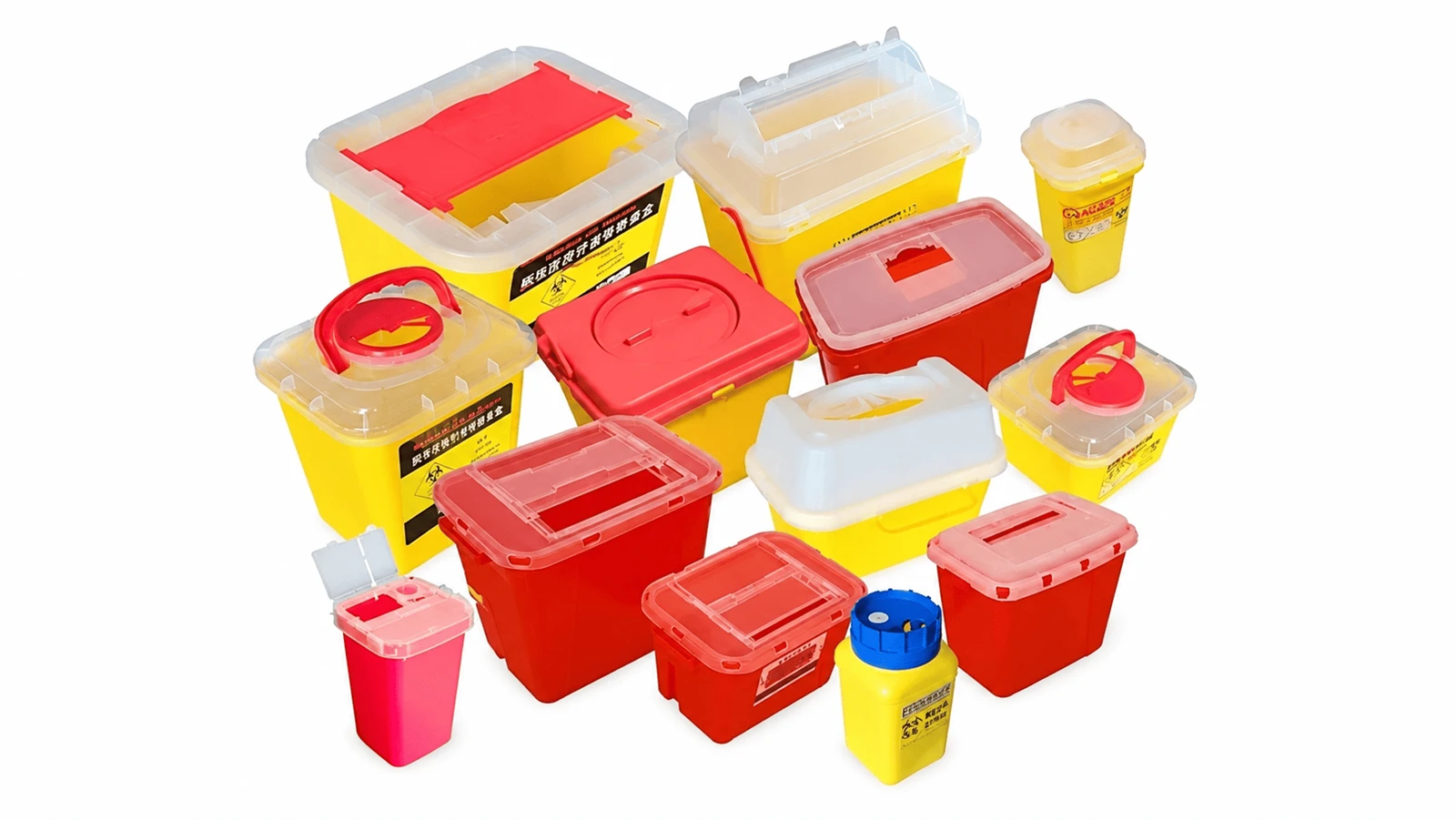
Sharps containers are used for needles, lancets, scalpels, blades, and other sharp medical waste. Made from rigid PP or HDPE, they offer puncture resistance, leak protection, and secure lid closure.
ENLIGHTENING PALLET supplies sharps containers from approximately 0.1L to 30L. Buyers should check capacity, opening design, lid lock, labeling, and local compliance requirements.
For more details, read our Sharps Containers Buying Guide: Sizes, Materials, and Safety Tips.
Infectious and Biohazard Waste Bins
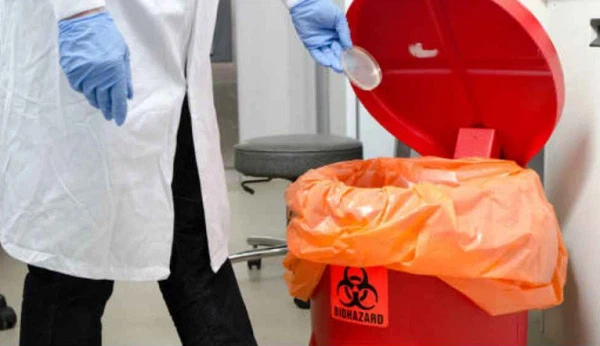
Infectious waste bins are used for blood-contaminated materials, dressings, swabs, gloves, and other potentially infectious waste. They are commonly used in hospitals, laboratories, clinics, and treatment rooms.
A small plastic medical bin suits limited spaces, while a plastic biohazard container provides clear identification for biohazard waste.
Buyers should focus on easy-clean surfaces, secure lids, liner retention, and clear labeling.


Pharmaceutical Waste Bins
Pharmaceutical waste bins are used for expired, unused, spilled, or contaminated medicines.
Color, labeling, and container requirements vary by local regulations, so buyers should confirm destination-country or tender requirements before ordering.
Pathological Waste Bins
Pathological waste bins are used for tissues, organs, biological specimens, and similar medical waste.
Key purchasing points include secure closure, leak resistance, clear labeling, and sufficient container strength. Our medical garbage bins in different sizes support different healthcare collection needs.


Clinical and Pedal-Operated Waste Bins
Clinical bins are commonly used in wards, treatment rooms, laboratories, and clinics. Foot-operated designs reduce direct hand contact with the lid.
Common capacities range from 16L to 100L. Buyers can compare our pedal-operated garbage bins and 50L medical waste bin.
Mobile Medical Waste Bins
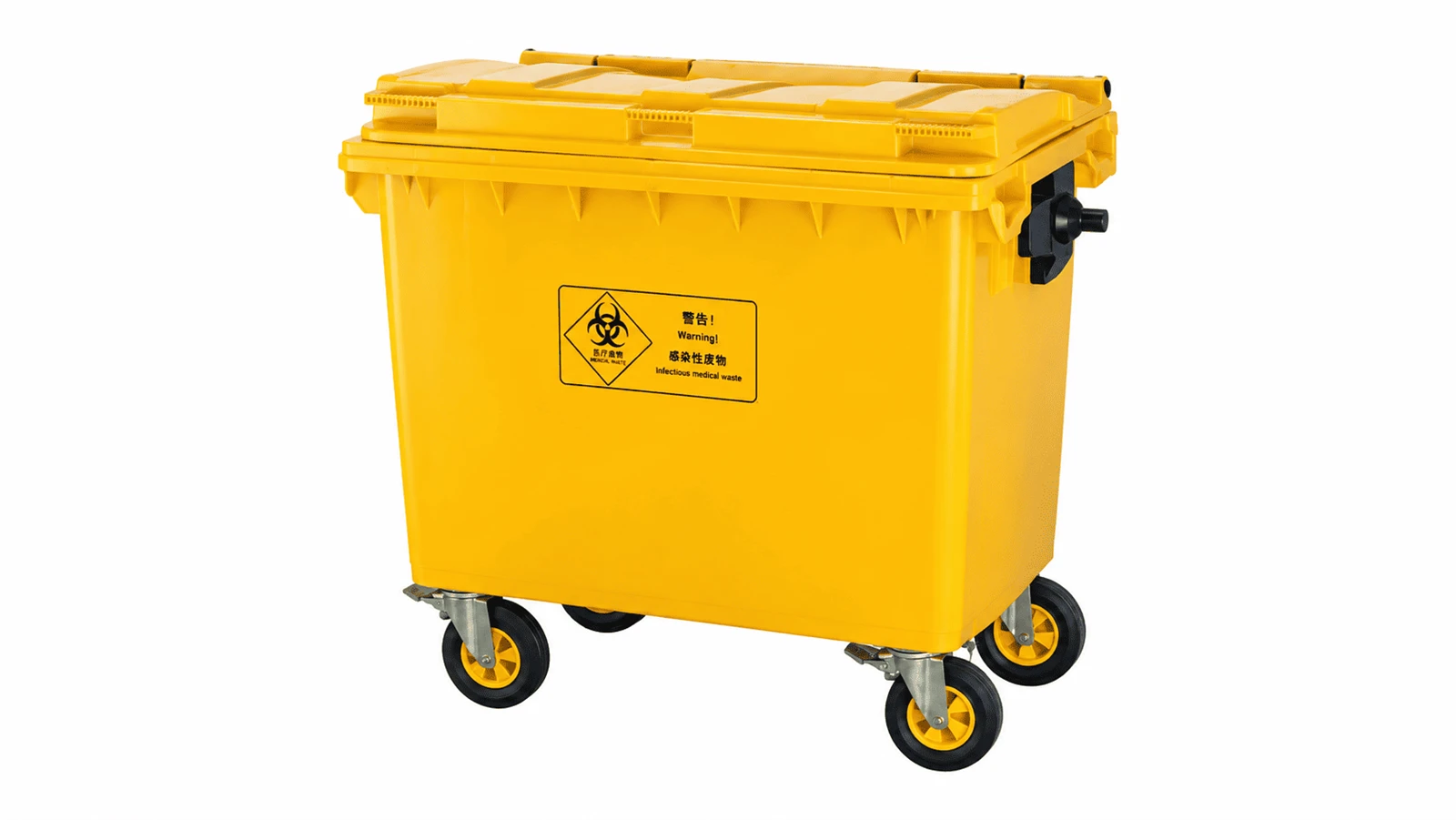
Wheeled medical waste bins are used for internal transport and centralized waste collection.
A 240L Hospital Waste Container suits medium-volume collection, while the 660L yellow wheeled waste bin and 1100L HDPE Medical Waste Bin are better suited to high-volume hospital waste handling.
Medical Waste Bin Color Coding
Color coding helps healthcare workers identify different waste streams quickly, but buyers should not assume that one color system applies worldwide.
WHO provides recommended healthcare waste segregation schemes, but national and regional regulations may use different colors, labels, or combinations. Always check the rules that apply in the destination market before confirming a bulk order.
A common WHO reference system includes:
|
Waste Type |
Common Reference Color |
Container Requirement |
|
Infectious/pathological waste |
Yellow |
Suitable bag or container |
|
Sharps |
Yellow |
Puncture-resistant sharps container |
|
Chemical/pharmaceutical waste |
Brown |
Suitable bag or container |
|
General healthcare waste |
Black |
General waste container |
For projects in the United States, regulated medical waste and sharps may also use red containers or appropriate biohazard labeling depending on the applicable requirements.
For international orders, buyers should provide the required bin color, warning symbol, label language, waste category, and destination country before production.
Sizes of Medical Waste Bins
Medical waste bins vary widely in size and capacity, typically depending on the type of waste they are used to store and their color. For example, sharps containers are generally small waste bins, ranging in size from 0.1 liters to 30 liters.
Small medical waste bins are generally 25 liters to 100 liters in size and can be placed in various corners. Small bins are usually foot-operated to avoid direct contact.
Large medical waste bins are generally equipped with wheels, such as 240L Hospital Waste Containers and 1100L HDPE Medical Waste Bin, allowing cleaning staff to easily move the bins and improve waste turnover efficiency.
Medical Waste Bin Size Chart for Enlightening Pallets
|
Size (L × W × H) |
Volume |
Color |
|
|
|
32 × 25 × 42 cm |
16L |
Customizable |
|
43 × 40 × 44 cm |
30L |
Customizable |
|
|
43 × 40 × 60 cm |
50L |
Customizable |
|
|
49 × 43 × 70 cm |
80L |
Customizable |
|
|
49 × 48 × 84 cm |
100L |
Customizable |
|
|
58 × 65 × 107 cm |
240L |
Customizable |
|
|
137 × 78 × 121 cm |
660L |
Customizable |
|
|
104 × 135 × 130 cm |
1100L |
Customizable |
Key Features Healthcare Facilities Should Look For

Leak-proof and overflow-proof design
Since medical waste typically contains liquids such as blood, bodily fluids, and chemical residues, it is essential to ensure that medical waste bins are made of high-quality plastic (e.g., HDPE) when wholesaling them. This ensures the products are sturdy and durable, with a smooth interior for easy cleaning.
Puncture Resistance (Especially for Sharps Waste)
For sharp medical waste such as syringe needles, blades, and scalpels, the puncture resistance of the plastic waste bins must be considered when choosing them. When wholesaling sharps bins, prioritize the manufacturing materials, such as HDPE or PP, and whether the lid has a safety lock. Puncture resistance in medical waste bins can prevent medical personnel from being pricked by needles, reducing safety hazards.


Color Coding and Clear Labeling
Color coding on trash cans helps healthcare workers and patients quickly identify waste, reducing the risk of mixing hazardous and non-hazardous waste.
When wholesaling, please pay attention to the following:
• Are the colors on the trash cans highly visible (yellow, red, blue, black, green)?
• Does the trash can bear the international biohazard symbol?
• Does the trash can have a printed label or embossed marking?
Compliance with Healthcare Standards
When purchasing in bulk from plastic waste bin manufacturers, it is essential to ensure that the bins they provide meet healthcare standards. For example:
• World Health Organization (WHO) recommendations for medical waste disposal
• ISO standards
• CE certification (if applicable)
• Regional medical waste color coding regulations

Medical Waste Bin Solutions at ENLIGHTENING PALLET
ENLIGHTENING PALLET, a leading plastic garbage can manufacturer in China, provides high-quality plastic medical waste bins for medical institutions of all sizes.
Product Highlights
✔ High-density HDPE material for extra durability
✔ Wide capacity range up to 1100L
✔ Customizable colors, logos, and capacities
✔ ISO/CE/ EN840 certifications
✔ Factory-direct pricing for bulk orders
✔ Strict quality control and fast delivery
Whether you need sharps containers, biohazard bins, or large-capacity wheeled trolleys, we provide complete medical waste solutions tailored to your facility's needs.
FAQ
Q: What type of bin is used for medical waste?
A: The correct bin depends on the waste type. Sharps require puncture-resistant containers, while non-sharp infectious waste commonly uses labeled pedal or lidded medical waste bins.
Q: What size medical waste bin should I choose?
A: Small 16–50L bins suit treatment rooms and clinics, while 80–240L bins suit department collection and 660–1100L wheeled bins suit centralized waste handling.
Q: Are medical waste bin colors the same in every country?
A: No. Healthcare waste color coding varies by country and region, so buyers should confirm local requirements before ordering.
Q: What material is used for medical waste bins?
A: Reusable medical waste bins are commonly made from HDPE, while many sharps containers use PP or other rigid puncture-resistant plastics.
Q: Are pedal bins suitable for hospitals?
A: Yes. Pedal-operated bins reduce the need to touch the lid directly and are commonly used in wards, laboratories, treatment rooms, and clinics.
Q: Can medical waste bins be customized?
A: Yes. Depending on the model, color, logo, labeling, capacity, and other features can be customized for bulk healthcare projects.
Q: Can I buy medical waste bins directly from a manufacturer?
A: Yes. Bulk buyers can source medical waste bins directly from manufacturers and request product specifications, samples, customization, packing details, and container-loading information before placing an order.
Conclusion
Choosing the right medical waste bin starts with identifying the waste type and understanding how the container will be used.
Healthcare facilities normally require several different products rather than one universal bin: sharps containers for needles and blades, pedal medical bins for treatment areas, and larger wheeled containers for internal transport and centralized waste collection.
For bulk purchasing, compare capacity, material, lid design, puncture or leakage resistance, wheels, color coding, labeling, applicable standards, customization, and supplier production capability before making a final decision.
If you are planning a hospital, clinic, laboratory, healthcare distribution, or medical waste management project, contact ENLIGHTENING PALLET with your waste type + required capacity + quantity + destination country. We can help you select suitable models and prepare a quotation.