Why More Warehouses Are Switching to Plastic Pallets in 2025
Leave a message
Warehouse needs are changing. In the past, many warehouses used pallets mainly for forklift transport, floor storage, and basic shipping. Today, more warehouses use high-bay racks, conveyors, shuttle systems, and automated storage equipment.
These systems need stable warehouse pallets. Changes in size, structural damage, or pallet deformation can affect forklift entry, storage, and transport. This is one reason why more companies now choose plastic pallets, especially rackable plastic pallets and heavy duty plastic pallets.
Plastic pallets are not the best choice for every warehouse. Wood pallets can still make sense for one-way shipping or operations where empty pallets cannot return. However, reusable plastic pallets can offer clear benefits in high-turnover warehouses, rack storage, automated warehouses, and cold storage.
Warehouse Operations Need More Consistent Plastic Pallets

Modern warehouses have more material handling steps. One pallet may move by forklift, enter a rack, pass through a conveyor, and return to storage. The pallet needs to keep a stable size and structure through each step.
Wood pallets may develop loose boards, cracks, warping, or exposed nails after repeated use. Repairs may also change the shape or dimensions of the pallet. These problems may have little effect in a simple floor-storage warehouse, but they become more important in high-turnover operations.
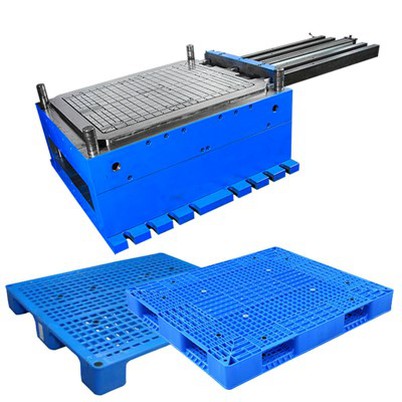
Plastic pallets come from fixed molds. The outer size, fork openings, base structure, and support points are easier to keep consistent from one pallet to another. This helps warehouses that use large numbers of warehouse plastic pallets, industrial plastic pallets, and reusable pallets.
For a detailed comparison of wood and plastic pallets in rack storage, see Wood vs Plastic Pallets: Which is Better for Warehouse Racking?. This article focuses on why warehouse requirements are changing.
Rack Storage Requires Better Pallet Stability
A pallet does not carry a load in the same way on the floor and on a rack. On a flat floor, most of the pallet base has direct support. On warehouse rack beams, part of the pallet may have no support underneath.
For this reason, a plastic pallet that works well on the floor may not be suitable for warehouse racking. Rackable plastic pallets need a stable base and enough structural stiffness. Three-runner, full-perimeter, and double-sided plastic pallets can serve different rack systems.
Some heavy duty rackable plastic pallets also use steel reinforcement inside the deck or runners. The steel can improve stiffness and help control pallet deflection on the rack. The correct design still depends on cargo weight, beam spacing, and storage time.
Buyers should also separate static load, dynamic load, and rack load. A heavy duty plastic pallet may have a high static load but a much lower rack load. For a rack storage warehouse, the real rack load matters more than a large static load number.
Automation Makes Plastic Pallet Quality More Important
Automated warehouses place tighter demands on pallet quality. Conveyors, shuttle systems, stacker cranes, and AS/RS equipment work with fixed positions and dimensions. Pallets must pass through these systems in a stable way.
A forklift driver can see a pallet and adjust the fork position. Automated equipment has less room for this type of adjustment. A badly deformed pallet or a damaged base can affect transport, transfer, and storage.
Plastic pallets do not have loose boards or exposed nails. The fork openings and bottom contact points are also more consistent within the same model. This is why ASRS plastic pallets, automation plastic pallets, and rackable pallets are common choices for modern automated warehouses.
However, size alone is not enough. Buyers should also check conveyor support points, fork dimensions, pallet base design, and equipment tolerances. Two 1200 × 1000 mm plastic pallets can have very different bottom structures.
High-Turnover Warehouses Need Reusable Plastic Pallets
High-turnover warehouses use pallets many times each day. Distribution centers, factories, and closed-loop warehouses often load, lift, unload, store, and reuse the same pallets.
These warehouses should not focus only on the first purchase price. Service life, damage rate, and replacement frequency also affect the real cost. These factors become more important as pallet use increases.
Reusable plastic pallets and returnable plastic pallets work well in repeated warehouse cycles. They do not have loose wooden boards, wood chips, or exposed nails. Staff can also inspect the pallet surface and structure more easily.
The value is even clearer in a closed-loop logistics system. Empty pallets return to a factory, distribution center, or warehouse and enter the next cycle. When a company can recover its pallets, long-term reuse becomes much easier.
Clean and Cold Warehouses Have Different Pallet Needs
Food, beverage, pharmaceutical, and some manufacturing warehouses clean pallets on a regular basis. Plastic pallets do not absorb water and do not produce wood chips. After cleaning, they can return to warehouse use.
These points also matter in cold storage warehouses. Cold rooms may have moisture, low temperatures, and long rack storage periods. Cold storage plastic pallets must match the material, cargo weight, temperature, and rack support conditions.
HDPE alone does not mean a pallet is suitable for every cold room. Buyers should confirm the real operating temperature and pallet structure. If the pallet will go on racks, the rack system must also match the rackable plastic pallet.
Warehouses Are Looking Beyond Plastic Pallet Price
Plastic pallet price is often the first point that buyers compare. Plastic pallets usually do not have the lowest initial price. Low-cost pallets may still be the better choice for one-way shipping or operations where pallets are often lost.
Closed-loop warehouses have a different cost structure. The same reusable plastic pallets can move through transport, storage, rack use, and return many times. This spreads the purchase cost across more trips.
Buyers should also consider repair, replacement, cleaning, cargo damage, and warehouse downtime. Automated warehouses may face extra costs if poor pallets interrupt equipment. For this reason, B2B buyers should not compare plastic pallet suppliers by unit price alone.
Cost per trip gives a better picture for high-turnover operations. A warehouse can compare the total pallet cost with the actual number of use cycles. This is more useful than the first purchase price alone.
This is one reason why wholesale plastic pallets and reusable pallets are common in closed-loop logistics and long-term warehouse programs. Bulk buyers should also compare pallet structure, product consistency, and long-term supply ability.
Which Warehouses Benefit Most from Plastic Pallets?
Not every warehouse needs to replace wood pallets with plastic pallets. Plastic pallets offer the most value where the operation has stable return cycles, repeated use, rack storage, or equipment compatibility requirements.
Automated warehouses need consistent pallet size and base structure. Conveyors, shuttle systems, and AS/RS depend on stable pallet contact points. ASRS plastic pallets and automated warehouse pallets can suit these systems when the design matches the equipment.
Rack warehouses need to check rack load, beam support, and pallet base structure. Standard floor-use pallets should not replace rackable plastic pallets or heavy duty rackable pallets without a proper check.
Closed-loop distribution centers can recover pallets after use. When pallet turnover is high, reusable plastic pallets and returnable pallets can provide more long-term value.
Food, pharmaceutical, and cold storage warehouses often need regular cleaning and better moisture control. If these warehouses also use racks, they must still check the rack storage conditions.
These warehouses share one important point. A pallet is not just packaging. It becomes a long-term part of the warehouse material handling system.
What Should a Warehouse Check Before Buying Plastic Pallets?
A warehouse should not replace a wood pallet only because a plastic pallet has the same outer size. The same dimensions do not mean the same base structure, support points, or load capacity.
Before buyers ask a plastic pallet manufacturer or plastic pallet supplier for a quote, they should confirm pallet size, cargo weight, and cargo footprint. For rack use, they should also provide rack type, rack beam spacing, load distribution, and expected storage time.
If the warehouse uses forklifts, pallet jacks, conveyors, shuttle systems, or AS/RS, the contact points should also be checked. Cold storage projects should include the actual storage temperature. These details help the manufacturer select the correct rackable pallet.
For heavier loads, some warehouses may need steel reinforced plastic pallets or heavy duty plastic pallets. Steel reinforcement can improve pallet stiffness, but it does not solve every rack problem. Beam position, load distribution, and pallet structure still need to match.
For more detail about rack compatibility, see Can Plastic Pallets Be Used in Racking Systems? Complete Guide.
Enlightening Pallet is a China plastic pallet manufacturer and supplier for warehouse, logistics, and industrial projects. For wholesale and bulk orders, buyers can provide cargo weight, rack type, beam spacing, storage temperature, and equipment requirements.
If you need help with pallet selection, Contact Us and send your warehouse details. Enlightening Pallet can help check pallet size, structure, load requirements, and equipment compatibility before bulk production.
More warehouses now choose plastic pallets because warehouse systems have changed. More racks, more automation, and higher pallet turnover all increase the need for stable and consistent pallets.
Rackable plastic pallets can meet many of these needs. However, the right pallet must still match the cargo, rack system, equipment, and storage temperature.
FAQs About Plastic Pallets for Warehouses
Q: Can all plastic pallets be used on warehouse racks?
A: No. Only rackable plastic pallets with the correct structure and rack load should be used on warehouse racks.
Q: Does a high static load mean a plastic pallet is rackable?
A: No. Static load and rack load apply to different support conditions, so buyers should check the actual rack load.
Q: Why do automated warehouses use ASRS plastic pallets?
A: Suitable plastic pallets offer more consistent dimensions and base structures, which can help them work with conveyors, shuttle systems, and AS/RS equipment.
Q: Do rackable plastic pallets always need steel reinforcement?
A: No. The need for steel depends on cargo weight, pallet structure, beam spacing, storage time, and temperature.
Q: Can plastic pallets be used in cold storage warehouses?
A: Yes. Buyers should confirm the material, operating temperature, rack load, and actual storage conditions before purchase.
Q: What information should I send to a plastic pallet supplier for a quote?
A: Provide quantity, pallet size, cargo weight, rack details, destination port, and use conditions. For wholesale plastic pallet orders, also state any color, logo, or steel reinforcement requirements.
Q: Does Enlightening Pallet supply wholesale rackable plastic pallets?
A: Yes. Enlightening Pallet supplies rackable plastic pallets for bulk warehouse, logistics, and industrial projects.
Q: Can a China plastic pallet factory support custom orders?
A: Yes. Bulk orders can include custom colors, logos, materials, steel reinforcement, and other project requirements.