


How Much Weight Can a Rackable Plastic Pallet Hold
Leave a message
How Much Weight Can a Rackable Plastic Pallet Hold on Racks?
Rackable plastic pallets are widely used in warehouse storage systems, but one of the most common buyer questions is simple: how much weight can a rackable plastic pallet actually hold on racks?
Most rackable plastic pallets can handle between 750 kg to 2,000 kg on warehouse racks. The exact capacity depends on the specific pallet design, rack type, beam spacing, and load distribution. Always verify racking load specifications rather than static or dynamic load ratings.
To evaluate plastic pallets correctly for rack storage, it is important to first understand the different types of load ratings and what they mean in real warehouse applications. Most purchasing agents ask the wrong question. They want a simple number, but the real answer requires understanding three different load types first.

What's the Difference Between Static, Dynamic, and Racking Load?
People often confuse these three load ratings when asking about pallet capacity.
Static load refers to weight capacity when the pallet sits on the ground with full bottom support. Dynamic load measures capacity when a forklift lifts the pallet. Racking load indicates weight capacity when the pallet rests on rack beams with unsupported spans.
Pallet purchasers need to be clear about the type of load they require, as the numbers are completely different. Static load typically shows the highest capacity since the pallet has full ground support. Dynamic load comes second because forklift tines provide concentrated support points. Racking load usually shows the lowest capacity because the pallet spans across beams with no middle support.
Most plastic pallet manufacturers will display these specifications:static load 4,000 kg, dynamic load 1,500 kg, racking load 750 kg. See the difference? Using the static load number for rack applications could lead to serious safety issues.
ASTM standards make this distinction clear. They require separate testing for each load condition because the stress patterns are completely different. Virginia Tech research also emphasizes testing pallets under actual use conditions rather than assuming one load type applies to all situations.
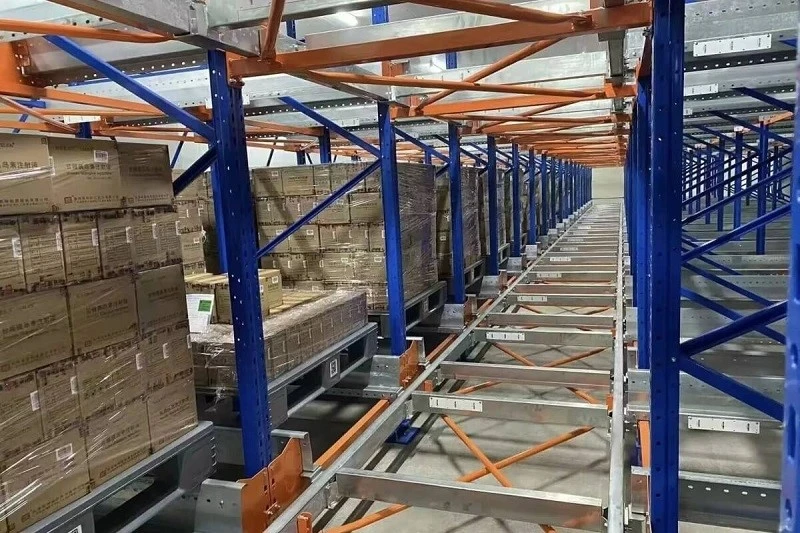
What Racking Load Capacity Can You Expect from Different Pallet Types?
Different plastic pallet designs offer varying racking load capacities based on their construction.
Light-duty rackable plastic pallets typically handle 750-1,000 kg on racks. Medium-duty models range from 1,000-1,375 kg. Heavy-duty reinforced pallets can support 1,400-2,000 kg on warehouse racks.
Summary of the current market situation.Light-duty options offer 750 kg racking capacity.These work well for consumer goods, textiles, or light automotive parts. Mid-range pallets typically show 1,000-1,250 kg racking loads. These handle most food products, chemicals, or medium-density manufactured goods.
Heavy-duty options can reach 1,375-1,400 kg racking capacity. Even some rackable plastic pallets provided by pallet suppliers can bear a weight of up to 2,000 kg. These pallets work for heavy machinery parts, building materials, or dense chemical products.

|
Pallet Category |
Typical Racking Load |
Common Applications |
|
Light-duty |
750-1,000 kg |
Consumer goods, textiles |
|
Medium-duty |
1,000-1,375 kg |
Food products, chemicals |
|
Heavy-duty |
1,400-2,000 kg |
Machinery, building materials |
Some pallets show "-" for high-rack capacity. This means they're not designed for rack storage at all. Always check this specification before assuming any plastic pallet works on racks.
How Does Rack Type Affect Pallet Load Capacity?
The type of warehouse rack system significantly impacts how much weight a plastic pallet can safely hold.
Selective pallet racks typically allow full rated capacity. Drive-in racks may reduce capacity by 10-20%. Flow racks and cantilever systems require special load calculations based on beam spacing and support points.
Drive-in racks create different stress patterns. Pallets often contact rails or guides during loading. This can reduce effective capacity by 10-20% compared to selective rack ratings. Flow racks add gravity and momentum forces. The pallet moves along rails under load, creating additional stress beyond static weight.
Cantilever racks present unique challenges. The pallet may hang over the support points or rest on arms rather than continuous beams. Wire decking can actually increase capacity by providing additional support between beams. Virginia Tech research shows bare beam testing might underestimate capacity when wire decking is present.
So, it is recommended that all pallet purchasers: get your rack specifications first. Beam spacing, support type, and operational requirements all factor into the final load calculation. Don't just ask "what's your racking load?" Ask "what's your racking load for my specific rack system?"
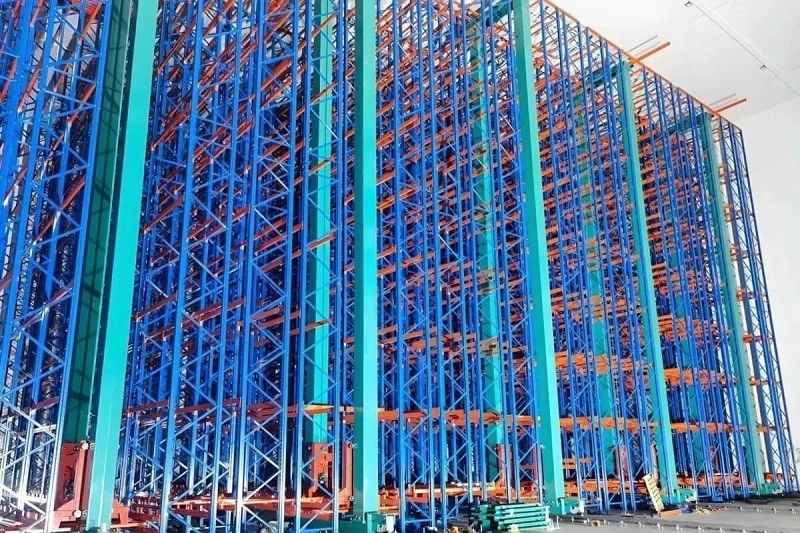
What Factors Actually Determine Real-World Racking Load Capacity?
Several technical factors beyond basic weight limits affect actual pallet performance on racks.
Beam spacing, bottom deck design, load distribution, storage duration, and temperature all impact real-world racking capacity. Longer beam spans reduce capacity. Point loads create higher stress than distributed loads.
Beam spacing makes the biggest difference. Standard 40-inch spans work for most rated capacities. Wider spans reduce effective load limits because the pallet deflects more in the middle. I've seen 48-inch spans drop capacity by 15-25% compared to standard spacing.
Bottom deck design matters enormously. Two-runner pallets concentrate all stress on two support lines. Three-runner designs distribute load better. Five and six-runner pallets offer the best load distribution but cost more to manufacture.
Steel reinforcement changes everything. Pallets with embedded steel tubes or profiles can handle much higher racking loads. The typical heavy-duty reinforced model get its 2,000 kg capacity partly from internal steel reinforcement.
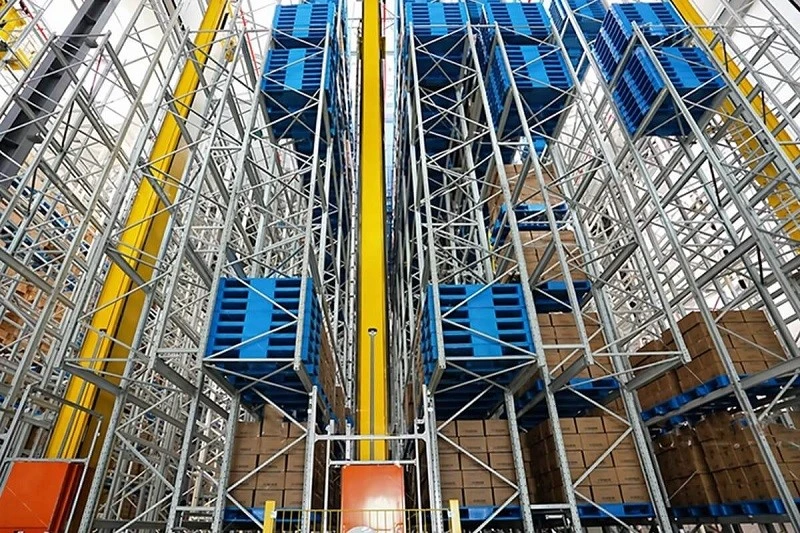
Load distribution affects safety margins significantly. Uniform loads across the entire pallet surface work best. Point loads or concentrated weight create stress concentrations. Heavy items placed off-center can cause dangerous tilting or cracking.
Storage duration introduces creep effects. Plastic gradually deflects under constant load over time. ISO 8611-4 provides creep prediction procedures for plastic pallets. A pallet that safely holds 1,500 kg for one day might fail at 1,200 kg after six months.
Temperature changes material properties. Standard testing occurs at room temperature. Cold storage applications require derating factors. High-temperature environments also reduce load capacity. Most manufacturers provide separate specifications for temperature extremes.
How Should You Evaluate Pallet Specifications for Your Application?
Smart buyers ask specific questions about testing conditions and actual use requirements.
Request test reports showing beam spacing, support conditions, and load distribution used. Verify temperature ratings match your environment. Ask about long-term creep performance if pallets stay loaded for weeks or months.
It is recommended that pallet purchasers pay attention to specifications beyond the basic ones. Ask how the racking load was tested. ASTM D1185 and ISO 8611 provide standard procedures, but test conditions vary. Some manufacturers test with minimal beam spacing to maximize ratings. Others use realistic warehouse conditions.

Buyers should verify the following questions:
- What beam spacing was used for testing?
- Was the load distributed evenly or concentrated?
- What temperature was maintained during testing?
- How long was the test duration?
- Were safety factors already included in the published rating?
Real-world factors often differ from test conditions. Your actual beam spacing might be wider than test conditions. Your loads might be less evenly distributed. Your storage temperatures might be higher or lower. Your pallets might stay loaded longer than test durations.
Industrial buyers should consider a safety margin for long-term rack storage. Use 80-85% of rated capacity for long-term storage. Reduce further for extreme temperatures or uneven loads. The goal is reliable performance, not maximum theoretical capacity.
Conclusion
A rackable plastic pallet can typically hold 750 kg to 2,000 kg on warehouse racks, but the final capacity depends on much more than the pallet itself. Rack type, beam spacing, bottom structure, reinforcement design, load distribution, storage duration, and environmental temperature all influence real-world racking performance. For this reason, selecting the right pallet for rack storage should always be based on the actual warehouse application rather than on a single published number.
If you can share your storage and loading conditions, we can help recommend a more suitable rackable plastic pallet solution for your application.
About Enlightening Plast
- 20+ years of plastic pallet manufacturing experience
- 60+ injection molding machines for stable supply and production consistency
- Custom solutions available: colors, logos, and molds
- Professional QC system to ensure reliable product performance
- Certified to international standards: ISO 9001, CE, REACH, ROHS, SGS, FDA, GRS
FAQ
Q: Can plastic pallets of all types be used as racks?
A: No. Pallets with a confirmed rack load rating are only to be used in warehouse racks.
Q: What is the most critical load rating for warehouse racks?
A: The racking load is more important than static or dynamic load for rack storage.
Q: Does steel reinforcement improve rack load capacity?
A: Yes, in many cases. The pallet can be strengthened with steel to improve its structural rigidity.
Q: Why is it important to have a good beam spacing for plastic pallets?
A: Wider beam spacing can increase the unsupported span, and cause pallet deflection. This can reduce safe load capacity.
Q: Can a pallet that has a high static load be used on racks?
A: Not necessarily. A high static load does not mean the pallet is suitable for rack storage. Buyers should always verify the racking load rating.
Q: What should the buyer confirm before purchasing plastic pallets?
A: The buyer should verify the rack type, beam spacing and load distribution. Also, confirm storage duration and temperature conditions.


