The step-by-step production process of plastic pallets
Leave a message
In recent years, with the development of industrialization and the rise of mechanization, plastic pallets have shown their unique charm in more and more fields and links, and have gradually entered the loading and unloading, transportation, warehousing and other links of various industries. With the continuous development of the pallet industry, the production technology of pallets and its specific production process have become the focus of attention of industry insiders. Next, we will mainly introduce the common production technology and production process of plastic pallets.
Production methods of plastic pallets
There are currently three main methods for producing plastic pallets: injection molding, blow molding and rotational molding, among which blow molding and injection molding are the most widely used.

The injection molding production process is that the mixer mixes the prepared plastic raw materials evenly, then feeds them into the injection molding machine through the feeder for high-temperature plasticization and then sprays them into the mold for injection molding.
Blow molding is also called hollow blow molding. Blow molded pallets are produced using large hollow molding machines. After the HDPE raw material is extruded into a tubular plastic parison, the parison is placed into the mold while it is still hot, and then compressed air is introduced into the mold to inflate the plastic parison and make it close to the inner wall of the mold, and finally cooled to shape and demold.


Rotomolding is also known as rotational molding, rotational molding, rotational molding, rotational casting, rotational molding, etc.
The rotational molding process is to first add the plastic raw material into the mold, and then the mold is continuously rotated along two vertical axes and heated. Under the action of gravity and heat energy, the plastic raw material in the mold is gradually and evenly coated, melted and adhered to the entire surface of the mold cavity, forming into the required shape, and then cooled and shaped into a finished product.
Detailed manufacturing process of plastic pallets
Raw material inspection
Raw material inspection is very important. The raw material determines the quality of the pallet. The flexibility, load-bearing capacity and life of the plastic pallet all depend on the raw material.
HDPE is generally used when producing plastic pallets using injection molding. This material has good impact resistance and environmental tolerance and can be used in a variety of scenarios.
Note: When testing raw materials, be sure to keep the raw materials dry.
The ratio of raw materials, masterbatches, and additives
The quality of the final plastic pallet is closely related to the ratio of masterbatches and additives. The ratio of raw materials will affect the mixing and injection molding effects. For example, plastic products used in low-temperature environments such as freezing need to add refrigerants; and for companies that have color requirements, they need to choose appropriate masterbatches.
Mixer
Before feeding production, the raw materials must be put into the mixer from the feeding port, and then the machine can start to discharge the materials. Mixer feeding is an important part of the production and processing of plastic pallets. The raw materials must be mixed evenly and at a suitable temperature before they can be put into production.
Feeding
After the raw materials are mixed, loading can begin.
Production process
Injection-molded plastic pallets are made by injecting molten plastic into a mold with pre-adjusted parameters under high pressure, and the raw materials are extruded into the shape of a pallet in the mold.
Blow-molded plastic pallets are made by blowing air into the molten plastic to expand it, and then when the mold is closed and extruded, a hole is cut in the expanded plastic to release the internal air and fully squeeze it.
Rotational molded plastic pallets are made by placing the stirred plastic on the mold, then closing the mold, rotating it and heating it, so that the molten plastic is close to the mold, and finally the shape of a pallet is formed.
Opening the mold
After the plastic pallet cools down for a while, the mold can be opened. When the workshop workers are working in this link, they must pay attention to the operating specifications.
Take out
When taking out, workshop workers should wear gloves and pay attention to high temperatures to avoid burns.
Modification
Whether a plastic pallet is produced by injection molding, blow molding, or rotational molding, the staff trims it, removes the excess plastic, and adds a non-slip mat after cooling. Then, the plastic pallet is completed.
Finished product inspection
The final step is finished product inspection. Qualified products should have a bright appearance without burrs, black spots, and other problems. In addition to these appearance inspections, plastic pallet manufacturers also need to conduct spot checks on the product's load-bearing capacity.
Injection molding vs Blow molding vs Rotational molding
Difference in process
Injection molding process: It is mainly made by injection molding machine, and the pallet is formed by injecting plastic and closing the mold to extrude. The mold is relatively precise and expensive, but the pallet produced is cheap, suitable for making smaller pallet products, and widely used in various fields.
Blow molding process: The mold used in blow molding production is relatively simple. It is mainly made by injecting air into the raw material to expand it, and then releasing the air during mold closing and extrusion. The price of the mold is moderate, mainly suitable for hollow, packaging and other special products.
Roto-molding process: The mold used in the roto-molding process is cheap, but the plastic particles need to be placed in the mold and heated repeatedly, and the mold needs to be rolled continuously to make the plastic fit the inner wall of the mold to form, so that the product produced is more expensive.
Differences in appearance:
Injection molding: After injection molding, although the surface of the product is bright, there will be an injection port on the surface, which requires staff to cut it.
Blow molding: Although the blow-molded product does not have an injection port, it is also necessary to trim the excess plastic on the surface during mold closing, and then grind and trim the edges around.
Rotational molding: The product after rotational molding is also uneven, but it has no injection port or blow port, so simply grind the product around.
Difference in products
Injection molding: Most pallets on the market are made by injection molding, especially heavy pallets.
Blow molding: Blow molding is generally only used to produce nine-legged pallets, that is, nestable pallets.
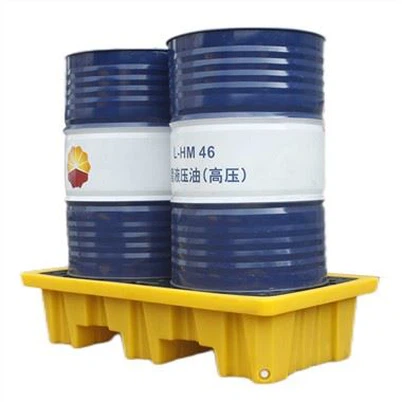
Rotational molding: Rotational molding is generally only used to produce spill containment pallets for transporting and storing chemical products.
Featured Plastic Pallets By Production Process
Injection molding plastic pallets


Blowing molding plastic pallets


Rotational molding plastic pallets


Conclusion
The above are the main production processes and complete manufacturing process of plastic pallets. ENLIGHTENING PALLET is a well-known plastic pallet manufacturer in China. It has a complete set of plastic pallet production processes and strictly controls the production quality of plastic pallets. In addition, ENLIGHTENING PALLET also provides customized services according to the relevant transportation and warehousing requirements of enterprises to meet the personalized needs of various industries. If you have more questions about plastic pallets, please contact us directly and we will answer them for you immediately.