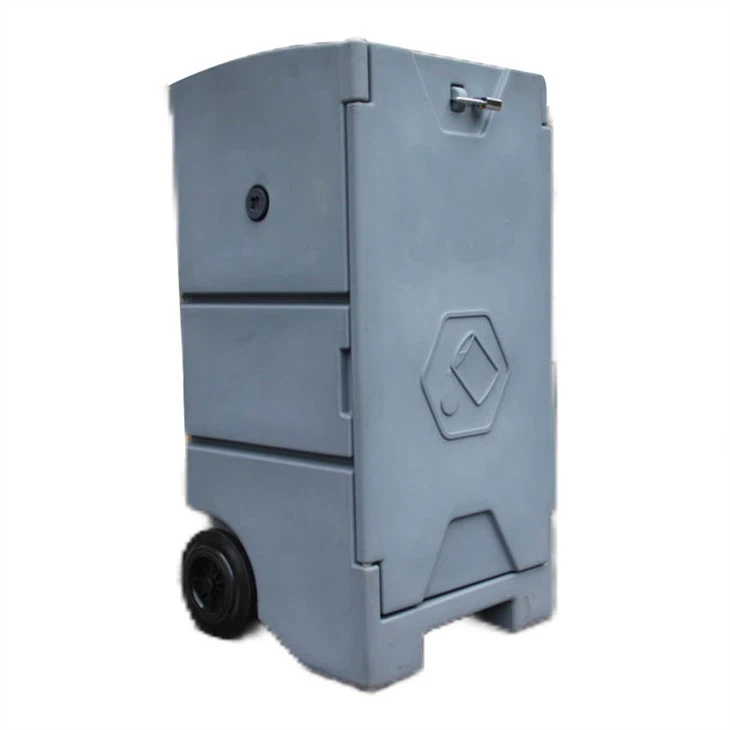
Spill Pallets: Secondary Containment Solution for Hazardous Liquid Storage
Leave a message
Introduction
Spill pallets, also known as spill containment pallets, are specially designed platforms that capture and contain leaks or spills from drums and IBC containers. These plastic pallets are widely utilized across industries such as chemical manufacturing, oil and gas, and warehousing and logistics. In this guide, we provide a comprehensive overview of spill containment pallets-covering their types, specifications, material properties, compliance standards, and application scenarios-and offer guidance on how to select the optimal solution for your specific needs.
- • What Are Spill Pallets?
- • Spill Pallet Applications
- • Types of Spill Pallets
- • Common Sizes and Capacity of Spill Pallets
- • Spill Pallet Materials & Manufacturing
- • Spill Pallet Compliance & Regulations
- • How to Choose the Right Spill Pallet
- • Spill Pallet Maintenance & Cleaning
- • Why Source Spill Pallets Wholesale Directly from Manufacturers
- • How to Choose a Reliable Spill Pallet Manufacturer
- • Why Choose ENLIGHTINGE PALLET As Your Spill Pallets Manufacturer
- • FAQ
- • Get a Quote for Spill Pallets
- • Recommended Related Products
What Are Spill Pallets?
Spill pallets, also
called spill containment pallets, are engineered platforms that catch and contain
leaks from drums and IBC containers, helping businesses prevent costly spills and
environmental hazards. Designed to comply with regulatory standards such as OSHA,
EPA, and SPCC, spill pallets not only protect employees and the workplace but also
safeguard the environment from chemical or oil contamination.
They are widely used in chemical plants, oil storage facilities, warehouses, and
manufacturing sites.
Next, we will take a closer look at the various types of spill pallets and how to
select the right one for your operational needs.
Spill Pallet Applications
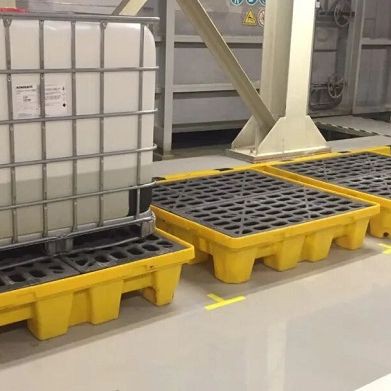
Spill containment pallets are widely utilized in facilities dedicated to the safe storage of hazardous liquids, chemicals, or oils. Depending on the specific application scenario, purchasers must select the appropriate spill containment solution based on factors such as container type, capacity, and operational conditions.
Spill Pallets for Chemical Storage
Typical applications include:
- Chemical warehouses
- Laboratories
- Manufacturing plants handling hazardous substances
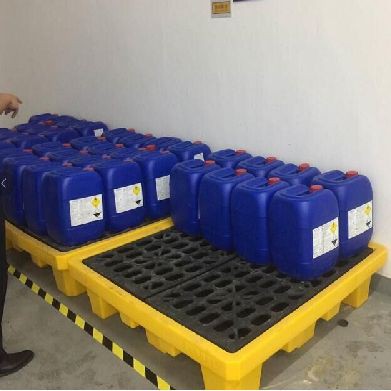
Spill Pallets for Oil and Fuel Storage
Common use cases:
- Oil storage facilities
- Fuel handling areas
- Maintenance workshops
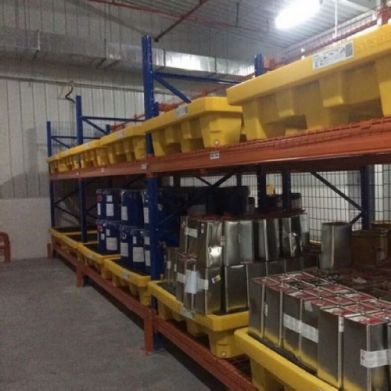
Spill Pallets for Warehousing and Logistics
They help:
- Prevent accidental leaks during handling
- Improve workplace safety
- Ensure compliance with storage regulations
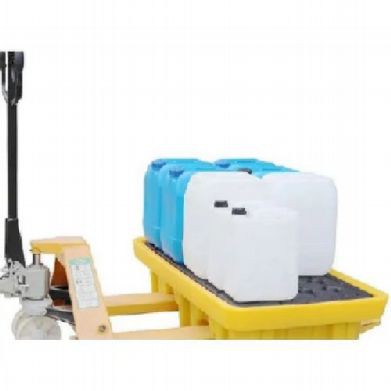
Spill Pallets for Industrial Manufacturing
Applications include:
- Production lines
- Equipment maintenance areas
- Waste liquid storage
Types of Spill Pallets
By Drum Capacity

1 Drum Spill Containment Pallet
Our 1-drum spill containment pallet primarily and encloses a single drum (typically a 55 gallon or 208 liter drum) to contain leaking, dripping, or spilled liquids, thus preventing hazardous liquids from contaminating the ground or environment.
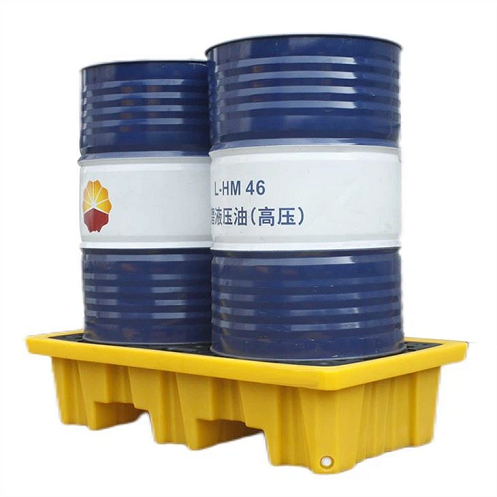
2 Drum Spill Containment Pallet
Our double-drum spill containment pallet is designed to safely support two drums (typically 55-gallon or 208-liter capacity) while simultaneously capturing any leaked or spilled liquids. It effectively prevents hazardous fluids from contaminating the ground or the environment.
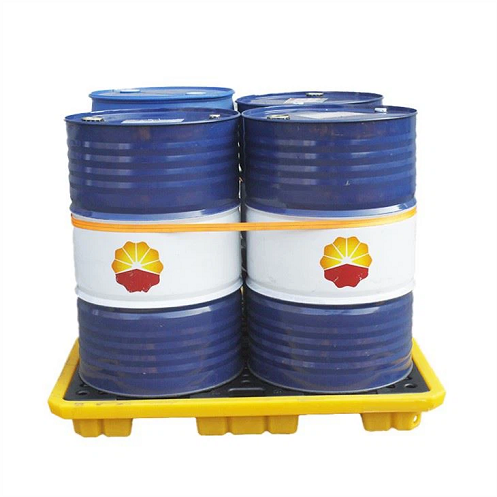
4 Drum Spill Pallet
Our 4-drum spill pallet is specifically designed for the safe storage of four 55-gallon drums containing oils, fuels, or hazardous liquids. It effectively contains spills and features forklift pockets at the base for convenient handling.
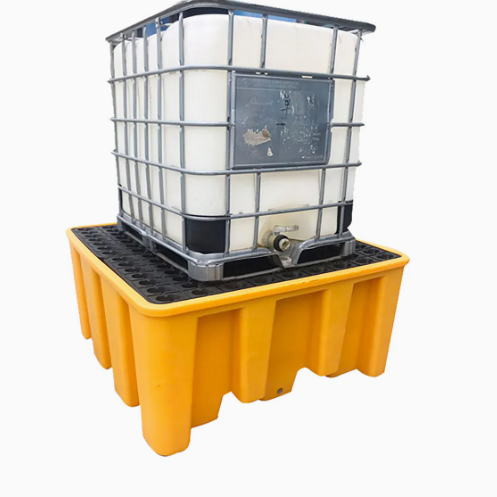
IBC Spill Drum Pallets
Our IBC spill containment pallet is specifically designed for the storage and transport of 1,200-liter IBCs. Widely utilized in chemical processing, chemical storage areas, laboratories, production lines, and workshops, it effectively protects the environment by preventing liquid spills from reaching the ground.
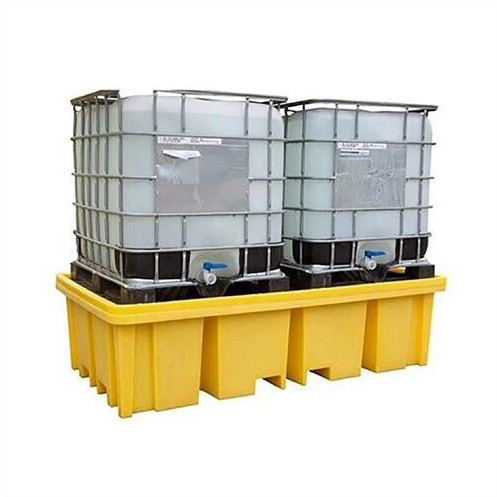
Double IBC Spill Containment Pallet
A Double IBC Spill Pallet is a secondary containment device featuring a bund, designed to hold containers of oils and fuels-typically 200-liter (44 Imperial gallons; 53 US gallons) drums or Intermediate Bulk Containers (IBCs).
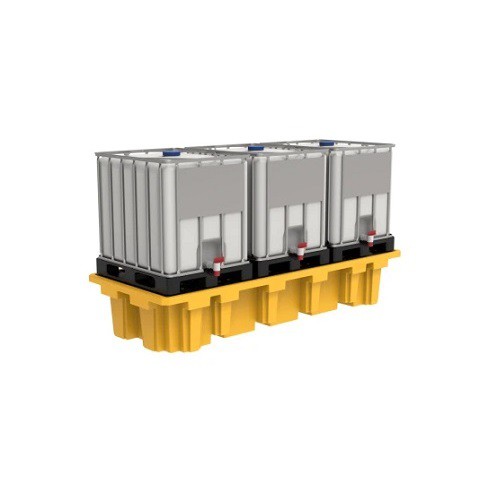
3 Drums IBC Spill Containment Pallet
Our IBC spill containment pallet efficiently manages three IBC totes, featuring a sump capacity of up to 1,500 liters (approximately 396 gallons)-sufficient to handle any potential spills.
By Specical Function
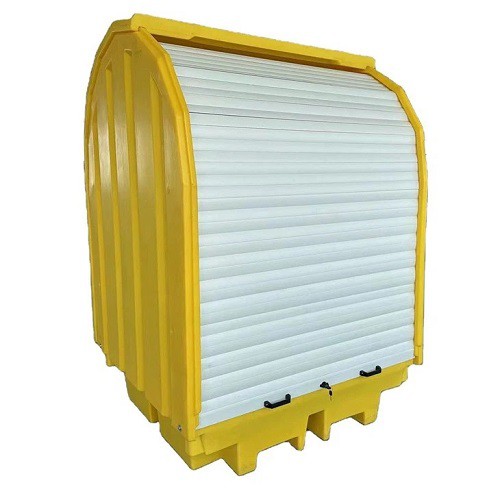
Covered Spill Pallet For 4 X 210ltr Drums
This spill containment pallet is specifically designed to accommodate four standard 210-liter drums. Constructed from high-density polyethylene (HDPE), it features a fully enclosed lid that effectively protects the drums against leaks.
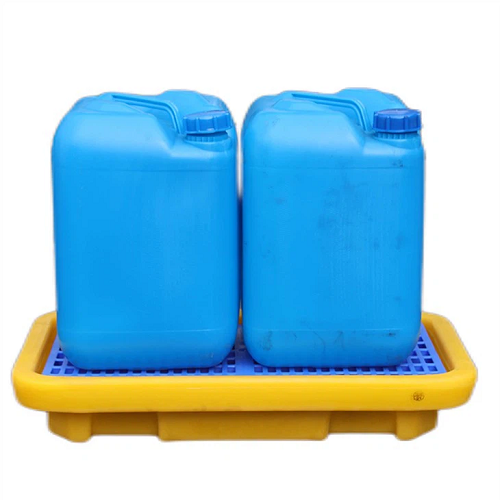
Low Profile Spill Deck
Also known as a secondary containment bund or spill tray, this low-profile spill containment platform features a low-profile design that allows for the safe storage of 20-liter (5-gallon) pails or other small containers, serving to collect leaks, drips, and spills.

55 Gallon Drum Pallet
This spill containment pallet is specifically designed for the storage and transport of 55-gallon (approximately 208-liter) industrial drums. It facilitates the handling and circulation of drums containing chemicals, liquids, or petroleum products. The pallet platform is equipped with a drain plug, allowing any accumulated liquid.
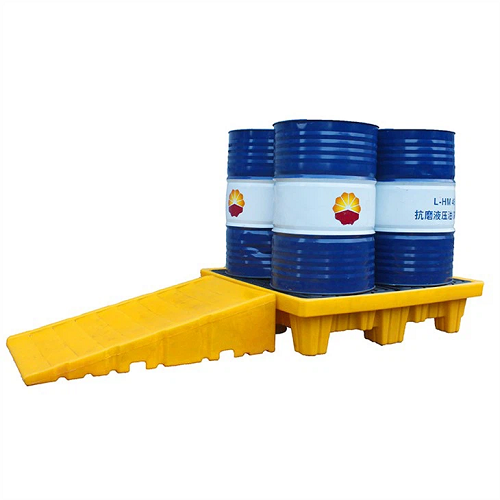
Spill Pallet Ramps
This spill pallet ramp is designed to connect to spill pallets, facilitating the loading and unloading of drums and containers while helping to reduce the risk of personal injury. Featuring a simple inclined design, the ramp incorporates a textured, non-slip surface to enhance traction when transporting drums via hand truck.
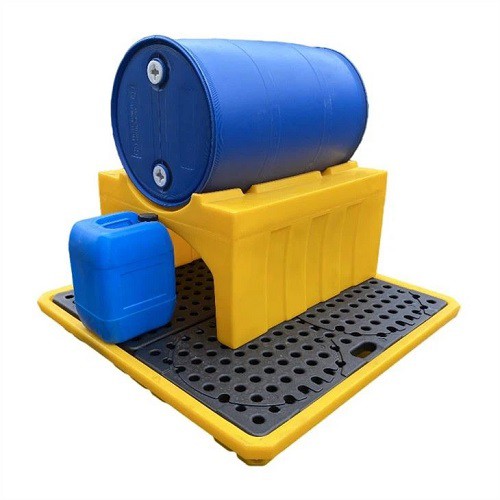
Spill Containment Drum Rack
When combined with drum racks, this spill containment pallet base creates a highly efficient system for drum storage and distribution. It allows for stacking up to two rack levels (accommodating a total of four drums).
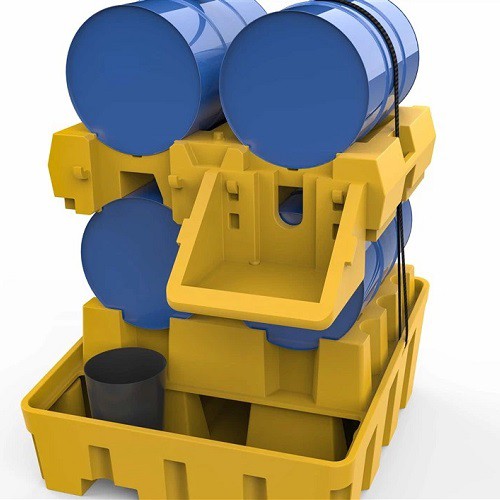
Industrial Drum Spill Pallet Rack
Constructed from durable High-Density Polyethylene (HDPE), this industrial drum spill containment pallet accommodates up to four 205-liter drums and features a 450-liter sump capacity to capture spills, ensuring compliance with safety regulations.
Common Sizes and Capacity of Spill Pallets
Based on different application needs, there is a wide variety of sizes and capacities for spill containment pallets on the market. Below are the common sizes and capacities.
As a factory manufacturer with 26+ years of experience, we have a comprehensive range of molds and can produce spill containment pallets in various sizes. We also support custom mold development.
For more details, please learn about the product categories of Enlightening Pallet spill containment pallets.
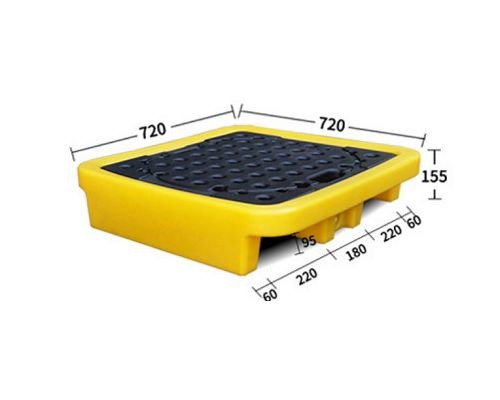
- Dimensions: 720 × 720 × 155 mm
- Spill Capacity: 25 L / 7 US gal
- Loading Capacity: Static Load: 500 kg | Dynamic Load: 300 kg
- Note: Suitable for hydraulic pallet jacks and motorized forklifts.
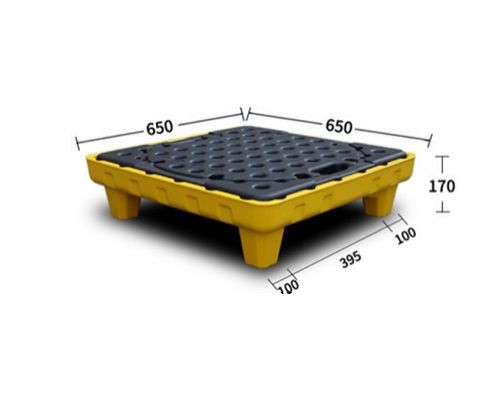
- Dimensions: 650 × 650 × 170 mm
- Spill Capacity: 43 L / 11 US gal
- Loading Capacity: Static Load: 500 kg | Dynamic Load: 300 kg
- Note: Suitable for hydraulic pallet jacks and motorized forklifts.
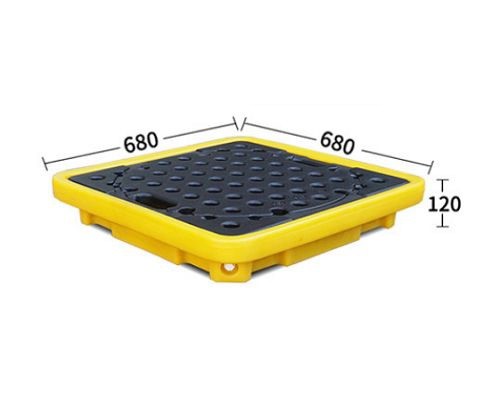
- Dimensions: 680 × 680 × 120 mm
- Spill Capacity: 43 L / 11 US gal
- Loading Capacity: Static Load: 500 kg | Dynamic Load: N/A
- Note: Not suitable for use with forklifts or hydraulic pallet jacks.
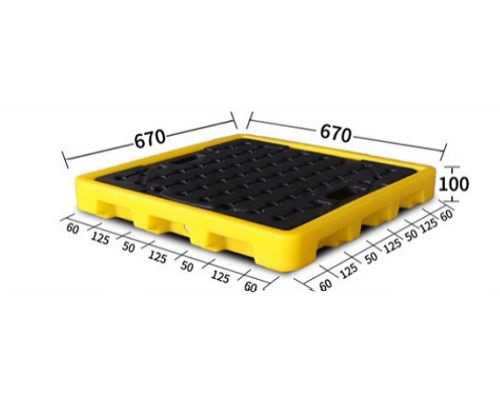
- Dimensions: 670 × 670 × 100 mm
- Spill Capacity: 30 L / 7 US gal
- Loading Capacity: Static Load: 300 kg | Dynamic Load: N/A
- Note: Not suitable for use with forklifts or hydraulic pallet jacks.
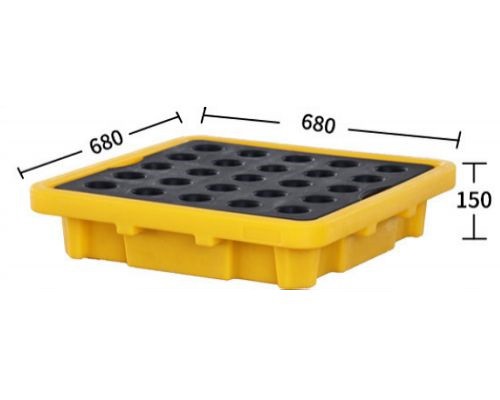
- Dimensions: 680 × 680 × 150 mm
- Spill Capacity: 43 L / 11 US gal
- Loading Capacity: Static Load: 500 kg | Dynamic Load: N/A
- Note: Not suitable for use with forklifts or hydraulic pallet jacks.
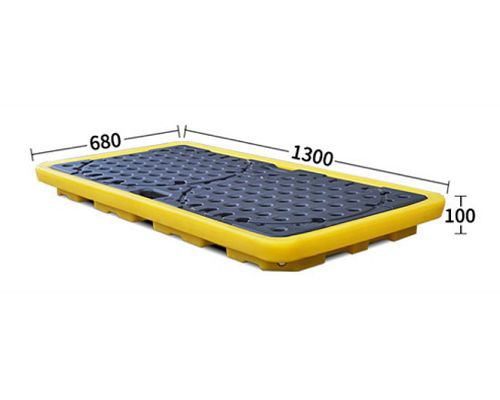
- Dimensions: 1300 × 680 × 100 mm
- Spill Capacity: 45 L / 12 US gal
- Loading Capacity: Static Load: 1200 kg | Dynamic Load: N/A
- Note: Not suitable for use with forklifts or hydraulic pallet jacks.
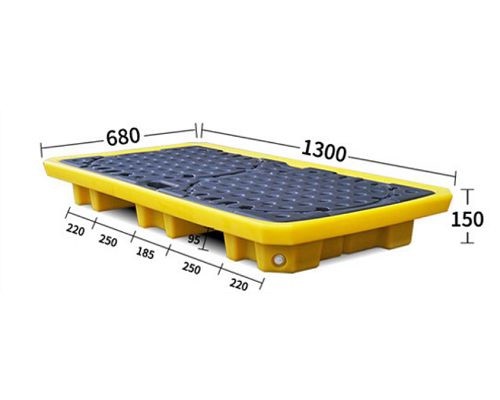
- Dimensions: 1300 × 680 × 150 mm
- Spill Capacity: 70 L / 18 US gal
- Loading Capacity: Static Load: 1200 kg | Dynamic Load: 600kg
- Note: Suitable for use with forklifts or hydraulic pallet jacks.
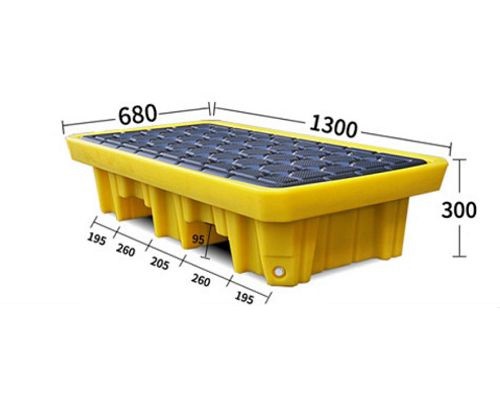
- Dimensions: 1300 × 680 × 300 mm
- Spill Capacity: 120L / 32 US gal
- Loading Capacity: Static Load: 1200 kg | Dynamic Load: 600kg
- Note: Suitable for use with forklifts or hydraulic pallet jacks.
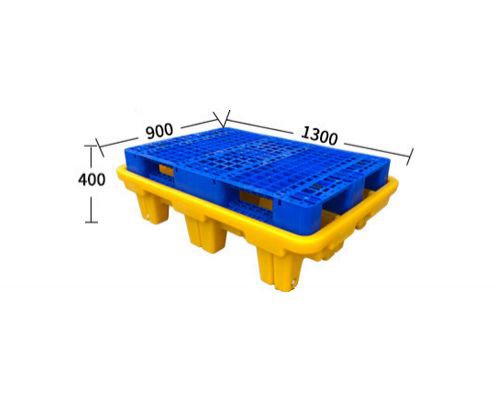
- Dimensions: 1300 × 900 × 400 mm
- Spill Capacity: 120L / 32 US gal
- Loading Capacity: Static Load: 1200 kg | Dynamic Load: 600kg
- Note: Suitable for use with forklifts or hydraulic pallet jacks.
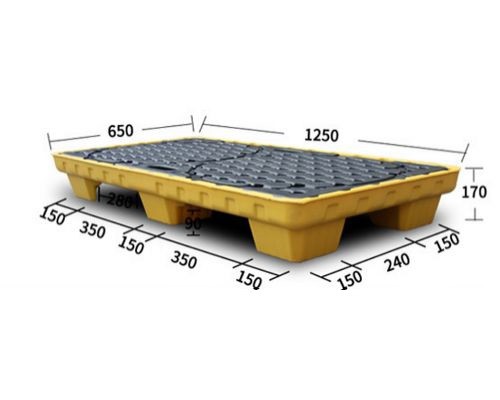
- Dimensions: 1250 x 650 x 170 mm
- Spill Capacity: 32 L / 11 US gal
- Loading Capacity: Static Load: 2000 kg | Dynamic Load: 600kg
- Note: Suitable for use with forklifts or hydraulic pallet jacks.
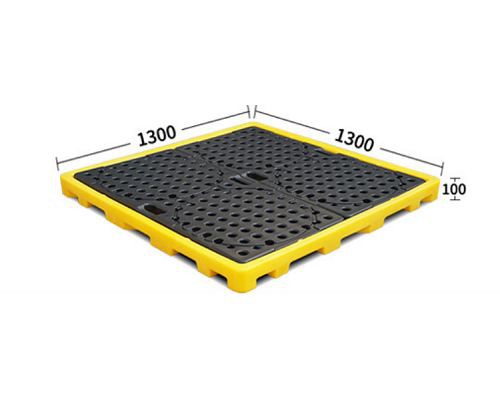
- Dimensions: 1300 × 1300 × 100 mm
- Spill Capacity: 80 L / 21 US gal
- Loading Capacity: Static Load: 2600 kg | Dynamic Load: 800 kg
- Note: Suitable for hydraulic pallet jacks and motorized forklifts.
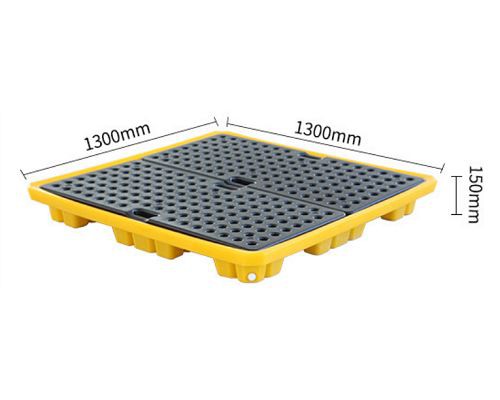
- Dimensions: 1300 × 1300 × 150 mm
- Spill Capacity: 120L / 32 US gal
- Loading Capacity: Static Load: 2600 kg | Dynamic Load: 1200 kg
- Note: Suitable for motorized forklifts and 685-series hydraulic pallet jacks.
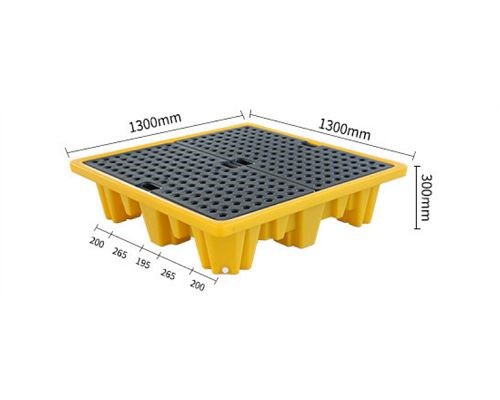
- Dimensions: 1300 × 1300 × 300 mm
- Spill Capacity: 280 L / 62 US gal
- Loading Capacity: Static Load: 3000 kg | Dynamic Load: 1200 kg
- Note: Suitable for hydraulic pallet jacks and motorized forklifts.
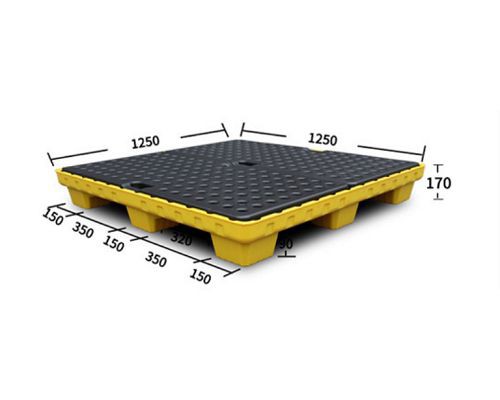
- Dimensions: 1250 × 1250 × 170 mm
- Spill Capacity: 55 L / 14 US gal
- Loading Capacity: Static Load: 3000 kg | Dynamic Load: 1200 kg
- Note: Suitable for hydraulic pallet jacks and motorized forklifts

- Dimensions: 1300 × 1300 × 150 mm
- Spill Capacity: 150L / 39 US gal
- Loading Capacity: Static Load: 3000 kg | Dynamic Load: N/A
- Note: Not suitable for hydraulic pallet jacks and motorized forklifts
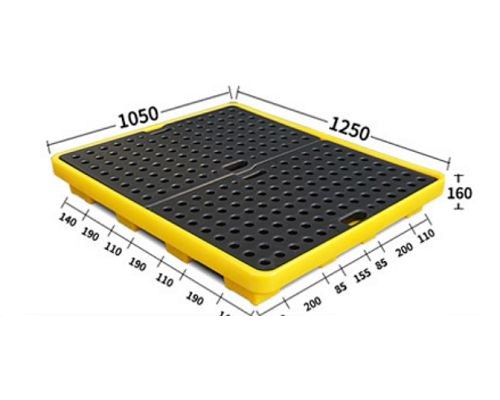
- Dimensions: 1250 × 1050 × 160 mm
- Spill Capacity: 80 L / 21 US gal
- Loading Capacity: Shelf Load Capacity: 400 kg | Dynamic Load: 1000 kg
- Note: Suitable for hydraulic pallet jacks and motorized forklifts
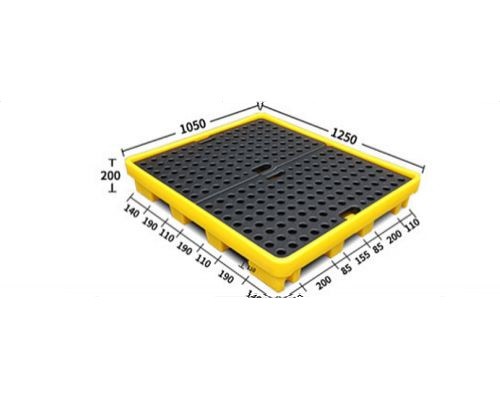
- Dimensions: 1250 × 1050 × 200 mm
- Spill Capacity: 120 L / 32 US gal
- Loading Capacity: Shelf Load Capacity: 600 kg | Dynamic Load: 1200 kg
- Note: Suitable for hydraulic pallet jacks and motorized forklifts
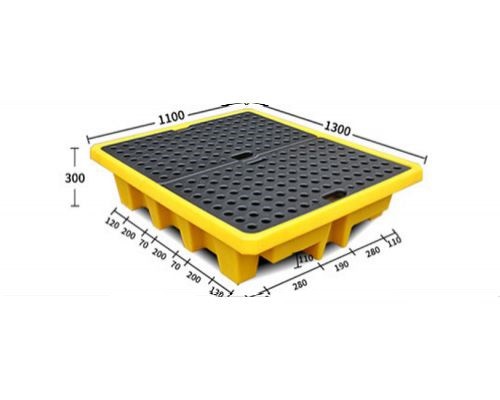
- Dimensions: 1300 × 1100 × 300 mm
- Spill Capacity: 200 L / 52 US gal
- Loading Capacity: Static Load: 3000 kg | Dynamic Load: 1500 kg
- Note: Suitable for hydraulic pallet jacks and motorized forklifts
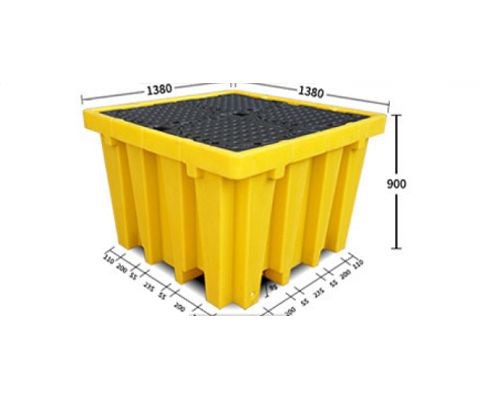
- Dimensions: 1380 × 1380 × 900 mm
- Spill Capacity: 1300 L / 343 US gal
- Loading Capacity: Static Load: 3000 kg | Dynamic Load: 1500 kg
- Note: Suitable for hydraulic pallet jacks and motorized forklifts
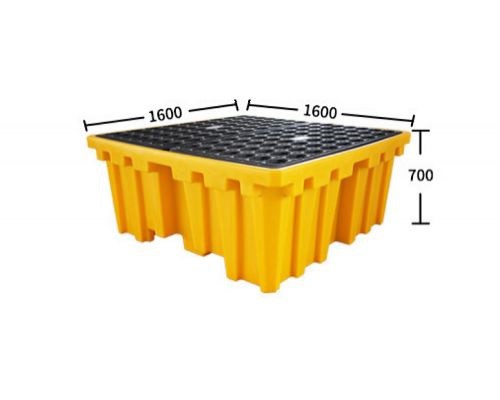
- Dimensions: 1600 × 1600 × 700 mm
- Spill Capacity: 1100 L / 290 US gal
- Loading Capacity: Static Load: 4000 kg | Dynamic Load: 1500 kg
- Note: Suitable for motorized forklifts and 685-series hydraulic pallet jacks.
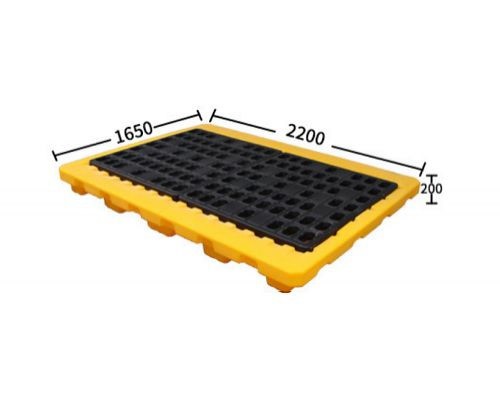
- Dimensions: 2200 × 1650 × 200 mm
- Spill Capacity: 240 L / 64 US gal
- Loading Capacity: Static Load: 4000 kg | Dynamic Load: N/A
- Note: Suitable for 685-series hydraulic pallet jacks and motorized forklifts.
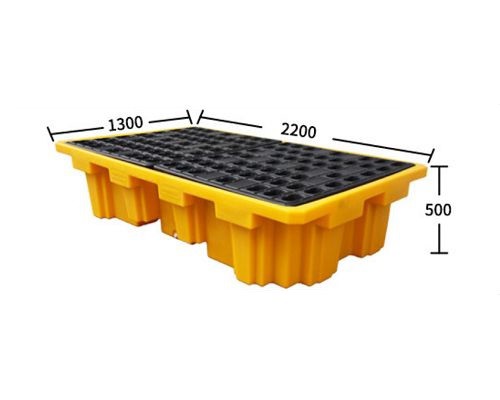
- Dimensions: 2200 × 1300 × 500 mm
- Spill Capacity: 1100 L / 290 US gal
- Loading Capacity: Static Load: 4000 kg | Dynamic Load: N/A
- Note: Suitable for 685-series hydraulic pallet jacks and motorized forklifts.
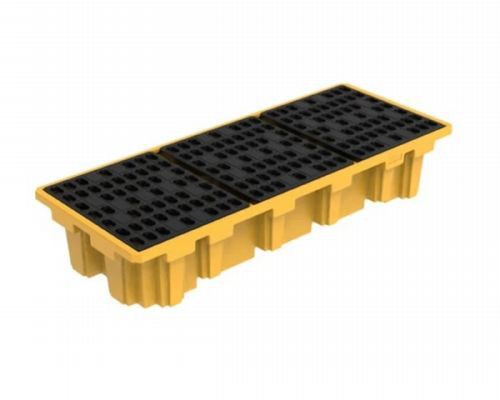
- Dimensions: 3280 x 1300 x 580mm
- Spill Capacity: 1500 L
- Loading Capacity: Static Load : 300kg | Dynamic Load: N/A
- Note: Suitable for hydraulic pallet jacks and motorized forklifts
Contact us for more information on spill containment pallet sizes and capacity charts.
Spill Pallet Materials & Manufacturing
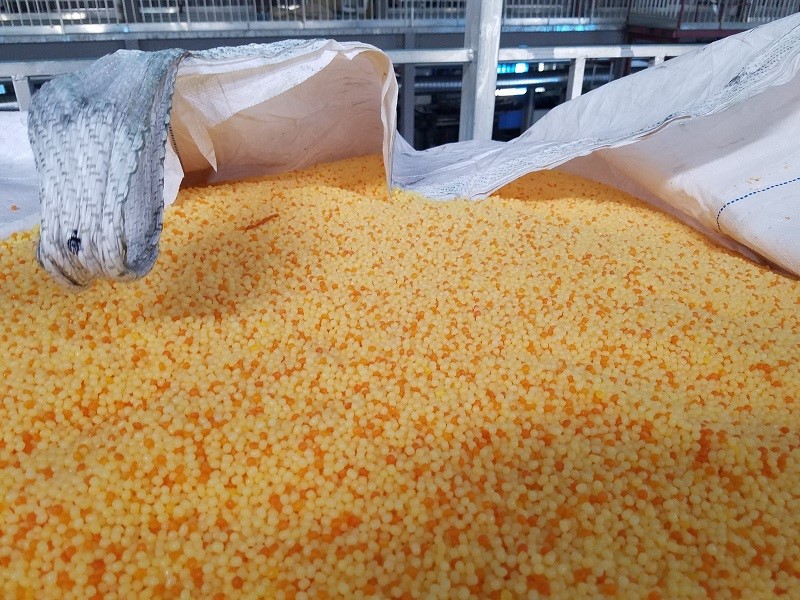
Poly spill pallets are typically made from high-density polyethylene (HDPE) or linear low-density polyethylene (LLDPE), both of which offer strong resistance to chemicals and environmental conditions.
• HDPE (High-Density Polyethylene)
Known for its high strength and rigidity, HDPE provides excellent load-bearing capacity and structural stability. It is widely used for heavy-duty spill pallets that require durability and long service life.
• LLDPE (Linear Low-Density Polyethylene)
LLDPE offers greater flexibility and impact resistance compared to HDPE. It performs well in applications where pallets may be exposed to frequent handling, impacts, or temperature variations.
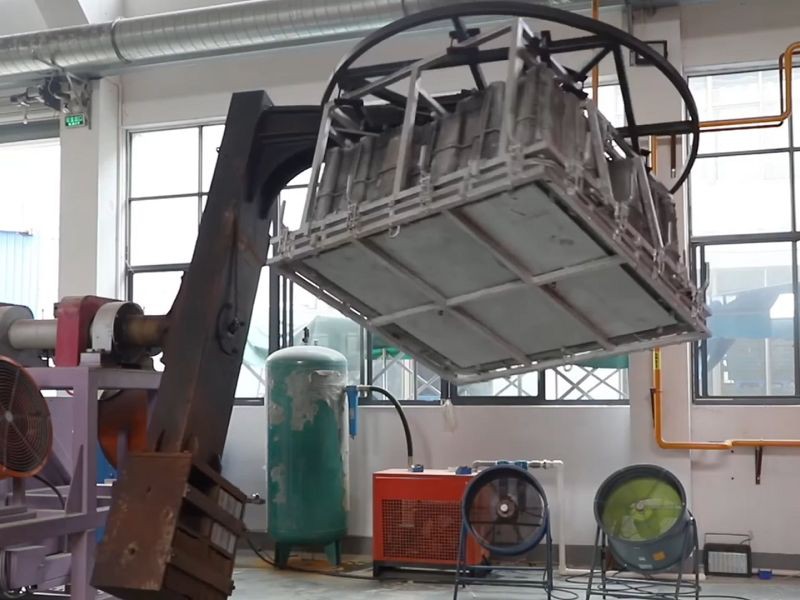
Our spill containment pallets are primarily produced using two manufacturing methods: injection molding and rotational molding.
• Injection Molding
Injection molding involves using an injection molding machine to inject HDPE raw materials into a mold; the mold is then closed, and the material is extruded and formed to create the desired shape.
• Rotational Molding
Rotational molding involves introducing LLDPE raw materials into a mold, followed by a process of controlled heating and shaping.
Spill Pallet Compliance & Regulations
Spill containment pallets play a critical role in the safe storage of hazardous liquids, while also helping businesses comply with various environmental and workplace safety regulations. In many regions, failing to properly contain chemicals, oils, or other hazardous substances can lead to severe environmental damage, legal penalties, and operational risks. Therefore, using regulation-compliant spill containment pallets is not only an environmentally responsible measure for businesses but also often a mandatory legal obligation.
Key Regulations You Should Know
United States (EPA, SPCC, OSHA)
In the U.S., spill containment is governed by several key regulations:
- EPA (Environmental Protection Agency): Requires proper containment for hazardous substances to prevent environmental pollution
- SPCC (Spill Prevention, Control, and Countermeasure): Mandates secondary containment for oil storage systems
- OSHA (Occupational Safety and Health Administration): Focuses on worker safety and proper handling of hazardous materials
The 110% Rule Explained
One of the most widely applied standards in spill containment is the 110%
rule. This rule requires that the spill pallet's sump capacity must
be able to hold:
• 100% of the volume of the largest container, plus
• 10% of the total volume of all containers combined
For example, if you store four 200-liter drums, the spill pallet must
have sufficient capacity to contain at least 220 liters.
How to Ensure Your Spill Pallet Is Compliant
To ensure your spill pallet meets regulatory requirements, consider the following factors when selecting a product:
- Sump Capacity: Must meet or exceed the 110% containment rule
- Load Capacity: Should support the total weight of fully loaded drums or containers
- Material Compatibility: Polyethylene pallets are ideal for corrosive chemicals, while steel may be suitable for certain industrial applications
- Design Features: Options such as removable grating, drain systems, and forklift access can improve safety and usability
- Certification & Testing: Check whether the product meets relevant industry standards or has been tested for compliance
Choosing the right compliant spill pallet not only ensures regulatory adherence but also protects your facility, employees, and the environment.
How to Choose the Right Spill Pallet
Selecting the right spill pallet is essential to ensure safety, regulatory compliance, and efficient handling of hazardous liquids. The ideal choice depends on several key factors, including container type, capacity requirements, and operating environment.
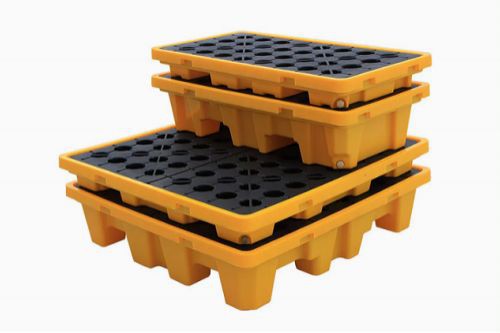
Identify the Type and Number of Containers
Start by determining what kind of containers you need to
store:
• Drums (e.g., 55-gallon / 200L) → Choose 2-drum or
4-drum spill pallets
• IBC tanks → Require dedicated IBC spill pallets
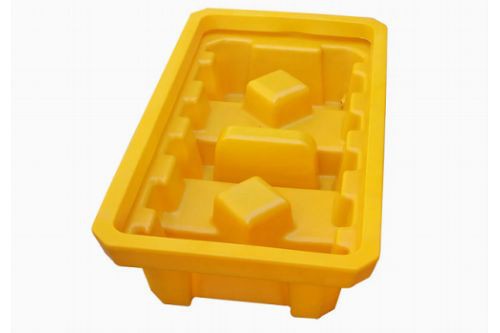
Check Sump Capacity and Compliance Requirements
Sump capacity is one of the most critical factors when choosing a spill pallet. It must comply with industry regulations such as the 110% rule, which requires the pallet to contain at least 110% of the largest container's volume.
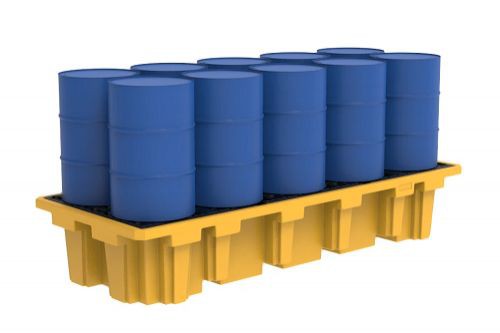
Evaluate Load Capacity
In addition to spill containment capacity, the load-bearing capacity of the pallet must also be ensured. You need to consider its static load capacity to meet requirements. If the pallet is to be moved by forklift, its dynamic load capacity must also be taken into account. Failing to consider load-bearing capacity when selecting a pallet can create safety hazards.
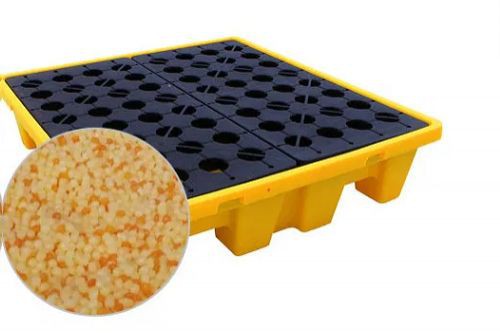
Choose the Right Material
When selecting a spill containment pallet, it is also essential to consider the materials used in its construction; manufacturers typically utilize HDPE for this purpose. HDPE spill containment pallets are suitable for use with corrosive chemicals, acidic substances, and in harsh environments, thereby meeting a wide range of storage requirements.
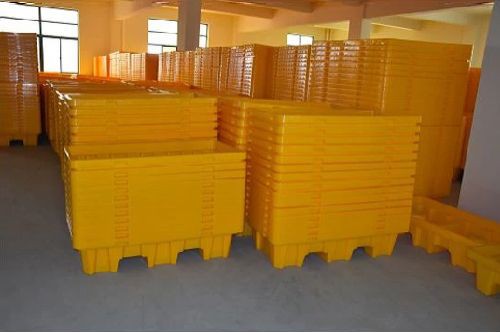
Consider the Operating Environment
Environmental conditions can have a significant impact on
safety and durability. When procuring spill containment pallets, it is essential
to consider where and how they will be utilized:
• Indoor Use: Standard models are typically sufficient to
meet requirements.
• Outdoor Use: It is recommended to select pallets
featuring UV resistance or equipped with protective covers.
• Space Constraints: Opt for a low-profile design to
facilitate the handling of drummed materials.
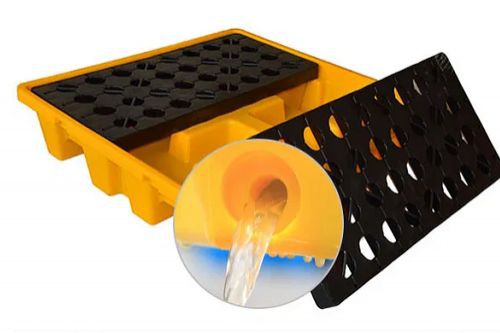
Look for Functional Design Features
When purchasing spill containment pallets wholesale, it
is also necessary to consider the pallets' additional features:
• Removable grates for easy cleaning
• Built-in drain ports for convenient liquid drainage
• Forklift pockets to facilitate handling operations
• Non-slip surfaces to enhance safety
Spill Pallet Maintenance & Cleaning
Regular maintenance and cleaning of spill containment trays ensure their long-term usability, prevent secondary contamination, and help maintain a safe working environment.
Routine Inspection
Spill pallets should be inspected regularly to ensure they remain in good working condition. Key areas to check include:
- Inspect the bottom and side walls of the spill pallet for cracks or structural damage.
- Check the condition of the grating to ensure it is secure and free from deformation.
- Inspect the sump for any signs of leaks or blockages.
- Check for any signs of chemical corrosion or material degradation.
Cleaning After Spills
In the event of a spill involving liquids, cosmetics, or similar items during transport, it is essential to immediately follow proper safety protocols to clean the pallet and prevent the creation of safety hazards.
- Remove the containers and safely transfer any residual liquid.
- Use appropriate absorbent materials to collect the spilled substance.
- Depending on the type of chemical involved, use a compatible cleaning agent to clean the surface.
- Dispose of waste materials in accordance with local environmental regulations.
When handling hazardous chemicals, always adhere to your facility's safety guidelines and wear appropriate Personal Protective Equipment (PPE).
Preventive Maintenance Tips
To extend the lifespan of your spill pallet and reduce maintenance frequency:
- Avoid exceeding the rated load capacity
- Use pallets compatible with the stored chemicals
- Keep the sump area free from debris and residue buildup
- Store pallets in suitable environments (e.g., avoid prolonged UV exposure if not UV-resistant)
When to Replace a Spill Pallet
Even with proper maintenance, spill pallets should be replaced when:
- Structural damage compromises containment capability
- The sump no longer holds liquid effectively
- Material degradation affects chemical resistance
- The pallet no longer meets regulatory requirements
Why Source Spill Pallets Wholesale Directly from Manufacturers
Sourcing spill containment pallets directly from the manufacturer offers distinct advantages in terms of cost control, customization, quality assurance, and supply chain management. For businesses seeking to make bulk purchases or establish long-term partnerships, collaborating directly with the manufacturer delivers enhanced value and flexibility.
Competitive Pricing Without Middlemen
By sourcing directly from the manufacturer, you can eliminate the intermediary costs associated with distributors or trading companies. This enables you to secure more competitive pricing for spill containment pallets, particularly for large-volume orders.
Greater Customization Options
Manufacturers can offer tailored solutions based on your specific requirements, including:
- Custom sizes and sump capacities
- Different material formulations (e.g., HDPE or LLDPE)
- Design modifications for specific applications
Consistent Quality and Material Control
When manufacturing spill pallets, manufacturers implement rigorous controls over raw materials, production processes, and quality standards. For instance, ENLIGHTENING PALLET-a leading Chinese manufacturer of plastic pallets-conducts a series of quality inspections (such as impact testing) before products leave the factory; furthermore, they strictly monitor the load-bearing capacity of the pallet grates to ensure their performance meets established standard requirements.
Stable Supply and Faster Lead Times
Many spill pallet suppliers-such as ENLIGHTENING PALLET-operate their own manufacturing facilities to produce spill pallets. Typically, they maintain ample inventory to ensure supply, resulting in relatively short delivery times. Furthermore, they are capable of fulfilling large-volume orders on schedule.
Technical Support and Product Expertise
Manufacturers have in-depth knowledge of their products and can provide expert guidance on:
- Selecting the right spill pallet for your application
- Compliance with industry regulations
- Maintenance and usage best practices
This ensures you make informed purchasing decisions and avoid costly mistakes.
Long-Term Partnership Value
Establishing a direct relationship with a manufacturer enables long-term cooperation, including:
- Better pricing for repeat orders
- Priority production scheduling
- Ongoing product improvements and support
How to Choose a Reliable Spill Pallet Manufacturer
Choosing a reliable spill pallet manufacturer is essential to ensure product quality, regulatory compliance, and long-term supply stability. With many suppliers in the market, understanding what to look for can help you make the right decision and avoid costly risks.
Manufacturing Experience and Expertise
An experienced manufacturer is more likely to understand industry requirements, material performance, and application needs.
Look for:
- Years of experience in spill containment products
- Proven expertise in materials such as HDPE and LLDPE
- Familiarity with industry standards and regulations
Material Quality and Production Capabilities
The quality of a spill pallet depends heavily on the materials used and the manufacturing process.
A reliable manufacturer should:
- Use high-quality polyethylene (HDPE/ LLDPE) or properly treated steel
- Apply advanced manufacturing processes such as rotational molding
- Maintain consistent production standards
Quality Control and Testing
Strict quality control is critical to ensure safety and durability.
Check whether the manufacturer conducts:
- Load capacity testing
- Leak and sump integrity testing
- Material inspections
Consistent testing ensures the product meets performance and compliance requirements.
Compliance with Regulations
A trustworthy manufacturer should understand and meet relevant environmental and safety regulations, such as:
- EPA and SPCC requirements
- OSHA safety standards
- The 110% containment rule
Customization and Product Range
Different industries and applications require different spill containment solutions.
A reliable manufacturer should offer:
- A wide range of products (2 drum, 4 drum, IBC spill pallets)
- Customization options for size, capacity, and design
- Flexibility to meet specific project requirements
Lead Time and Supply Stability
For bulk orders or ongoing procurement, stable supply is essential.
Consider whether the manufacturer can provide:
- Consistent production capacity
- Reliable delivery schedules
- Fast response to urgent or repeat orders
Why Choose ENLIGHTINGE PALLET As Your Spill Pallets Manufacturer
Partnering with the right spill pallet manufacturer ensures quality, compliance, and long-term reliability. Here's why businesses worldwide choose us for their spill containment needs.
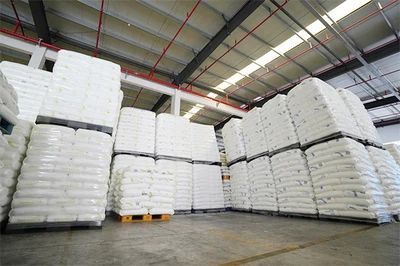
High-Quality HDPE & LLDPE Raw Materials
As a manufacturer of spill containment pallets, we operate our own production facility. We source premium HDPE and LLDPE materials to produce spill pallets. All raw materials undergo a series of inspections prior to production to ensure they meet manufacturing standards.
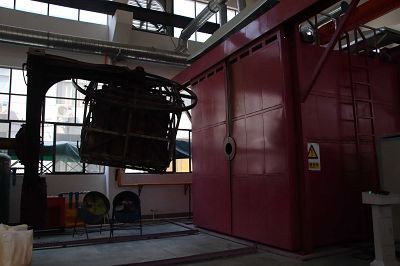
Rich Production Experience
We have 26+ years of experience in plastic pallet manufacturing. We use rotational molding technology to produce secondary spill pallets, ensuring stable leak-proof performance and consistent product quality across all batches.
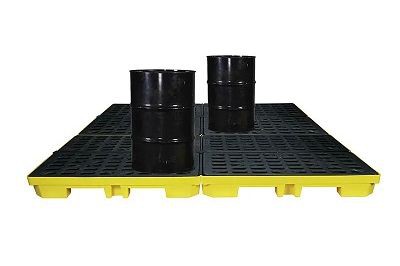
Compliance and Safety Focus
All our spill pallets comply with global spill containment regulations, including EPA, OSHA, and the 110% containment rule. By choosing our spill pallets, businesses can reduce operational risks and create a safer storage environment for hazardous liquids.
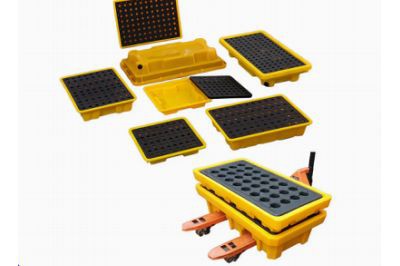
Wide Product Range & Customization
We offer spill pallets for 2 drums, 4 drums, and IBC tanks to meet various application needs. We can also customize the size, liquid retention capacity, and material of spill pallets according to customer requirements. With our flexible service capabilities, we ensure to provide you with customized solutions that perfectly fit your specific needs.
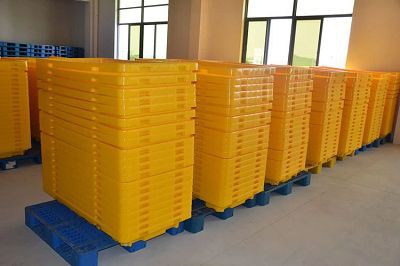
Reliable Supply & Responsive Support
We own and operate our own spill containment pallet factory, equipped with over 60 production lines to maintain ample inventory-sufficient to fulfill large-volume orders. Furthermore, we offer short lead times and a three-year warranty, ensuring that we provide our customers with a comprehensive, one-stop procurement solution.
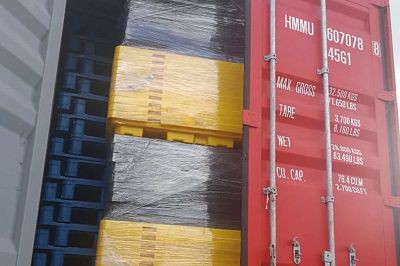
Trusted by Global Clients
Our spill pallets are trusted by businesses worldwide and widely used in chemical storage, oil and fuel storage, industrial manufacturing, and warehousing. To date, we have exported to 100+ countries and regions and served 18,400+ customers.
FAQ
Q: Which industries typically use spill containment pallets?
A: Spill containment pallets are commonly used in industries such as chemical processing, pharmaceuticals, oil and gas, and hazardous materials storage-sectors where spill control is critical for safety and compliance.
Q: What is the expected service life of a spill containment pallet?
A: Generally speaking, the service life of a spill containment pallet is approximately 5 to 10 years.
Q: How many oil drums can a nestable plastic spill pallet with a 120L sump capacity hold?
A: It can hold two standard 55 gallon oil drums.
Q: Can the low-profile IBC spill pallet accommodate two IBC tanks?
A: This model accommodates one IBC tank; a dual-tank model is available if required.
Q: Can I mix different types of containers on one spill pallet?
A: Yes, but you must ensure the total volume does not exceed the pallet's sump capacity. Always check compatibility of container types to avoid instability.
Q: Are spill pallets stackable?
A: Most spill pallets are not stackable when loaded, as this may compromise safety. Empty pallets may be nestable depending on the design.
Q: Are spill pallets recyclable?
A: Polyethylene spill pallets can typically be recycled at the end of their life.
Q: Can I get samples before placing a bulk order?
A: We are pleased to provide you with free samples of our spill containment pallets for quality evaluation; however, the shipping costs must be borne by you.
Q: Can you print our logo on the pallet?
A: Yes, we can print your logo on the spill containment pallet according to your requirements. We offer two options for you to choose from: screen printing or embossing.
Q: What is the lead time?
A: We maintain ample stock; typically, the lead time is 15 days after receiving a 50% deposit.
Get a Quote for Spill Pallets
Made of high-quality high-density polyethylene (HDPE), our pallets feature a non-slip base and a built-in drain outlet for easy disposal of liquids leaked during transportation or storage.
Contact us today to discuss your specific requirements and get a quote for our spill containment pallets.
Your Leading Sock Manufacturer in China
Get fast, reliable support from an experienced OEM & ODM sock manufacturer. Have a project or questions? Complete the form and we'll respond promptly.
Request A Quote
Recommended Related Products
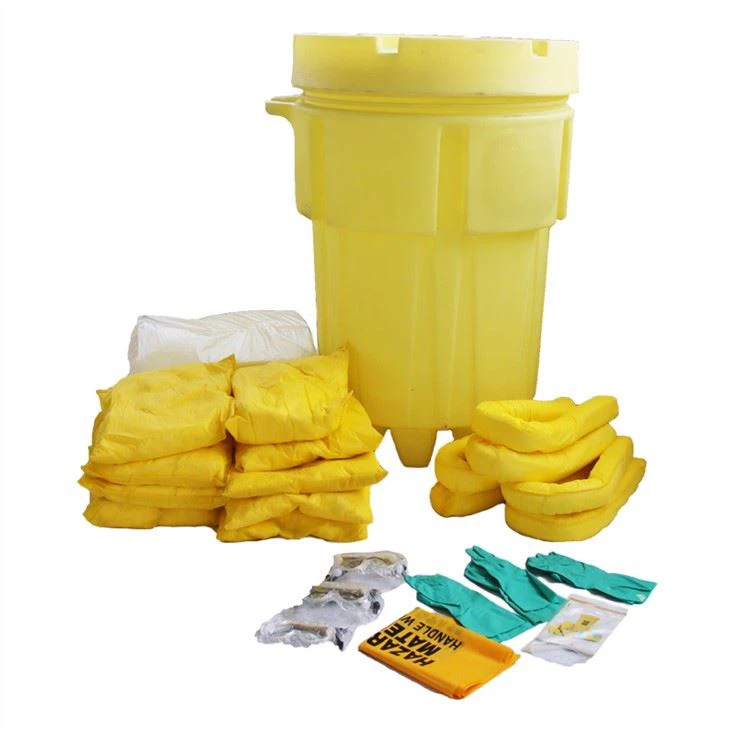
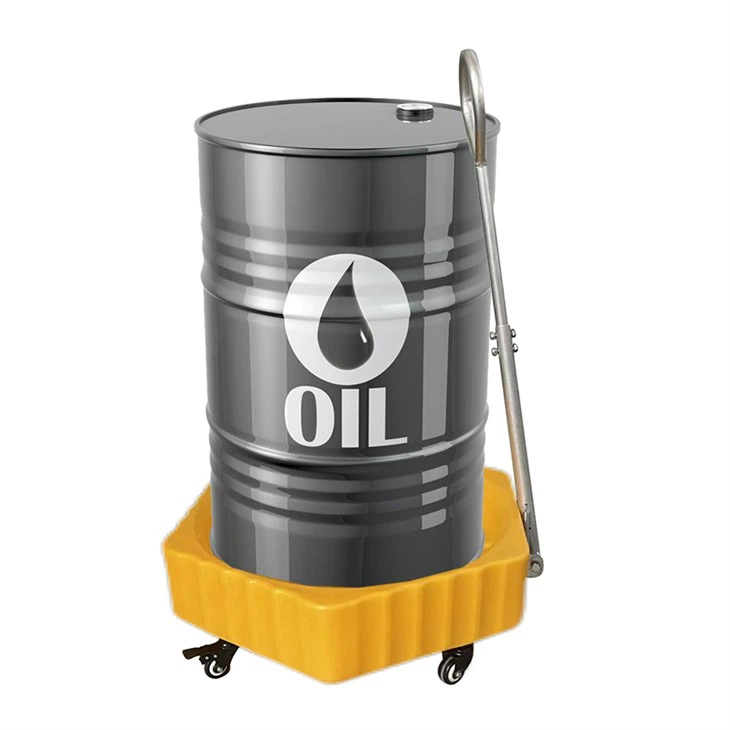
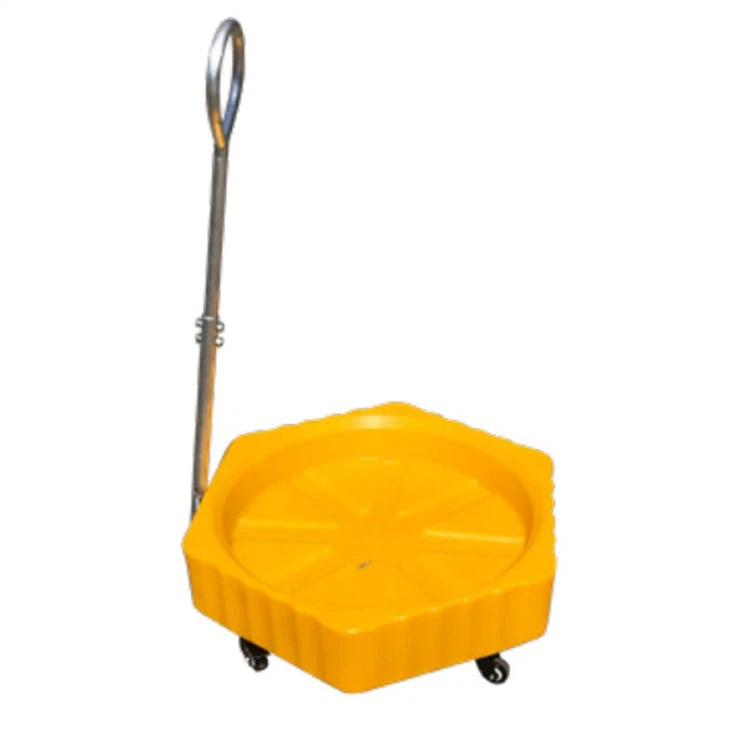
As a supplier of spill containment pallets, in addition to offering pallets in various capacities, we also provide complementary products-such as spill response kits, drum dollies, and hand trucks-to help you more efficiently handle and transport hazardous materials, including cosmetics and oils.