Top 5 Tips for Choosing Durable and Affordable Wholesale Trash Cans
Leave a message
Introduction
Buyers of wholesale trash cans often face common challenges: inadequate material selection leading to insufficient durability, mismatched capacity leading to waste, and inconsistent or impractical colors and features, ultimately leading to higher costs. Therefore, this article will focus on the materials, capacity, features, colors, and reliable suppliers to consider when purchasing trash cans, providing practical purchasing tips.

Choosing the Right Material-The Core Guarantee of Durability
When purchasing wholesale garbage cans, the material is the primary factor determining durability and long-term cost-effectiveness. If the wrong material is chosen, even improved capacity and functionality can't compensate for insufficient durability or substandard compliance. For example, using ordinary plastic bins in medical settings may not meet hygiene standards; using untreated metal bins outdoors will quickly be scrapped due to rust.

• High-density polyethylene (HDPE) trash cans: They offer excellent cold resistance, maintaining strength in temperatures ranging from -20°C to 60°C. They are suitable for outdoor use and for use with sanitation vehicles.
• Polypropylene (PP) trash cans: They offer greater rigidity and heat resistance, making them suitable for indoor use, kitchens, and medical settings.
For medical waste disposal or special sanitary environments, medical-grade HDPE/PP should be selected. They offer high chemical and biological safety, heat resistance, and sterilization performance, making them more compliant with cleaning and cross-contamination prevention requirements.

• Stainless steel trash cans: Naturally rust- and corrosion-resistant, they offer both aesthetic appeal and ease of cleaning. They are commonly used in shopping malls, office buildings, and public spaces.
• Carbon steel trash cans (hot-dip galvanized or powder-coated): Made from carbon steel, they are hot-dip galvanized or electrostatically sprayed to create a rust-resistant protective layer. They are cost-effective and suitable for outdoor sanitation or construction site use.
Matching Capacity – Cost Control for Affordable Procurement
Capacity mismatches directly increase "hidden costs": too little capacity means frequent collections and extra labor; too much capacity means extra storage space and extra costs. Wholesale trash cans require capacity matching to ensure a perfect match between procurement costs and usage needs.

High-Frequency Use Scenarios
In places like restaurants, shopping malls, and office buildings, trash is generated daily. For restaurants and shopping malls, a 120L-240L trash can can hold a day's worth of trash, reducing the number of collections. For office buildings and convenience stores, a 60L-120L capacity is more suitable, fitting easily into corners or aisles without compromising business and pedestrian space.

Centralized Collection Scenarios
Communities and scenic spots have concentrated waste collections and large single collection volumes, requiring sufficient capacity. Therefore, 240L-1100L trash cans should be purchased. A single large bin can replace multiple smaller ones, saving space and reducing collection frequency. It also meets peak usage needs and facilitates connection with collection vehicles.

Small-Scale Scenarios
For small spaces like workstations and clinics, where waste volumes are low, purchasing 10L-30L plastic trash cans can meet the needs of storing small amounts of waste. Used in conjunction with centralized recycling bins, this avoids waste caused by over-utilizing large trash cans.
Select the Right Functionality – Meet Your Pain Points
Functional design directly impacts the actual user experience of a trash can. Choosing a plastic trash can with the right configuration will ensure every penny is spent effectively.
• Foot pedal: Hands-free operation prevents direct contact with trash and improves hygiene standards. This is particularly suitable for use in high-hygiene settings such as restaurants and healthcare facilities. Enlightening Pallet's medical trash cans are all equipped with a foot pedal to prevent direct contact by medical staff, reducing the risk of cross-infection.
• Inner bucket design: The inner bucket can be removed separately, making it easier to change trash bags and clean them. It also protects the outer bucket from contamination and wear, extending its service life.
• Sealing lid: Prevents spillage and effectively controls odor spread, making it suitable for outdoor use, parks, or hospitals.
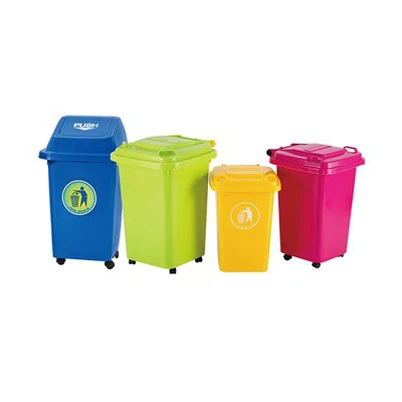
• Wheels and handles: Easy to move and transport, suitable for large-capacity trash cans or those that require frequent transportation. Enlightening Pallet's two-wheeled trash cans are ideal for locations with limited space and high mobility requirements.
• Wheel locks: Prevent he waste bin from sliding on slopes or in windy conditions, increasing safety. The Enlightening Pallet's four-wheeled waste bin has foot brakes on two of the four wheels to prevent accidental movement.
• Lift bar/lift pedal: Adjusts the tilt angle of the trash can, making it easier to lift and dump trash.
Choosing the Right Color – Considering Compliance, Classification, and Scenario Adaptation
Many buyers overlook the importance of color. However, color not only impacts aesthetics but also relates to classification compliance, context, and efficiency.

Color Compliance and Segmentation Standards
• International Mainstream Standards: Follow universally recognized color standards for classification, such as blue (recyclables), green (food waste), red (hazardous waste), and black (other waste). Different regions also have specific requirements. For example, brown indicates food waste in Europe, while blue is commonly used for paper recycling in the United States.
• Specific Scenarios:
Medical Scenarios: Yellow for medical waste and gray for household waste, in compliance with WHO and national hygiene standards.
Chemical Industry Zones: Orange for hazardous waste, with warning signs for enhanced safety and visibility.
Color and Scenarios Adaptation
• Public Scenarios: Choose highly recognizable colors (such as standard classification colors) to facilitate quick user identification and improve delivery accuracy.
• Commercial Scenarios: Custom brand colors are supported to blend in with the environment and enhance brand recall.
• Outdoor Scenes: Choose UV-resistant and fade-resistant colors to avoid fading in the sun and extend the life of appearance.
Choosing the Right Partner – Guaranteed Delivery and Long-Term Partnership
The biggest concerns for wholesale trash can businesses are "unscheduled delivery and lack of after-sales support." The key to this step is choosing a partner with qualified qualifications, timely responses, and the potential for a long-term partnership.
Supplier Qualifications and Production Capacity
Prioritize suppliers with quality and environmental certifications to ensure product reliability and stable delivery. Furthermore, suppliers with production capacity and adequate inventory can mitigate supply risks and ensure that bulk orders are completed on schedule.
01
Service and Support Capabilities
Excellent suppliers must not only have production capabilities but also provide comprehensive service and support, including remote production progress tracking and necessary compliance documentation, to help businesses reduce uncertainty in the procurement process.
02
After-Sales Support
Suppliers should be able to quickly address product issues or shipping damage, provide warranty services, and offer remote/on-site support to ensure that any issues encountered during use are resolved promptly.
03
Advantages of Long-Term Partnership
Establishing long-term partnerships with reliable suppliers can significantly improve procurement efficiency. Suppliers can also respond quickly to subsequent restocking or specification adjustments. Furthermore, long-term partnerships often offer preferential pricing, customized services, and recycling options for used barrels, further reducing procurement costs.
04
Conclusion
By applying five key techniques-selecting the right material, matching capacity, configuring features appropriately, matching colors, and choosing a reliable supplier-you can achieve a durable and affordable purchasing solution.
Enlightening Pallet is your reliable partner. We have strong manufacturing capabilities, strict quality control, and comprehensive service and support. We sell high-quality plastic trash cans to meet your business's wholesale needs. Please contact us.