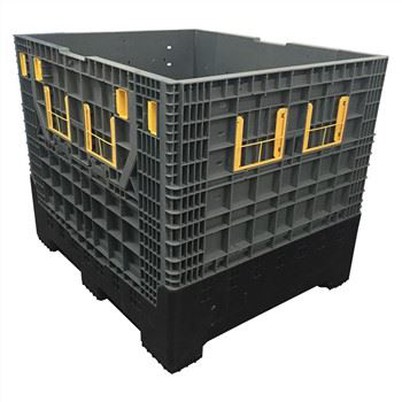
What is a plastic pallet
Leave a message
Introduction to plastic pallets
Plastic pallets are a flat transport structure used to support goods in a stable manner while being lifted or moved by equipment such as forklifts, pallet jacks, or conveyors. They play a critical role in logistics, warehousing, and supply chain management, serving as a fundamental tool for the efficient handling, storage, and transportation of products.

Types Of Plastic Pallets
Classification by material
HDPE (High-density polyethylene)
PE plastic pallets have good flexibility and low-temperature resistance, and are particularly suitable for the storage and transportation of frozen and refrigerated foods. High-density polyethylene (HDPE) has excellent impact resistance and mechanical properties, is suitable for various molding processes, and is widely used in chemical, food and other industries.
PP (polypropylene)
PP plastic pallets are known for their good impact resistance and chemical corrosion resistance, and are suitable for the production of light to medium-duty pallets. PP plastic pallets have excellent thermal stability and are usually used in special environments with higher temperatures. Its operating temperature range is approximately between -20°C and 120°C, which is suitable for most normal temperature and low temperature storage environments.
By Structure

Single-sided
Single-sided plastic pallets usually have only one side that can be used to carry goods, and the other side is designed to be in contact with the ground or cooperate with handling equipment. This design makes the pallet more targeted when used and can better meet specific usage needs.

Grid
The surface of the Grid Plastic Pallet presents a grid-like structure. This design makes the pallet relatively light in weight and has good air permeability and drainage. The size and shape of the grid can be designed according to different needs. Some grids are smaller, suitable for placing small items; some grids are larger, which is convenient for the fork tines of the forklift to insert.

Double-sided
As the name suggests, a double-sided plastic pallet is a pallet that can be used on both sides and is more suitable for multi-layer stacking. It is generally equipped with a forklift and is not suitable for ground turnover with a hydraulic truck.

Flat
The surface of the flat plastic pallet is flat and smooth, which allows the goods to be placed on it stably and is not prone to sliding or tilting. The sturdy and stable flat pallet is very suitable for transporting small or sensitive items.
By load capacity

Light
The Lightweight plastic Pallets usually has a simpler structure, relatively less materials, and a lighter overall weight. The design focuses more on portability and space utilization efficiency. It is mainly used in scenarios where the load weight requirement is not high and frequent handling or stacking is required, such as cargo turnover and temporary storage in small warehouses, supermarkets, express logistics and other industries.

Medium
The structure of medium-sized plastic pallets is relatively more stable, and the material strength and toughness are also good, and it can withstand a certain degree of weight and pressure. Its size and specifications are relatively diverse and can be selected according to different usage requirements. It is suitable for the storage and transportation of products in light industries such as food, postal services, medicine and health.

Heavy
Heavy-duty plastic pallets usually use thickened materials or special structural designs to enhance their load-bearing capacity. In appearance, heavy-duty plastic pallets are generally larger in size and thicker overall. It is mainly used for the storage and transportation of products such as petrochemicals and heavy industries. The goods in these industries are usually heavier and larger in size, and the load-bearing capacity and stability of the pallets are very high.
By Size Standard
Euro Standard (1200 x 800 mm): Commonly used across Europe for efficient logistics.
American Standard (48 x 40 inches): Widely adopted in North America for retail and distribution.
Japanese Standard (1100 x 1100 mm): Popular in Japan for industrial applications.
Plastic Pallets Advantages
Plastic pallets are highly resistant to cracking, splintering and corrosion, and last longer than wooden or metal pallets. This durability reduces replacement costs and improves overall cost-effectiveness.
Made from non-porous materials such as HDPE or PP, plastic pallets are easy to clean, disinfect, and are resistant to moisture, bacteria, and insects. This makes them ideal for the food, pharmaceutical, and chemical industries, which have strict hygiene requirements.
Plastic pallets are generally lighter than wooden or metal alternatives, which reduces shipping costs and makes handling easier in manual or automated systems.
Most plastic pallets are recyclable and can be reprocessed into new pallets, supporting the circular economy and helping companies achieve their environmental goals.
Plastic pallets can withstand extreme temperatures, humidity, and chemical exposure due to their material properties, making them ideal for indoor and outdoor use across a variety of industries.
Plastic Pallets Manufacturing
product key technologies

Injection Molding
Injection molding involves transferring molten plastic material under high pressure into a mold where it solidifies and cools. The molten plastic takes up the volume of the mold cavity and takes the shape of the tray in the mold. Injection molding is able to produce pallets with intricate details. In this method, molten plastic (usually HDPE or PP) is injected into the mold under high pressure. This process produces pallets that are consistent in size, strong, precise, and uniform. It is ideal for mass production of durable, heavy-duty pallets.
Blow Molding
The blow molding process uses compressed air to stretch heated plastic against the inner walls of the mold cavity. Blow molded pallets also have uniform wall thickness and higher load-bearing capacity. They also have higher strength and impact resistance than injection molded pallets.
In blow molding, the heated plastic is formed into a hollow tube (parison) and then inflated into the shape of the mold. This technology produces hollow, lightweight pallets with excellent impact resistance, often used for export and light-duty applications.

Quality control and standards during manufacturing
The manufacturing process of plastic pallets involves several critical stages, each designed to ensure the highest quality and durability of the final product.
Material Selection: The process begins with the selection of high-grade, recyclable plastic resins, typically HDPE or PP, known for their strength and environmental sustainability.
Surface Treatment: To enhance slip resistance and improve hygiene, surface treatments such as anti-slip strip welding may be applied.
Quality Control Checks: Throughout the manufacturing process, rigorous quality control measures are implemented. Each pallet is tested for load capacity, dimensional specifications, and surface integrity. This is critical to meeting industry standards.
Certification Compliance: The pallets adhere to international standards, such as ISO and ASTM, ensuring they meet safety and performance criteria.
Final Inspection and Packaging: Before shipping, a final inspection is conducted to verify that each pallet meets quality specifications. The pallets are then carefully packaged for delivery.
Plastic Pallets Applications

01
Food & Beverage Industry
Plastic pallets are widely used in the food and beverage sector due to their hygienic, easy-to-clean, and non-porous surfaces. They resist moisture, bacteria, and contaminants, making them ideal for handling perishable goods. Their compliance with FDA and HACCP standards ensures safety in food supply chains.

02
Chemical Industry
In the chemical industry, plastic pallets offer chemical resistance and durability, making them perfect for handling corrosive materials. They withstand exposure to hazardous substances and extreme temperatures, providing a safer and more efficient transport solution.

03
Pharmaceutical Industry
For the pharmaceutical sector, hygiene is paramount. Plastic pallets are made from non-toxic materials, ensuring compliance with strict cleanroom standards. They are easily sterilized, preventing contamination in handling sensitive products like medicines and medical devices.

04
Logistics & Warehousing
In logistics and warehousing, plastic pallets enhance efficiency with their standardized sizes, durability, and lightweight design. They are ideal for use in automated systems and provide better load stability during transport and storage, reducing damage to goods.
How Plastic Pallets Improve The Efficiency And Safety Of Logistics And Warehousing
Plastic pallets significantly improve cargo handling efficiency by offering standardized dimensions, which ensure smooth operations in automated systems like forklifts and conveyor belts. Their lightweight yet durable design reduces manual handling time, making loading and unloading quicker.
In terms of safety, plastic pallets eliminate risks of splinters, sharp edges, or broken nails often found in wooden pallets. Their non-slip surfaces and consistent load-bearing capacity ensure goods remain secure during transport and storage, reducing the chances of damage or accidents.
Plastic Pallets Size
ISO Standard Plastic Pallet Size
|
Dimensions in mm (W x L) |
Dimensions in inches (W x L) |
Regions most used in |
|
1016 x 1219 |
40 x 48 |
North America |
|
1000 x 2000 |
39.37 x 47.24 |
Europe, Asia |
|
1165 x 1165 |
45.9 x 45.9 |
Australia |
|
1067 x 1067 |
42 x 42 |
North America, Europe, Asia |
|
1100 x 1100 |
43.3 x 43.3 |
Asia |
|
800 x 1200 |
31.5 x 47.24 |
Europe |
Our Most Popular Plastic Pallet Sizes:
1100mm*1100mm*150mm
1200mm*1000mm*150mm
1200mm*800mm*150mm
Conclusion
Consider the benefits of using plastic pallets for your logistics and storage needs. With their superior durability, eco-friendliness, and compliance with international standards, plastic pallets offer a reliable solution to enhance your supply chain efficiency.
Elevate your operations-partner with us to explore high-quality, customizable plastic pallets that meet your specific requirements. Contact us today to discuss how we can support your business in achieving optimal performance and sustainability.