What is the difference between a pallet and a crate
Leave a message
Plastic pallets and crates can both be used to transport and store goods. Today we will mainly discuss the differences between the two to help you choose the right means of transport and storage for your goods.
What exactly is a pallet?


The pallet is the most popular and widely used method of carrying and storing freight. Pallets are typically 48" X 40" in size and may hold up to 1000 kg of any specific commodity. There are two common types of pallets: wooden pallets and plastic pallets.
Since plastic pallets are superior to wooden pallets in terms of economic efficiency, environmental protection and durability, plastic pallets have become indispensable logistics equipment in modern logistics warehousing. They are mainly made of plastic materials such as polyethylene (PE) and polypropylene (PP) through injection molding and blow molding. They can be used with logistics equipment such as forklifts and shelves to store, load and transport goods. They play a very critical role in the logistics operation process, can effectively improve logistics efficiency and management level, and ensure the safe and convenient storage and transportation of goods.
Features of Pallet
Structural features
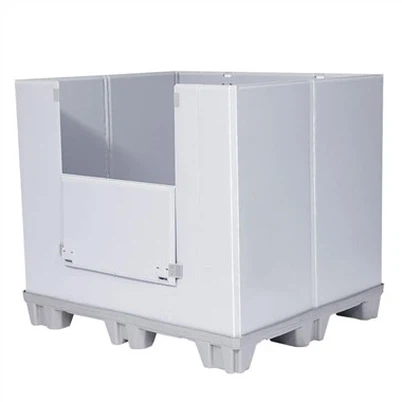
Pallets are generally composed of panels, legs (or pads), etc. Flat pallets are the most common type, with a flat panel and legs or pads at the bottom of the pallet to support the goods and allow forks of forklifts to be inserted. Column pallets add columns to flat pallets to improve the stability of cargo stacking; box pallets have side panels around them, and some also have top panels, which can better protect the goods; wheeled pallets have wheels at the bottom to facilitate moving goods within a short distance.
Functional characteristics
Corrosion resistance: Plastic pallets have good tolerance to chemicals such as acids and alkalis, and are suitable for use in factories with special environments such as chemical and food processing. For example, in a food factory, even if it comes into contact with some acidic or alkaline detergents, it will not be easily corroded.
Good moisture resistance: Plastic pallets will not deform or mold due to moisture like wooden pallets, and can maintain stable performance in a humid environment.
Easy to clean: The surface of plastic pallets is smooth and stains are easy to remove, which is very important in industries with high hygiene requirements such as food and medicine.
Recyclable: Plastic pallets have high durability and can be reused many times, reducing long-term use costs.
Application areas of pallets
The emergence of plastic pallets has many important significances. It is an ideal product to meet the needs of environmental protection. Since it can replace wooden pallets, it can effectively reduce the damage to forest resources. At the same time, it is also an inevitable product in the development of the logistics industry.
At present, with the continuous strengthening of food safety concepts and the high standards of hygiene in the pharmaceutical industry, plastic pallets are favored and sought after in the food and pharmaceutical industries due to their excellent properties such as anti-corrosion, anti-moisture, anti-rust, anti-insect, and no mildew. Not only that, plastic pallets also have the advantages of high load-bearing capacity and long service life, which makes it widely used in many fields such as chemical industry, textile, manufacturing industry, etc.
Plastic pallets play an indispensable role in the logistics links of various industries, and have effectively promoted the efficient operation and development of the entire industrial chain.
What exactly is a crate?

Crates are transport boxes and logistics boxes made of high-impact HDPE (high-density polyethylene) or PP (polypropylene) as raw materials through injection molding. They play an important role in many industries. Many companies use plastic crates to transfer finished products, semi-finished products and parts. Due to their material characteristics and production process, they can provide convenient and reliable solutions for the storage, handling and circulation of goods, effectively improving the logistics and production operation efficiency of enterprises.
Features of Crate
Durable
Plastic crates are not easy to break, rust, and can resist corrosion and deformation from most chemicals, so they can not only be used for a long time to ensure the safety of stored items, but also greatly extend their service life.
01
Lightweight
Compared with traditional wooden crates, plastic turnover crates are lighter, and the weight of a single turnover crate is small and easy to carry. It can not only reduce labor intensity, but also reduce management costs.
02
Easy to clean
The surface of plastic crates is smooth and will not produce oil stains. After use, you only need to clean it with clean water, eliminating complicated maintenance work.
03
Environmental protection
Compared with traditional wooden crates, plastic crates are more environmentally friendly. Its materials can be recycled, which helps to reduce garbage pollution and waste of resources. At the same time, plastic crates can also be recycled, reducing consumption on the environment and being more economical.
04
Application areas of pallets
Food industry
Plastic crates are widely used in the food industry. For example, in the transportation of vegetables and fruits, the crates have good air permeability, which can prevent the products from rotting and extend the shelf life. For the processing and transportation of perishable foods such as seafood and meat, plastic crates can adapt to low temperature environments and will not react chemically with food.
Pharmaceutical industry
The pharmaceutical industry has extremely high requirements for sanitary conditions. Plastic crates are ideal for drug storage and transportation due to their anti-corrosion, moisture-proof, insect-proof, and mold-proof properties.
Electronics industry
In the production process of electronic components, plastic crates can provide a clean and orderly environment, which is convenient for the classification, management and transportation of parts.
Logistics and warehousing industry
Plastic crates can also be used in conjunction with logistics equipment such as forklifts and shelves to facilitate cargo loading, handling and storage. In warehouses, crates can be stacked and stored to save space.
Which Option Is The Best For You?
Choosing between a pallet and a crate relies on the sort of goods you're delivering and what you're searching for while moving freight. Pallets are the way to go if you want a safe, stackable, and dependably trustworthy choice. Finally, if you frequently transport products that must be particularly safe and don't mind a big cargo, the crate is your best alternative.
You can utilize these alternatives to send different things, but in most circumstances, the industry standard pallet is the best and easiest solution for most of your shipping needs.
Conclusion
Choosing the right mode of transport for your goods is crucial to ensure that they reach their destination safely and efficiently. Above we mainly introduce the characteristics and application areas of pallets and crates. Understanding these two means of transport can help you make wise decisions for your transportation needs. If you have any other questions, or want to purchase pallets or crates directly, please contact ENLIGHTENING PALLET directly!