


Bulk Liquid Packaging: Applications, Benefits, And Solutions
Leave a message
Bulk liquid packaging plays an important role in industrial supply chains. Poor packaging choices can cause leaks, product loss, contamination, and higher transport costs. These problems affect both liquid manufacturers and their customers.
Bulk liquid packaging uses large-capacity containers to store and transport liquids in commercial and industrial operations. It helps manufacturers move raw materials, ingredients, and finished liquid products between suppliers, factories, and distribution centers. Common applications include food ingredients, beverages, dairy products, edible oils, and industrial liquids.

At Enlightening Pallet, I work with industrial packaging products and understand the needs of bulk material handling. I have seen how packaging affects filling, transportation, unloading, and container return. The right solution must match the liquid itself and the way a business handles its materials. In this guide, I will explain the main applications, benefits, and solutions for bulk liquid packaging.
What Is Bulk Liquid Packaging?
Many manufacturers move hundreds or thousands of liters of liquid between production sites. Small bottles and drums may not be practical for these operations. They need packaging that can handle larger volumes and work with industrial filling and unloading equipment.
Bulk liquid packaging refers to containers and packaging systems designed to store and transport large quantities of liquid products. These systems help manufacturers move raw materials, ingredients, and finished liquid products between suppliers, factories, and distribution centers.
Bulk Liquid Packaging in Industrial Supply Chains
Bulk liquid packaging connects liquid manufacturers with downstream processing companies. For example, a juice concentrate producer may fill large-capacity containers and deliver them to a beverage factory. The receiving factory then transfers the concentrate into its production tanks for further processing.
This process is also common in dairy, food ingredients, edible oils, and chemical manufacturing. Each business needs packaging that matches its filling equipment, transportation conditions, and unloading process.
Bulk Liquid Packaging vs. Small-Volume Packaging
The main difference is the amount of liquid each package can hold and how businesses handle it. Small-volume packaging usually serves retail sales, household use, and smaller commercial orders. Bulk liquid packaging serves industrial operations that need larger quantities of materials.
For example, a beverage manufacturer may receive juice in small containers for retail distribution. However, the same manufacturer may purchase juice concentrate in 1000L IBC containers for production. The larger package reduces the number of individual containers that workers need to handle.
|
Comparison |
Small-Volume Packaging |
Bulk Liquid Packaging |
|
Capacity |
Usually liters or less |
Hundreds to thousands of liters |
|
Main Users |
Retailers and consumers |
Manufacturers and distributors |
|
Handling |
Manual or small equipment |
Forklifts, pumps, and filling systems |
|
Main Purpose |
Retail storage and sales |
Industrial storage and transportation |
|
Packaging Format |
Bottles, cans, small bags |
Large-capacity containers and liquid packaging systems |
Applications of Bulk Liquid Packaging
Different industries use bulk liquid packaging to move raw materials and finished liquid products. I consider the type of liquid the most important starting point when reviewing a packaging application. Viscosity, density, temperature, chemical properties, and hygiene requirements can all affect the packaging choice.
Food Processing and Ingredients
Food manufacturers purchase liquid ingredients in large quantities for regular production. Tomato paste, fruit puree, sauces, and syrups are common examples. Suppliers need packaging that protects the ingredients and supports efficient delivery to food processing plants.
Tomato paste and fruit puree can have a thicker consistency than ordinary liquids. Buyers should check the discharge opening, liner arrangement, and unloading method to reduce product remaining inside the package. Sauces and syrups may also contain different ingredients, so material compatibility and filling conditions need attention.
For these products, I recommend checking whether the liner has suitable food-contact documentation and whether the packaging can meet the customer's filling, storage, and transportation requirements.
For food manufacturers, I recommend choosing packaging that meets the hygiene and handling requirements of each ingredient. Our collapsible IBC container for food provides a bulk packaging option for compatible liquid food products. For thicker ingredients, a foldable liquid IBC container for fruit puree can also be considered.
Beverage and Juice Industry
Juice concentrate, fruit extracts, and beverage syrups are important raw materials for beverage manufacturers. Ingredient suppliers often deliver these products to factories that blend them with water, sugar, flavors, or other ingredients.
Bulk packaging helps beverage producers receive larger batches of raw materials. It also supports regular supply between concentrate manufacturers and beverage factories. However, juice concentrates may have high Brix values and different levels of acidity. These properties can affect viscosity and handling requirements.
I recommend confirming the product concentration, filling temperature, storage conditions, and discharge method before selecting a packaging solution.
For juice concentrate suppliers, a 1000L IBC tote for juice concentrate provides a bulk packaging option for deliveries to beverage processing plants. Buyers should confirm the concentrate's viscosity, filling temperature, and liner compatibility before selecting the packaging.

Dairy Industry
The dairy industry uses bulk packaging for cream, dairy blends, yogurt bases, butterfat, and other liquid dairy ingredients. Dairy ingredient suppliers often deliver materials to ice cream manufacturers, bakeries, dessert producers, and dairy processing facilities.
These products may require refrigerated transportation and controlled storage temperatures. Some dairy ingredients also have high fat content, which can affect product residue during unloading. Buyers should check the liner material and discharge arrangement based on the actual dairy product.
I would not treat all dairy products as having the same packaging requirements. Pasteurized products, UHT ingredients, cream, and specialty dairy fats may need different handling procedures and regulatory checks.
A collapsible IBC container for dairy ingredients can support bulk deliveries of compatible dairy ingredients. Buyers should check the required storage temperature and food-contact conditions before ordering.
Liquid Egg Industry
Liquid egg processors produce liquid whole egg, egg white, and egg yolk for industrial food manufacturers. Bakeries use whole egg in cakes and other baked products. Egg white suppliers serve manufacturers of meringues and other egg-based foods. Egg yolk is used in mayonnaise, dressings, and sauces.
Liquid egg products require careful hygiene management. Processors must control filling conditions, temperature, and product contact surfaces. A food-grade PE liner can provide a direct food-contact surface when it meets the applicable requirements for the product and market.
For this application, I recommend paying particular attention to the discharge method and the amount of liquid remaining after unloading. The actual result depends on the egg formulation, liner position, and unloading conditions.
For industrial egg processors, a 1000L IBC container for liquid egg products combines bulk liquid packaging with a food-grade PE liner option for compatible egg products.

Edible Oil and Fats
Vegetable oil, palm oil fractions, and specialty food fats are common bulk liquid products. Oil producers and ingredient suppliers deliver these materials to food factories, refineries, and other industrial customers.
Different oils have different densities, viscosities, and temperature requirements. Some fats become thicker or solidify at lower temperatures. This can affect filling, storage, and unloading.
I recommend checking the oil type, filling temperature, storage temperature, and liner compatibility before choosing a packaging solution. Buyers should also confirm whether the selected discharge method can handle the product under the intended operating conditions.
Chemical and Industrial Liquids
Bulk liquid packaging is also used for adhesives, liquid detergents, coatings, and other industrial chemicals. These products may have different chemical properties, so material compatibility is a key part of packaging selection.
For example, a liner that works with a food ingredient may not be suitable for a particular solvent or chemical. Buyers should check the chemical composition, concentration, temperature, and applicable transport classification.
For regulated or hazardous liquids, the packaging must meet the relevant design, testing, labeling, and transport requirements. I recommend confirming these requirements before placing an order rather than selecting a container based only on capacity.
Key Benefits of Bulk Liquid Packaging
I look at bulk liquid packaging from the perspective of the complete supply chain. The container must do more than hold liquid. It should also support filling, transportation, unloading, storage, and, where applicable, return and reuse.
Efficient Bulk Transportation
Large-capacity containers allow manufacturers to move more liquid in fewer packages. A 1000L IBC, for example, can replace several smaller drums when the product and transport conditions allow it.
This reduces the number of individual packages that workers need to handle. It can also simplify receiving and inventory management at the destination. However, the actual transport advantage depends on the container's weight, maximum filling load, vehicle capacity, and loading arrangement.
For businesses handling regular bulk liquid shipments, a 1000L collapsible liquid IBC container provides a large-capacity packaging option with a folding outer structure.
Product Protection and Contamination Control
Liquid packaging protects products from leakage, external dirt, moisture, and other sources of contamination when the packaging is correctly selected and handled. A suitable liner can provide a separate product-contact surface inside a reusable outer container.
Food manufacturers should check the material documentation and hygiene requirements of the complete packaging system. Industrial users should also confirm chemical compatibility and seal performance. I recommend checking the liner, closures, outlet, and filling process together because the whole system affects product protection.
Easier Filling and Discharging
Bulk packaging can work with industrial filling and unloading equipment. Depending on the design, liquids can enter through a filling opening and leave through a discharge outlet by gravity or pumping.
The correct opening size and outlet position can make handling easier. However, different liquids behave differently. Thick puree, concentrated syrup, and vegetable oil may need different unloading conditions. I always recommend testing the actual product and equipment combination before large-scale use.
Reduced Packaging and Logistics Costs
Bulk packaging can reduce the number of containers required for a shipment. This may lower packaging handling, filling, labeling, and storage work. It can also make the receiving process more organized for factories that use large quantities of liquid ingredients.
Businesses should compare the full cost rather than the purchase price alone. They need to consider container cost, liner cost, filling labor, freight, unloading, cleaning, return transport, and container life. A reusable packaging system may offer long-term savings when the supplier and receiving factory have a reliable return process.
A 1000L collapsible IBC container for bulk liquids can help businesses organize large-volume deliveries and reduce the space needed for empty container storage.

Reusable Packaging and Waste Reduction
Reusable packaging can reduce the need to purchase a completely new outer container for every shipment. Some IBC systems use a reusable outer structure with a replaceable inner liner. This arrangement allows the outer container to return to the supplier after unloading.
Collapsible designs can also reduce the space needed to store and transport empty containers. However, reuse depends on inspection, cleaning, maintenance, and the packaging manufacturer's instructions. I recommend checking the container's condition before each new use and replacing damaged parts when required.
How Does a Bulk Liquid Packaging System Work?
A bulk liquid packaging system connects the liquid manufacturer, packaging operation, transport provider, and receiving factory. Each stage needs to follow the product's handling requirements. A clear process helps reduce filling errors, leakage, and unnecessary product loss.
Liquid Filling
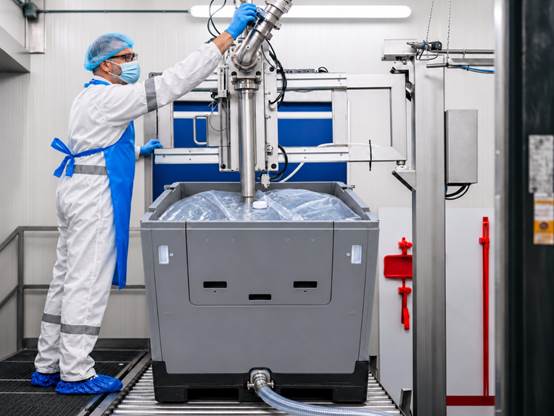
The process starts when the manufacturer transfers liquid from a production tank into the selected packaging container. Filling equipment must match the container opening and the product's flow properties.
Before filling, workers should check the container, liner, closures, and outlet. Food manufacturers also need to follow their hygiene procedures. The filling temperature and maximum load must stay within the approved limits of the packaging system.
Packaging and Sealing
For IBC systems with disposable liners, workers install the liner inside the outer container before filling. They position the liner and filling opening according to the product design. After filling, they close the liner and container openings using the specified sealing method.
I recommend checking the liner position and seal condition before transportation. A poorly installed liner can affect product handling and may increase the risk of leakage or damage. The outer container should also be checked for visible damage and correct assembly.

Transportation and Delivery
After preparation, the filled container moves to the receiving factory by truck, shipping container, or another suitable transport method. The transport arrangement must account for the liquid weight, container dimensions, load stability, and applicable regulations.
Temperature-sensitive products may need refrigerated transportation. Chemical products may require special transport documents and approved packaging. The supplier and buyer should agree on the transport conditions before shipment.
Liquid Discharging and Product Transfer
At the receiving factory, workers inspect the package before unloading. They then transfer the liquid into a storage tank or production system using the approved discharge method.
Gravity discharge may work for some free-flowing liquids. Other products may need suitable pumps. Thick liquids and temperature-sensitive materials may require special unloading conditions. I recommend checking the amount of residual liquid after discharge because product loss can affect the total cost of each shipment.
Empty Container Return and Reuse
For reusable IBC systems, the empty outer container can return to the supplier after unloading. If the design uses a disposable liner, the used liner is removed and handled according to the applicable waste and hygiene procedures.
Workers then inspect the outer container for damage and clean it according to the manufacturer's instructions. A collapsible IBC can be folded when empty, which helps reduce the space needed for return transport and storage.
How to Choose the Right Bulk Liquid Packaging Solution
I do not recommend choosing a container based on capacity alone. The packaging must match the liquid, filling process, unloading equipment, transport route, and final use. Buyers should review the following factors before confirming an order.
Liquid Type and Material Compatibility
The first step is to identify the liquid product. Buyers should provide its name, composition, concentration, viscosity, and any special properties. These details help determine whether the container body, liner, seals, and outlet materials are suitable.
For food products, buyers should also confirm food-contact requirements. For chemicals, they should check compatibility with the actual chemical composition. I recommend requesting material information and compatibility confirmation before ordering.
Packaging Capacity and Load Requirements
Capacity tells buyers how much liquid a container can hold by volume, but it does not tell them the maximum safe filling weight. Liquid density affects the total load. A 1000L container filled with a dense liquid may weigh much more than the same container filled with a lighter liquid.
Buyers should check nominal capacity, maximum filling weight, container dimensions, and the load limits of their handling equipment. They should also confirm whether the package fits their trucks, warehouse spaces, and receiving areas.

Filling and Discharging Requirements
The filling and discharge design should match the customer's production equipment. Buyers should confirm the filling opening, outlet position, outlet size, and whether the product will be discharged by gravity or pump.
They should also consider liquid viscosity and the expected residual amount after unloading. For a new packaging system, I recommend testing a sample with the actual liquid and unloading equipment before placing a large order.
Temperature and Storage Conditions
Temperature affects many liquid products. Some ingredients need refrigerated storage, while certain fats and syrups may need controlled warming for easier handling. Buyers should provide the filling, storage, and transportation temperature ranges.
The packaging material must remain suitable under the expected conditions. Buyers should not assume that an IBC provides heating or cooling unless the model has a specifically designed temperature-control system. External refrigeration or heating equipment may be necessary.
Food Safety and Regulatory Requirements
Food-contact packaging must meet the regulations of the target market and the intended product application. Buyers should review the liner material, filling and discharge components, and relevant documentation.
Chemical and pharmaceutical applications may have additional requirements. Hazardous liquid transport also requires suitable packaging approval and compliance with transport rules. I recommend confirming the complete packaging system rather than relying on a single material certificate.
Transportation and Reuse Requirements
The final factor is the movement of full and empty containers. Buyers should consider delivery distance, shipping method, return routes, storage space, and container inspection requirements.
For companies with regular deliveries between the same locations, reusable IBC systems may be worth considering. A collapsible model can reduce empty return volume. However, buyers should compare the cost of liner replacement, cleaning, inspection, and return transport before deciding.
Bulk Liquid Packaging Solutions for Food Manufacturers
Food manufacturers have specific requirements for liquid packaging. They need suitable food-contact materials, reliable filling and unloading processes, and packaging that fits their supply chains. At Enlightening Pallet, I focus on practical solutions that combine a reusable outer container with a suitable liquid liner.
Food Grade PE Liner Options
Food manufacturers need packaging materials that meet the requirements of their products and target markets. A food-grade PE liner can provide a direct food-contact surface for compatible liquid ingredients.
At Enlightening Pallet, we offer PE liner options for relevant liquid IBC applications. Buyers should confirm the food-contact documentation, liquid compatibility, filling temperature, and storage conditions before use. Food-grade material alone does not mean that every liquid food application is automatically approved.
For bulk food ingredient deliveries, an IBC container for liquid food packaging can be considered when its liner material and packaging specifications meet the intended food-contact requirements.


Reusable Outer Container Design
A reusable outer container supports the liner during filling, transportation, and handling. This arrangement can help businesses maintain a consistent packaging system across regular deliveries.
After unloading, the outer container can be inspected and prepared for another shipment according to the manufacturer's instructions. The liner can be replaced when required, while the outer structure continues to serve the returnable packaging process.
Foldable Design for Empty Container Return
The outer container folds down after unloading. This reduces the height and space needed when businesses store or return empty containers.
For suppliers with regular delivery routes, the foldable structure can help improve empty-container handling. The actual transport benefit depends on the container dimensions, folding method, loading arrangement, and return route. Buyers should compare the full and folded dimensions when planning their logistics.
Packaging Solutions for Different Liquid Ingredients
Collapsible liquid IBC containers can serve different industries when the selected liner and container design match the liquid. Potential applications include fruit puree, tomato paste, juice concentrate, liquid sugar, cream, liquid egg products, and compatible edible oils.
I recommend treating each application separately. A liner suitable for one food ingredient may need further compatibility checks for another. Buyers should provide the liquid type and operating conditions so the packaging configuration can be reviewed before ordering.
Conclusion
Bulk liquid packaging helps manufacturers move industrial liquids with better control over filling, transportation, and unloading. I recommend choosing a solution based on the liquid, operating conditions, and complete supply chain.

Need a Bulk Liquid Packaging Solution?
Looking for reliable bulk liquid packaging? Enlightening Pallet provides reusable collapsible liquid IBC containers with food-grade PE liner options for different applications.Contact us to discuss your product requirements and find the right packaging solution for your business.
About Enlightening Pallet
At Enlightening Pallet, we have more than 20 years of experience in plastic product manufacturing. We are based in China and serve brands, wholesalers, and distributors in international markets.
We specialize in reusable plastic liquid IBC containers and industrial bulk liquid packaging solutions. Our production facilities include more than 60 injection molding and rotational molding machines. Our quality control team checks production quality and product consistency throughout the manufacturing process.
We provide customized product options, including colors, logos, and mold development. Our available certifications and material documentation include ISO 9001, CE, REACH, RoHS, SGS, FDA, and GRS for relevant products and applications.
We use material inspections, production checks, and finished-product inspections to support consistent quality. We also work with customers to review product requirements and develop suitable packaging solutions for their markets.
Our goal is to provide reliable manufacturing, stable supply, and practical product support for international B2B customers.
Frequently Asked Questions
Q: What Is Bulk Liquid Packaging Used For?
A: Bulk liquid packaging is used to store and transport large quantities of liquid products for industrial and commercial operations. Common applications include food ingredients, beverages, dairy products, edible oils, and compatible industrial chemicals.
Q: What Are the Main Benefits of Bulk Liquid Packaging?
A: The main benefits include more efficient bulk transportation, easier filling and unloading, product protection, and better control of packaging and logistics costs. Reusable systems can also reduce the need for new outer containers in regular delivery operations.
Q: How Do I Choose the Right Bulk Liquid Packaging?
A: I recommend checking the liquid type, material compatibility, capacity, filling and discharge requirements, temperature conditions, and transport method. These factors help determine which packaging solution suits your operation.
Q: Can Bulk Liquid Packaging Containers Be Reused?
A: Some bulk liquid packaging containers are designed for repeated use. Reuse depends on the container design, inspection, cleaning, maintenance, and the manufacturer's instructions. For IBCs with disposable liners, the liner is replaced between shipments when required.
Q: What Should I Check Before Buying a Bulk Liquid Packaging Solution?
A: Buyers should confirm the liquid type, capacity, maximum filling weight, liner material, filling and discharge openings, temperature conditions, transport method, and reuse requirements. I also recommend requesting product drawings and testing a sample before a large order.


