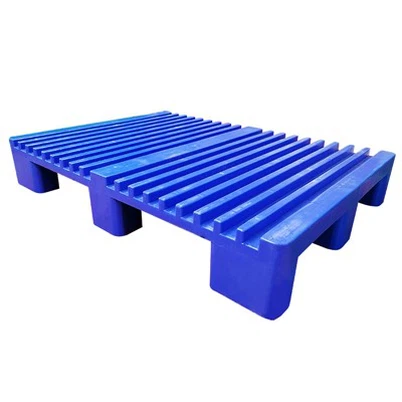
Choose Your Spill Containment Pallets Wisely
Leave a message
Introduction
Liquid spills are common hazards in factories and warehouses, posing risks of environmental contamination and safety incidents. Spill containment pallets are essential tools for ensuring safety and compliance. This article will guide you on how to choose spill containment pallets wisely.
Why Choosing the Right Spill Containment Pallet Matters
Spill containment pallets effectively prevent chemicals, oils, and other liquids from spilling onto the floor, protecting both employee safety and equipment integrity. At the same time, the right pallets can improve storage and handling efficiency while reducing cleanup and maintenance costs. However, every workplace is different, so yours may require different secondary spill containment solutions than another business. That's why it's so important to choose the right spill containment pallets for your specific needs.

How to Choose Spill Containment Pallets Wisely
When selecting spill containment pallets, several factors should be considered:
1. Identify Your Needs
If this is your first time choosing spill containment pallets, it's helpful to gather key information before purchasing:
• How many drums do you need to store liquids?
• What types of liquids will you store?
• How much storage space is available in your warehouse?
• Will you need to regularly dispense chemicals from these drums?
Answering these questions will make it easier to determine the secondary containment solution that best fits your facility.
2. Material and Chemical Resistance
The material of the pallet directly affects its corrosion and chemical resistance:
Plastic pallets (HDPE): Resistant to most chemicals, easy to clean, and commonly used in industrial and warehouse environments.
Fluorinated pallets: Suitable for highly corrosive liquids that are incompatible with polyethylene; usually light blue to differentiate from standard yellow chemical drums.
Heavy-duty steel pallets: Ideal for situations requiring higher chemical resistance or storage of flammable liquids, offering a strong alternative to HDPE pallets.
3. Capacity and Size
Pallet capacity should exceed the total volume of stored containers to prevent spills. The pallet's dimensions should also be compatible with warehouse space and handling equipment such as forklifts or pallet jacks to ensure ease of operation.
4. Load-Bearing and Stability
Pallets must be able to support the weight of the containers while maintaining long-term stability. Heavy-duty designs help reduce the risk of tipping or warping, ensuring safe use.
5. Additional Features
Depending on your operational needs, you can choose pallets with features such as drainage, stackability, mobility, or fire resistance to enhance handling convenience and safety.
Why Choose ENLIGHTENING Spill Containment Pallets
Our spill containment pallets offer the following advantages:
High Performance: Made from linear low-density polyethylene (LLDPE) or high-density polyethylene (HDPE), these pallets are highly resistant to chemical corrosion and have a long service life.
Leak-Proof Design: The top features a removable grate, and the bottom is equipped with a drain hole and plug, making liquid storage and discharge convenient.
Durable and Stable: The sturdy construction can withstand impact without breaking or deforming, ensuring long-term safe use.
Easy to Transport: The stable design effectively prevents liquid containers from sliding or leaking, making handling and transportation safer and more convenient.

Conclusion
Choosing the right spill containment pallets is essential for safety, efficiency, and compliance. ENLIGHTENING spill containment pallets offer durability, stability, and versatile designs to provide the best protection for your facility.
Let us help you find the perfect spill containment solution-contact ENLIGHTENING today!