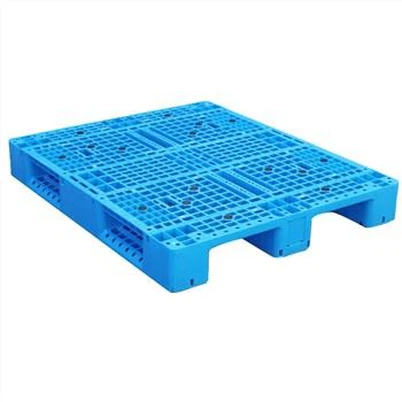
Static, Dynamic, Racking Load of Plastic Pallets Explained
Leave a message

Plastic pallets have become an indispensable asset in modern logistics and warehousing operations. Their durability, hygiene, and versatility make them a preferred choice over traditional wooden pallets. As a leading supplier of plastic pallets, we understand the importance of comprehending the different load capacities associated with these pallets. In this blog, we will delve into the concepts of static, dynamic, and racking loads of plastic pallets to help you make informed decisions for your business.
Static Load Capacity
The static load capacity of a plastic pallet refers to the maximum weight that a pallet can support when it is stationary and not in motion. This includes situations where the pallet is sitting on a flat surface in a storage area, with goods stacked on top of it. The static load is typically the highest load capacity a pallet can handle because there is no additional stress caused by movement or vibration.
For instance, if you have a large quantity of heavy boxes that need to be stored in a warehouse for an extended period, you would rely on the static load capacity of the pallet. Our One Piece Heavy Duty Plastic Pallet is designed to handle substantial static loads. Its robust one-piece construction distributes the weight evenly across the pallet surface, ensuring stability and preventing deformation under heavy loads.
When determining the static load capacity required for your application, it is essential to consider the weight of the goods, the distribution of that weight on the pallet, and the condition of the storage surface. Uneven surfaces can concentrate the load on certain areas of the pallet, reducing its effective load capacity. Therefore, it is advisable to use pallets with a higher static load rating than the actual weight of the goods to account for any potential variations.
Dynamic Load Capacity
The dynamic load capacity of a plastic pallet is the maximum weight it can support when it is in motion. This includes scenarios such as when the pallet is being moved by a forklift, pallet jack, or conveyor system. Unlike static loads, dynamic loads subject the pallet to additional stresses due to acceleration, deceleration, and vibration.
When a forklift picks up a loaded pallet, the sudden movement and the forces exerted during lifting and transportation can cause the pallet to flex and bend. Therefore, the dynamic load capacity of a pallet is generally lower than its static load capacity. Our 40 X 48 Plastic Pallet is engineered to withstand the rigors of dynamic handling. Its reinforced structure and high - impact resistance ensure that it can safely carry heavy loads during transportation.
To ensure the safety and longevity of your plastic pallets during dynamic handling, it is crucial to use the appropriate handling equipment. Forklifts should have the correct fork width and length to fit the pallet properly, and operators should be trained to handle the pallets gently to minimize stress on the pallet.


Racking Load Capacity
Racking load capacity is the maximum weight that a plastic pallet can support when it is placed on a racking system. Racking systems are commonly used in warehouses to maximize storage space by stacking pallets vertically. When a pallet is on a rack, it is supported only at specific points, which can create additional stress on the pallet compared to static or dynamic situations.
The racking load capacity of a pallet depends on factors such as the type of racking system (selective rack, drive - in rack, etc.), the support span between the rack beams, and the distribution of the load on the pallet. Our 48x48 Plastic Pallets are designed with racking applications in mind. They feature a reinforced bottom structure that provides excellent support when placed on rack beams.
When using plastic pallets in racking systems, it is essential to follow the manufacturer's guidelines for racking load capacity. Overloading a pallet on a rack can lead to pallet failure, which can cause damage to the goods, the racking system, and potentially endanger the safety of warehouse personnel.
Factors Affecting Load Capacities
Several factors can affect the static, dynamic, and racking load capacities of plastic pallets. Material quality is a significant factor. High - quality plastic resins, such as high - density polyethylene (HDPE) or polypropylene (PP), are more resistant to wear, impact, and deformation, resulting in higher load capacities.
The design of the pallet also plays a crucial role. Pallets with a solid deck or a reinforced grid structure can distribute the load more evenly, increasing their load - bearing capacity. Additionally, the thickness of the pallet walls and the presence of internal reinforcements can enhance the pallet's strength.
Environmental conditions can also impact load capacities. Extreme temperatures, exposure to chemicals, and UV radiation can degrade the plastic material over time, reducing the pallet's load - bearing capabilities. Therefore, it is important to choose pallets that are suitable for the specific environmental conditions in your warehouse or logistics operation.
Importance of Understanding Load Capacities
Understanding the static, dynamic, and racking load capacities of plastic pallets is essential for several reasons. Firstly, it ensures the safety of your goods and personnel. Overloading a pallet can cause it to break or collapse, leading to damage to the products and potential injuries to workers.
Secondly, it helps in optimizing your storage and transportation costs. By choosing pallets with the appropriate load capacities, you can maximize the use of your storage space and transportation vehicles. For example, using pallets with a higher load capacity allows you to stack more goods on each pallet, reducing the number of pallets required and ultimately saving on storage and shipping costs.
Conclusion
As a plastic pallet supplier, we are committed to providing our customers with high - quality pallets that meet their specific load - bearing requirements. Whether you need pallets for static storage, dynamic handling, or racking applications, our range of products, including 48x48 Plastic Pallets, 40 X 48 Plastic Pallet, and One Piece Heavy Duty Plastic Pallet, offers reliable solutions.
If you are looking for plastic pallets that can handle the demands of your business, we invite you to contact us for a detailed discussion about your needs. Our team of experts is ready to assist you in selecting the most suitable pallets for your operations. Make the right choice for your logistics and storage needs by partnering with us.
References
- "Plastic Pallets: A Comprehensive Guide" - Industry Report
- "Load Capacity Standards for Plastic Pallets" - International Logistics Association