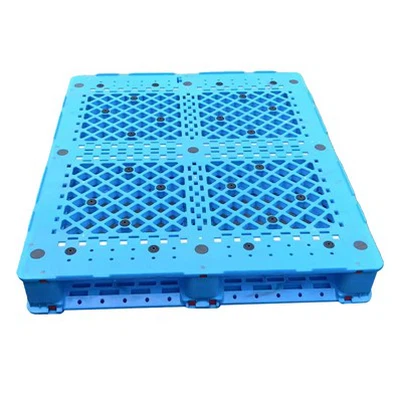
ISPM-15 Explained: Why Plastic Pallets Save Time and Money on Export
Leave a message
Your goods are ready, and the container is booked. But one wood pallet with the wrong treatment status or an unclear mark can still delay the shipment. In serious cases, the cargo may need new pallets, extra handling, or re-export.
The reason is ISPM-15. This international standard covers raw wood packaging used in global trade. Wood pallets fall within its scope, but plastic pallets do not. This removes the wood treatment and marking requirements from the start. U.S. APHIS also lists plastic pallets as an alternative that is not subject to its wood packaging rules.
For regular exporters, this means more than one less document to check. It can reduce preparation work, lower one source of compliance risk, and make export logistics easier to manage.

What Is ISPM-15? What Exporters Need to Know
ISPM-15 is an international phytosanitary standard for raw wood packaging material. Its purpose is to reduce the risk of wood pests moving between countries through international trade.
The standard covers common materials such as wood pallets, solid wood crates, packing blocks, dunnage, pallet collars, and skids. These types of raw wood packaging may need approved treatment and the correct ISPM-15 mark.
Exporters do not need to study every part of the standard. The main point is simple: if an international shipment uses regulated raw wood packaging, ISPM-15 needs attention.
2026 Update: Wood Packaging Marks Still Matter
The United States made one important enforcement change in 2026. During part of 2025, APHIS and U.S. Customs and Border Protection did not take action when the only problem was a missing hyphen between the country code and producer code on an ISPM-15 mark.
That temporary policy ended on December 31, 2025. From January 1, 2026, APHIS and CBP resumed enforcement of the required hyphen. All other ISPM-15 requirements remained in force during the temporary suspension.
The detail may look small, but it shows why wood packaging still needs attention before international shipping. U.S. inspectors can check the official mark and look for signs of pests. Australia also maintains strict biosecurity rules for solid timber packaging. Noncompliant timber packaging may need treatment, export, or disposal at the importer's expense.
Why Wood Pallets Add More Export Preparation
A wood pallet for export may need approved treatment before use. It also needs the correct ISPM-15 mark, and that mark must remain clear enough for inspection.
Used wood pallets can require more checks. Their marks may be damaged, and repairs can add new pieces of wood. If a problem appears after the container is loaded, workers may need to unload the cargo, change pallets, and load the goods again.
This is why the real cost of a wood export pallet is not only its purchase price. Treatment, inspection, labor, extra handling, and possible delays can all add to the total transportation and logistics cost.
Why Plastic Pallets Do Not Need ISPM-15 Treatment
The answer is simple. Plastic pallets are not raw wood packaging material, so ISPM-15 wood treatment and marking rules do not apply to them. APHIS specifically lists plastic pallets among packaging alternatives that are not subject to its wood packaging regulation.
There is one wording point worth keeping clear. It is more accurate to say that plastic pallets are exempt from ISPM-15 requirements or outside the scope of ISPM-15. The phrase "ISPM-15 compliant plastic pallets" can suggest that the pallet passed a wood treatment process, which is not the case.
For the pallet itself, exporters do not need to arrange ISPM-15 heat treatment or fumigation. They also do not need to check an IPPC wood packaging mark. This removes one group of checks from the export process.

How Plastic Pallets Save Time and Money
The first saving is preparation time. A plastic export pallet does not need ISPM-15 wood treatment or a wood packaging mark. Warehouse teams can spend less time on pallet compliance checks before cargo leaves the facility.
The second saving comes from lower risk of rework related to the pallet material. When wood packaging does not comply with U.S. requirements, authorities may require corrective action. Depending on the case, this can include safeguards, destruction, or re-export. These steps can create extra handling, storage, labor, and freight costs.
The right comparison is not simply wood pallet price vs plastic pallet price. Exporters should compare the total cost per shipment or cost per trip.
|
Cost Item |
Heat-Treated Wood Pallet |
Plastic Pallet |
|
Initial cost |
Usually lower |
Depends on model |
|
ISPM-15 treatment |
Must be confirmed |
Not required |
|
IPPC mark |
Must be checked |
Not required |
|
Maintenance |
May need repair |
Depends on damage |
|
Moisture absorption |
Possible |
Non-absorbent material |
|
Reuse |
Depends on pallet condition |
Depends on pallet design and use |
For a closed-loop supply chain, reuse can become an important part of the calculation. A stronger reusable plastic pallet may have a higher purchase price, but its cost per trip can fall after more transport cycles.
A Plastic Pallet Does Not Make the Whole Shipment ISPM-15-Free
This point is easy to miss. A machine may sit on a plastic pallet, but workers may also use solid wood blocks inside the container to hold the machine in place. The plastic pallet is outside ISPM-15, but the solid wood blocks may still fall within the standard.
ISPM-15 covers more than wood pallets. It can also apply to solid wood dunnage, crates, packing blocks, pallet collars, skids, and other raw wood packaging materials.
Before loading, check the whole shipment for solid wood crates, support blocks, braces, and dunnage. A plastic pallet removes the pallet itself from the wood packaging rules, but it does not remove requirements for other regulated wood materials.
Which Plastic Pallet Is Best for Each Export Use?
Plastic pallets come in different structures. The right choice depends on cargo weight, destination warehousing, handling equipment, and whether the pallet will return. Enlightening Pallet currently offers export, stacking, racking, hygiene, ground-use, and heavy-duty plastic pallet options.
One-way export: lightweight and nestable plastic pallets. If the customer will not return the pallet, buyers should focus on pallet weight, dynamic load, purchase cost, and nesting space. Nine-leg pallets are often lighter and nestable, which can help reduce empty pallet storage space.
Closed-loop export: stackable reusable plastic pallets. If pallets move on the same route many times, durability and load performance become more important. Buyers should also check stacking stability and forklift use.
Rack storage: rackable plastic pallets. Not every export pallet is suitable for pallet racking. If the destination warehouse will place loaded pallets on rack beams, the pallet needs a clear racking load rating. Static load should never be used as the racking load figure.
Food and pharmaceutical cargo: hygienic plastic pallets. Smooth and non-porous surfaces are easier to clean. Buyers should also confirm the material and hygiene requirements for the actual product.
Heavy industrial cargo: reinforced plastic pallets. Heavy machinery and dense goods need a stronger structure. The pallet should match the real cargo weight, support points, fork entry, and handling method.
Plastic Pallets vs Heat-Treated Wood Pallets for Export
The main differences are easy to see.
|
Item |
Plastic Pallet |
Heat-Treated Wood Pallet |
|
ISPM-15 treatment |
Not required |
Must be confirmed |
|
IPPC mark check |
Not required |
Required |
|
Export pallet checks |
Simpler |
Treatment and mark need review |
|
Moisture |
Does not absorb water |
Can absorb moisture |
|
Nesting |
Available on some designs |
Usually not available |
|
Initial cost |
Depends on model |
Usually lower |
Wood pallets can still make sense for some one-way shipments because the purchase cost is often low. Plastic pallets become more useful when exporters value simpler ISPM-15 handling, standard dimensions, hygiene, reuse, or consistent pallet structure.
How to Choose the Right Pallet Before Export
Start with the cargo size. The pallet footprint should match cartons, bags, drums, or equipment. Common plastic pallet sizes include 1200 × 1000 mm, 1200 × 800 mm, 1100 × 1100 mm, and 48 × 40 inches.
Next, confirm the maximum cargo weight and storage method. Floor storage, loaded stacking, and warehouse racking need different pallet structures and load ratings.
Then check the handling equipment. Forklifts, pallet jacks, conveyors, AGVs, and automated warehouse systems can require different fork openings and bottom designs. The pallet structure must match the actual equipment.
Finally, decide whether the pallet is for one-way export or repeated use. Check the full shipment for other raw wood packaging before the container leaves.
Conclusion
ISPM-15 remains an important part of international shipping when solid wood packaging is used. Plastic pallets remove the pallet itself from these wood treatment and marking requirements. This can simplify export preparation and reduce one source of logistics risk.
The right pallet still depends on cargo weight, dimensions, handling equipment, storage method, and reuse plans. One plastic pallet design cannot serve every export route.
Enlightening Pallet supplies plastic pallets for one-way export, stacking, pallet racking, hygienic applications, and heavy industrial use. Buyers can provide cargo dimensions, load weight, handling method, and destination requirements to get a suitable pallet recommendation. Contact Us for an export pallet solution.
FAQ
Q: Do plastic pallets need ISPM-15 treatment?
A: No. ISPM-15 applies to regulated raw wood packaging material, not plastic pallets.
Q: Do plastic pallets need fumigation for export?
A: No. Plastic pallets do not need ISPM-15 fumigation or heat treatment.
Q: Can used plastic pallets be exported?
A: Yes, if the pallets remain structurally sound and meet the load and handling needs of the shipment. Cargo-specific import rules still need to be checked.
Q: Can plastic pallets develop mold during ocean freight?
A: Plastic does not absorb water like wood. However, dirt or cargo residue can remain on any pallet, so hygiene-sensitive shipments should use clean pallets.
Q: Can every plastic pallet go into pallet racking?
A: No. Use a rackable plastic pallet with a stated racking load when loaded pallets will sit on warehouse racks.