


Nestable vs. Stackable vs. Rackable Pallets: How Do You Choose the Right Plastic Pallet by Load, Material & Industry?
Leave a message
Picking the wrong pallet type costs you more than money. It fails inspection, breaks on a rack, or gets rejected at customs. Get the classification wrong and everything downstream breaks.
Choose a nestable pallet for empty return trips, a stackable pallet for flat-ground storage, and a rackable pallet for selective racking with heavy loads. Match plastic type, HDPE or PP, to your temperature and cleaning needs, then confirm certifications match your industry before you order.

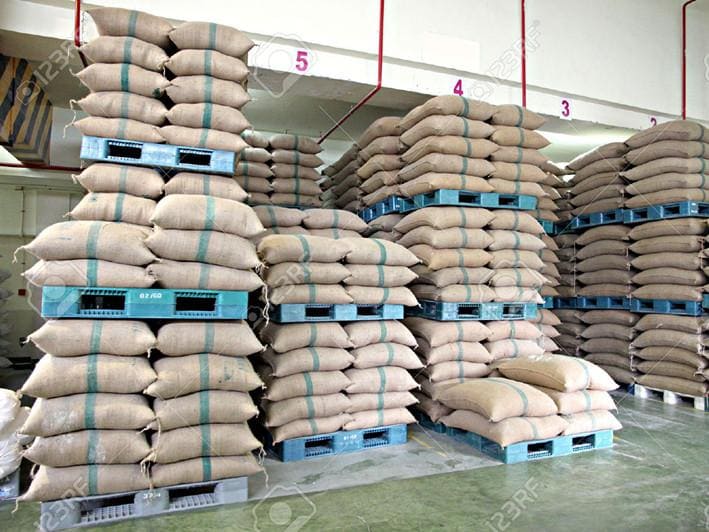
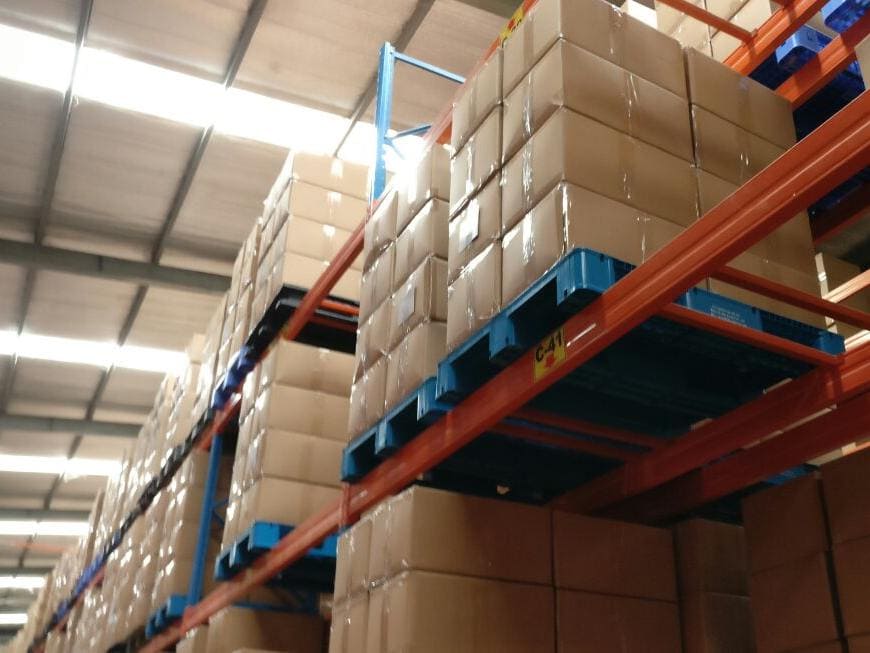
Most pallet comparison guides online repeat the same shallow framework without citing real data. I built this guide from actual manufacturer catalogs, the kind of product lines you see from large US pallet makers like ORBIS and export-focused factories in China, plus real racking safety standards. Let's start with the fast answer, then go deep on each piece.
When Should You Choose Plastic Over Wood?
Wood pallets look cheaper upfront. Then they get rejected at customs, rot in cold storage, splinter in food zones, and your freight bill grows anyway.
Choose plastic pallets over wood when you need ISPM-15 exemption for export, hygiene in food or pharma, cold chain durability, or long-term reuse across many trips. Stick with wood for one-way domestic shipments on a tight budget where recovery isn't realistic.
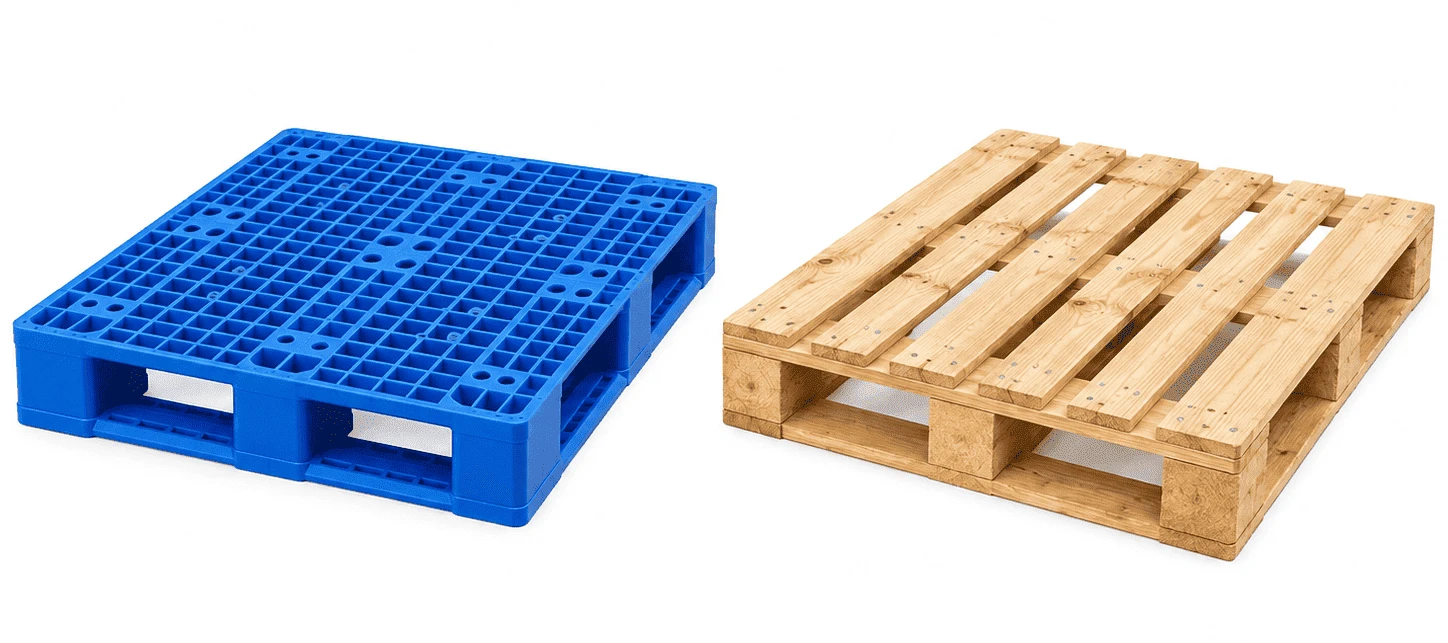
I use a short mental checklist before recommending plastic over wood. If the cargo crosses a border, plastic skips the ISPM-15 wood treatment process entirely. If the cargo touches food or pharma products, plastic cleans easier and doesn't shed splinters or absorb moisture the way wood does. If the cargo moves through cold storage, plastic holds up better across repeated freeze-thaw cycles than most wood designs. If the pallet only makes one trip and never comes back, wood's lower upfront cost can still make sense, since you're not paying for durability you won't use.
|
Decision Factor |
Favors Plastic |
Favors Wood |
|---|---|---|
|
Crosses international border |
Yes, skips ISPM-15 treatment |
No, needs heat treatment or fumigation |
|
Food/pharma contact |
Yes, easier to clean |
No, absorbs moisture, can splinter |
|
Cold chain / repeated freeze cycles |
Yes, more consistent durability |
No, more prone to damage |
|
One-way domestic shipment, tight budget |
Not always needed |
Often the cheaper choice |
How Do You Quickly Pick a Pallet Type and Material?
Scanning ten pages of specs before every order wastes time you don't have. A fast reference card gets you to the right category before you call a supplier.
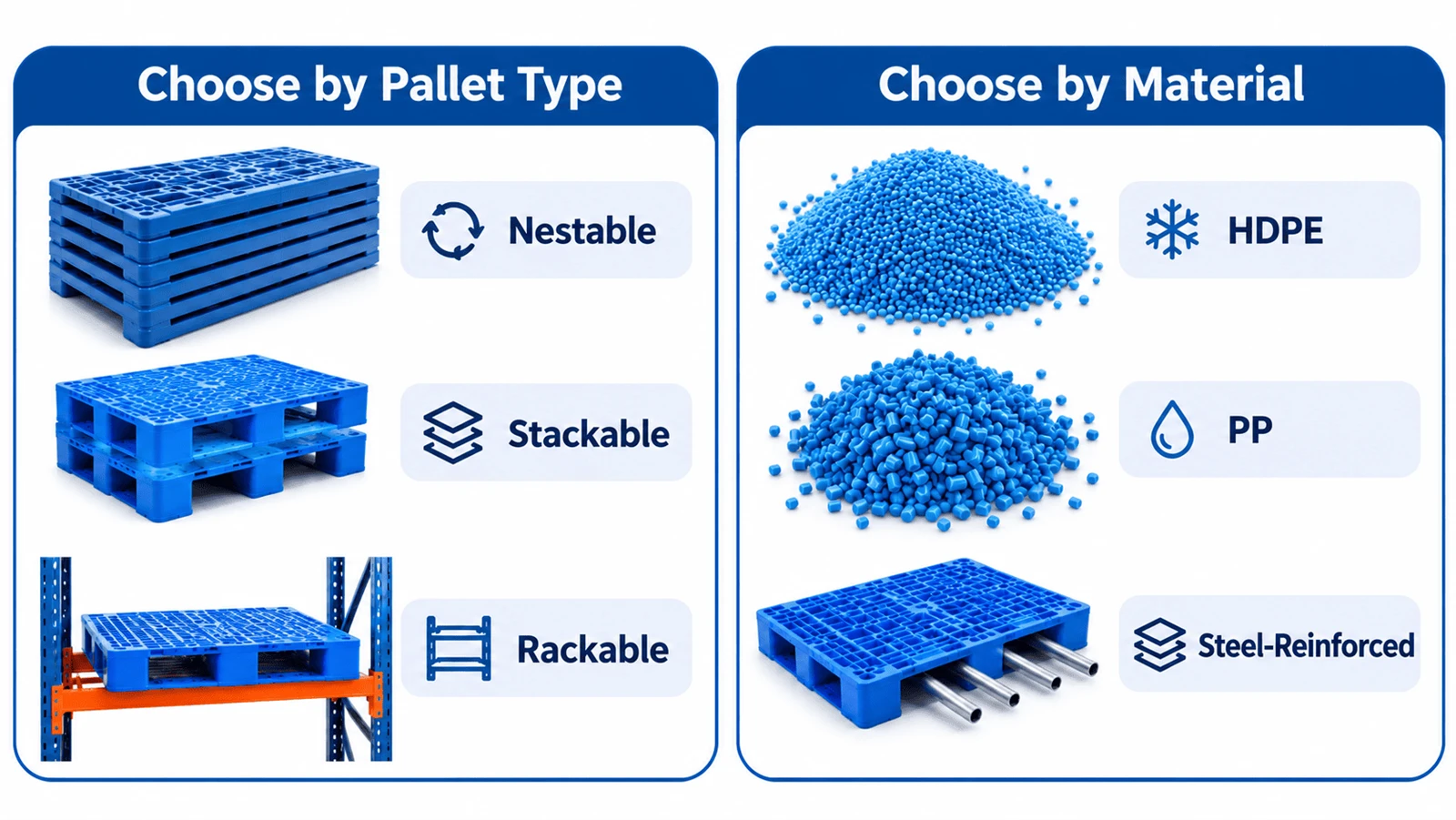
Pick your pallet type by how it moves (empty return, flat storage, or racking) and pick your material by temperature and cleaning needs (HDPE for cold chain, PP for hot wash-down). Use the cards below, then confirm exact load numbers on the manufacturer's spec sheet.
|
Type |
Core Function |
Best For |
|---|---|---|
|
Nestable |
Empty units nest inside each other |
Return trips, light loads, export |
|
Stackable |
Full units stack on top of each other |
Flat-ground warehouse storage |
|
Rackable |
Built to span rack beams under load |
Selective racking, heavier loads |
|
Material |
General Strength |
Best For |
|---|---|---|
|
HDPE |
Better low-temperature impact resistance |
Cold chain, repeated freezer use |
|
PP |
Higher heat distortion resistance |
Hot wash-down, steam cleaning lines |
|
Steel-reinforced plastic |
Higher load capacity on racks |
Heavy racking loads |
I'd confirm exact temperature and load thresholds directly with your supplier's technical data sheet. General material behavior holds across the industry, but precise numbers vary by resin grade and wall thickness, so I don't quote a single fixed figure as if it applies to every product line.
Safety Warning - Why Using a Non-Rackable Pallet on Racking Is a Violation, Not a Spec Mismatch
This point matters more than most buyers realize. Putting a pallet on a rack that was never tested as rackable isn't just a bad fit. It's a violation of a real industry standard. ANSI/MH16.1, the racking standard set by the Material Handling Industry's rack manufacturer association, requires structural rack beams to meet two separate load ratings, and the capacity limit must reach at least 55% of uniformly distributed load to pass. Roll-formed beams often fall to somewhere between 35% and 40% on that same measure.
What this means in practice: if you place a pallet that was never tested for rack support onto a rack bay, even if the size fits perfectly, you're betting on a safety margin nobody ever verified. I don't treat this as a minor spec mismatch. I treat it as a compliance failure waiting to surface during an inspection or, worse, during a load failure.
How Do You Choose the Right Pallet by Industry?
The same buyer question, "which pallet do I need," gets a different answer in every industry. Matching type and material to your sector cuts the guesswork fast.
Food and beverage needs sanitary, easy-to-clean pallets, pharma needs high-cleanliness designs, export needs lightweight nestable units, and cold chain needs HDPE built for repeated freeze cycles. Match your industry to the right combination before you request a quote.

Food & Beverage - Recommended Type + Material
For food and beverage production, I lean toward stackable or rackable pallets with a flat, easy-to-clean deck, usually in HDPE or PP depending on whether the line runs hot wash-down cycles. Splinter-free, low-moisture-absorption surfaces matter most here.
Pharmaceutical - Recommended Type + Material
Pharma buyers usually want the same clean, flat-deck approach as food, often in rackable configurations for controlled warehouse storage. I check cleanliness and particle contamination requirements before confirming material grade.
Export & International Shipping - Recommended Type + Material
For one-way export shipments, nestable pallets in lightweight HDPE or PP cut packaging weight and skip ISPM-15 wood treatment entirely. I confirm the destination country's other import rules separately, since pallet material alone doesn't clear every requirement.
Cold Chain & Frozen Storage - Recommended Type + Material
For cold chain and frozen storage, HDPE generally holds up better under repeated freeze-thaw cycling than PP, based on how each resin behaves under low-temperature impact. I'd still confirm the specific cold-rated grade with your supplier before committing to a bulk order.
|
Industry |
Recommended Type |
Recommended Material |
|---|---|---|
|
Food & Beverage |
Stackable/Rackable |
HDPE or PP |
|
Pharmaceutical |
Rackable |
HDPE or PP, clean deck |
|
Export/International |
Nestable |
HDPE or PP, lightweight |
|
Cold Chain/Frozen |
Stackable/Rackable |
HDPE, cold-rated grade |
How Do Nestable, Stackable & Rackable Pallets Actually Differ?
Buyers often treat these three terms as interchangeable. That mistake is exactly how a non-rackable pallet ends up on a rack bay it was never built for.
Nestable pallets nest inside each other when empty, stackable pallets stack full units on flat ground, and rackable pallets are structurally tested to span rack beams under load. Each type solves a different handling problem, and they aren't interchangeable.

Nestable Pallets
Weight Range
Nestable pallets generally sit on the lighter end of the plastic pallet range, since the nesting legs reduce overall material use. I'd confirm the exact weight for a specific model against the manufacturer's spec sheet rather than assume one number across every nestable design.
Dynamic Load Capacity
Dynamic load capacity on nestable pallets varies by leg design and deck thickness. I always ask for the tested dynamic load figure for the specific SKU, since nestable models built for light export cargo differ a lot from heavier-duty nestable designs.
Best For - Empty Return Trips & Light Loads
I recommend nestable pallets when return-trip efficiency matters more than top-end load capacity. The nesting legs let empty units collapse into a smaller footprint, cutting storage and return-shipping space. This fits export shipments and light-to-medium warehouse cargo well.
Stackable Pallets
Weight Range
Stackable pallets usually run a bit heavier than nestable designs, since the deck and support structure need to hold a full load while another full pallet sits directly on top. Exact weight depends on the specific model and wall thickness.
Dynamic Load Capacity
Stackable pallets are built to carry a load while another loaded pallet rests on top, so dynamic load capacity needs to account for that stacked weight, not just the cargo on one unit. I check the manufacturer's stacking height limit alongside the dynamic load figure.
Best For - Flat Ground Stacking
I recommend stackable pallets for warehouses that store inventory on the ground rather than on racks. Stacking full pallets saves floor space without needing racking infrastructure, which works well for high-turnover storage.
Rackable Pallets
Weight Range
Rackable pallets tend to carry more material and structural reinforcement than nestable or stackable designs, since the deck has to resist bending across unsupported rack beam spans. Weight varies by whether the design uses steel reinforcement or reinforced plastic ribbing alone.
Dynamic & Racked Load Capacity
This is the number that matters most for racking safety. A rackable pallet's racked load capacity is tested under beam-span conditions, not flat-ground conditions, which is exactly the test a non-rackable pallet never goes through. I never substitute a static load number for a racked load number, since they're measured under completely different support conditions.
Steel Reinforcement Explained
Some rackable pallets add steel tube reinforcement inside the deck or runners to resist bending under beam-span loads. This reinforcement raises both racked load capacity and total weight, and it usually raises cost too. I only recommend steel reinforcement when the racking load genuinely requires it, not as a default upgrade.
Best For - Selective Racking & Heavy Loads
I recommend rackable pallets specifically for selective rack storage, where the pallet only rests on two beams with open space underneath. This is also the category to choose for heavier loads that a nestable or stackable design was never tested to carry.
|
Type |
Weight Range |
Load Testing Basis |
Best For |
|---|---|---|---|
|
Nestable |
Lighter, confirm per SKU |
Flat-ground dynamic load |
Return trips, light cargo, export |
|
Stackable |
Moderate, confirm per SKU |
Flat-ground stacked load |
Ground storage, high turnover |
|
Rackable |
Heavier, confirm per SKU |
Beam-span racked load |
Selective racking, heavy loads |
Which Plastic Material Should You Choose - HDPE, PP, or Steel-Reinforced?
Buyers often pick material by price alone. That shortcut backfires fast when a PP pallet cracks in a freezer or an HDPE pallet warps on a hot wash-down line.
HDPE generally handles low-temperature impact better, PP generally handles heat distortion better, and steel-reinforced plastic adds load capacity for heavy racking. Match material to your temperature range and racking need, and confirm exact thresholds with your supplier's data sheet.

HDPE
Cold Resistance
HDPE's higher crystallinity generally gives it better low-temperature impact resistance than PP, which is why it shows up often in cold chain applications. I don't quote an exact temperature threshold here, since that figure depends on the specific resin grade and additive package. I'd ask your supplier for the technical data sheet before locking in a cold-storage spec.
Best For - Cold Chain Applications
I recommend HDPE for pallets that move repeatedly in and out of freezers or cold storage, since it tends to hold up better against the impact stress of repeated temperature swings.
PP (Polypropylene)
Heat Resistance
PP generally resists heat distortion at higher temperatures than HDPE, which is why it shows up more often on production lines that run hot steam cleaning or pasteurization cycles. Again, I don't quote a fixed degree threshold, since that number depends on the exact resin formulation.
Brittleness Risk
PP can become more brittle in cold conditions compared to HDPE, depending on the formulation. If your application includes both heat exposure and cold storage, I'd confirm with the supplier which resin blend handles both ends of that range, rather than assume a standard PP grade covers it.
Best For - High-Temp Wash-Down Lines
I recommend PP for production environments that regularly use hot water or steam cleaning, since it generally tolerates that heat exposure better than standard HDPE.
Steel-Reinforced Plastic Pallets
Best For - Heavy Racking Loads
I recommend steel-reinforced plastic pallets specifically when racked load requirements exceed what a standard reinforced plastic rackable design can safely carry. The steel tube runners add real structural support across the beam span.
Cost & Weight Trade-Offs
Steel reinforcement raises both pallet weight and purchase cost. I only recommend it when the load genuinely requires it, since the added weight also increases shipping cost and can reduce payload capacity on tightly loaded trucks.
|
Material |
General Strength |
Best For |
Watch For |
|---|---|---|---|
|
HDPE |
Better cold impact resistance |
Cold chain, freezer use |
Confirm exact cold rating with supplier |
|
PP |
Better heat distortion resistance |
Hot wash-down, steam lines |
Can be more brittle in cold conditions |
|
Steel-reinforced plastic |
Higher racked load capacity |
Heavy racking loads |
Added weight and cost |
What Certifications Should You Check Before Buying a Plastic Pallet?
Buyers often treat FDA and NSF as the same thing. That mix-up is one of the most common mistakes I see in pallet buying guides.
FDA compliance confirms the material itself meets federal food-contact material regulations, while NSF certification is a separate third-party lab test confirming specific hygienic design standards.
ISO 9001 covers the manufacturer's quality management system, not the product itself.

FDA compliance is a regulatory matter, not a certification you apply for and receive a badge from. It confirms the plastic material and its components meet the applicable federal regulations for food contact material. I ask suppliers for the specific material compliance documentation tied to their resin, not just a general claim that the pallet is "FDA approved."
NSF is a different thing entirely. It's an independent third-party organization that tests food handling equipment and related tools against specific hygienic design standards, then issues a certification if the product passes. A pallet can be FDA compliant on material grounds without holding NSF certification, since NSF testing covers the actual hygienic design of the finished product, not just the raw material. I treat these as two separate boxes to check, not one standard with two names.
ISO 9001 certifies the manufacturer's quality management system, not the pallet itself. A supplier holding ISO 9001 shows they run a consistent, documented quality process, but it doesn't confirm any specific load rating or food-contact compliance for a given product. I check the certificate's validity dates and issuing body before trusting it on a supplier's page.
|
Certification |
What It Actually Covers |
Common Mix-Up |
|---|---|---|
|
FDA compliance |
Material meets food-contact regulation |
Treated as a product "certification" when it's a regulatory standard |
|
NSF certification |
Third-party hygienic design testing on the finished product |
Confused with FDA compliance |
|
ISO 9001 |
Manufacturer's quality management system |
Mistaken as proof of a specific product spec |
What Are the Standard Plastic Pallet Sizes You Should Know?
Ordering the wrong size pallet means it doesn't fit your racking, your truck, or your destination market's standard. Getting size right from the start saves a lot of rework.
Standard plastic pallet sizes include the US GMA 48×40 inch (1219×1016mm) for grocery and general racking, the Euro EUR/EUR2 1200×800mm and 1200×1000mm for European trade, and roughly 1100×1100mm for common Asia-Pacific export. Confirm exact requirements with your destination market before ordering.

The GMA pallet, 48×40 inches, converts to roughly 1219×1016mm, and it's the standard size across North American retail and general warehouse racking. If you're supplying US grocery or general distribution, this is the size I'd confirm first, since most racking and handling equipment in that market is built around it.
Some buyers associate a 45×48 inch pallet size with beverage and automotive logistics. I don't have a fully confirmed, authoritative source pinning that exact inch mapping to those two industries specifically, so I'd treat this as a general pattern worth checking, not a fixed rule. Confirm the exact size requirement with your specific buyer or industry standard before ordering.
The core EUR pallet runs 1200×800mm, and a variant called EUR2 runs 1200×1000mm. The industry commonly associates the larger EUR2 size with beverage and automotive applications, though I'd still confirm the exact size your European buyer expects before locking in a production run, since naming and usage can vary by sector and country.
A roughly 1100×1100mm size shows up often in Japan, Korea, and Southeast Asia export logistics. I don't have one single authoritative source confirming this as a universal regional standard, so I'd describe it as a common export size in that region, and I'd confirm the exact dimension requirement with the destination port or buyer before finalizing an order.
|
Size Standard |
Dimensions |
Common Region/Use |
|---|---|---|
|
US GMA |
48×40 in (1219×1016mm) |
North American grocery, general racking |
|
US (unconfirmed mapping) |
45×48 in |
Associated with beverage/automotive, confirm per order |
|
Euro EUR |
1200×800mm |
European general trade |
|
Euro EUR2 |
1200×1000mm |
Often beverage/automotive, confirm per order |
|
Asia-Pacific common |
~1100×1100mm |
Common in Japan, Korea, SE Asia, confirm per port |
How Much Weight Can a Plastic Pallet Actually Hold?
A pallet rated for a high static load number doesn't guarantee it holds that same weight on a rack. Mixing up these load types is one of the most common and costly mistakes in pallet buying.
Static load capacity measures weight the pallet holds while resting flat and unmoving, dynamic load capacity measures weight it holds while being lifted and moved, and racked load capacity measures weight it holds while spanning rack beams. These three numbers come from different tests and aren't interchangeable.

Static load capacity tests the pallet resting flat on the ground, fully supported underneath, with weight stacked on top. This is usually the highest number on a spec sheet, since the pallet has full support across its entire bottom surface during the test.
Dynamic load capacity tests the pallet while it's being lifted and moved, typically by forklift, with the load in motion rather than sitting still. This number is usually lower than static load capacity, since movement adds stress the static test doesn't capture.
Racked load capacity tests the pallet while it spans two rack beams with open space underneath and nothing supporting the middle. This is the lowest of the three numbers in most cases, since the pallet has to resist bending under its own deck span instead of relying on full ground support. I always ask for this specific number before recommending any pallet for rack storage, since a high static load figure tells you nothing about how the same pallet behaves on a rack.
|
Load Type |
Test Condition |
Typically Highest or Lowest |
|---|---|---|
|
Static Load |
Flat, fully supported, stationary |
Usually highest |
|
Dynamic Load |
Lifted and moved, typically by forklift |
Usually mid-range |
|
Racked Load |
Spanning beams, no support underneath |
Usually lowest |
How Do Plastic Pallets Compare to Wood Pallets?
Buyers often compare plastic and wood on price alone. That comparison misses lifespan, compliance, hygiene, and repair costs that change the real total cost over time.
Plastic pallets generally cost more upfront than wood but last through many more trips, skip ISPM-15 treatment for export, clean easier, and hold up better in cold chain use, while wood is usually cheaper to repair on-site. Compare total lifecycle cost, not just the purchase price.
Cost Comparison - New, Used & Refurbished
Plastic pallets generally carry a higher upfront purchase price than new wood pallets, and that gap narrows or disappears when you compare against premium reinforced plastic designs versus basic wood. Used and refurbished wood pallets usually come in cheapest of all. I'd ask your supplier for current pricing on the exact spec you need, since per-unit cost shifts with order volume, material grade, and market conditions, and I wouldn't trust a fixed price quoted in a generic guide.
Lifespan (Trips) Comparison
Plastic pallets generally last through more total trips than wood before retirement, since they don't splinter, absorb moisture, or lose structural integrity the way wood does over repeated handling. Wood pallets can get repaired cheaply on-site, which extends their working life, but each repair cycle adds labor cost and inconsistency to the fleet. I'd ask for trip-count data specific to the exact product line before comparing lifespan claims across suppliers.
ISPM-15 Compliance Difference
This is one of the clearest differences between the two materials. Wood pallets crossing international borders need ISPM-15 heat treatment or fumigation, plus the official wood packaging mark, or customs can reject the shipment. Plastic pallets are exempt from ISPM-15 entirely, since the standard targets wood packaging material specifically, not plastic.
Hygiene & Washability
Plastic pallets generally clean easier than wood, since they don't absorb moisture, don't shed splinters, and don't trap bacteria in porous material the way wood can. This matters most in food, beverage, and pharma environments with frequent wash-down requirements.
Cold Chain Suitability
Plastic, especially HDPE, generally holds up better than wood across repeated cold storage and freezer cycles, since wood can absorb moisture and degrade faster under that kind of repeated temperature stress.
On-Site Repairability
Wood has a real advantage here. A damaged wood pallet can often get repaired on-site with basic tools and replacement boards. Plastic pallets generally can't get field-repaired the same way, so a cracked or broken plastic pallet usually needs replacement rather than repair.
|
Comparison Factor |
Plastic |
Wood |
|---|---|---|
|
Upfront cost |
Generally higher, confirm current pricing |
Generally lower, especially used/refurbished |
|
Lifespan (trips) |
Generally longer |
Shorter, but repairable |
|
ISPM-15 compliance |
Exempt |
Requires treatment for export |
|
Hygiene/washability |
Easier to clean |
Absorbs moisture, can splinter |
|
Cold chain suitability |
Generally better, especially HDPE |
Degrades faster under repeated cold cycles |
|
On-site repairability |
Usually requires replacement |
Can be repaired with basic tools |
What Mistakes Do Buyers Commonly Make When Choosing a Pallet?
The same mistakes show up again and again across this industry. Most of them trace back to confusing one pallet category for another, or trusting a number that was tested under different conditions.
The most common pallet selection mistakes are using a non-rackable pallet on racking, confusing static load capacity with racked load capacity, and assuming all plastic pallets of the same size share the same load rating. Each mistake traces back to skipping the manufacturer's actual spec sheet.

Case Study - Safety Incident from Using Nestable Pallets on Racking
I want to walk through a composite scenario, built from the kind of incident pattern that shows up across this industry, not one specific company. A warehouse operator needed more racking capacity fast. They had a stock of nestable pallets on hand, originally bought for export shipments, and the size happened to fit the rack bay perfectly. Nobody checked the racked load rating, because the pallets had never been tested for beam-span support in the first place; they'd only been tested for flat-ground and forklift handling. Under full load, with the pallet spanning two rack beams and nothing supporting the middle, the deck flexed beyond what the nesting-leg structure could handle. The load didn't fail instantly, but repeated loading cycles weakened the structure until a deck gave way. This is exactly the failure mode the ANSI/MH16.1 racked load testing exists to catch, and it's exactly why a size match alone never tells you if a pallet belongs on a rack.
|
Mistake |
Why It Happens |
How to Avoid It |
|---|---|---|
|
Nestable pallet on racking |
Size fits, load rating never checked |
Confirm racked load capacity before rack use |
|
Static load confused with racked load |
Assumed one number covers all conditions |
Ask for the specific racked load test result |
|
Assuming same size means same rating |
Different wall thickness/reinforcement by model |
Always check the spec sheet for the exact SKU |
How Do You Calculate How Many Pallets Fit on a Truck?
Guessing pallet count by eye leads to wasted truck space or an overloaded shipment. A simple calculation method gets you a reliable number before you book freight.
You calculate pallet count by dividing the truck's usable floor length and width by your pallet's footprint, then adjusting for loading pattern, either straight-loaded or pinwheeled, since pattern changes how many units fit per row. There's no single fixed number that applies to every pallet size.

Enter Pallet Size & Truck Type to Estimate Load Count & Freight Cost
I don't trust a generic "X pallets per truck" number, because that figure depends entirely on your specific pallet footprint, the truck's internal floor dimensions, and whether you load pallets straight or pinwheeled to use corner space more efficiently. My actual method: take the truck's internal floor length and width, divide each by your pallet's length and width (testing both straight and rotated orientation), then multiply the resulting row and column counts together for your usable floor-level count. If your cargo allows double-stacking, multiply again by your safe stacking height. For freight cost, I divide your total shipment weight and pallet count against the carrier's actual rate sheet, since freight pricing depends on lane, weight, and current market rate, not a fixed formula I can hand you here.
|
Step |
What to Measure |
Why It Matters |
|---|---|---|
|
1. Truck floor length/width |
Internal usable dimensions |
Base number for row/column fit |
|
2. Pallet footprint |
Length × width of your specific pallet |
Determines units per row |
|
3. Loading pattern |
Straight-loaded vs. pinwheeled |
Changes total units that fit |
|
4. Stacking height |
Safe stack height for your cargo |
Multiplies floor-level count |
|
5. Freight rate |
Carrier's current rate sheet |
Converts pallet count into real cost |
How Many Pallets Fit in Different Truck Types?
Different truck types offer very different usable floor space. Knowing the general floor dimensions helps you run the calculation above for your specific pallet size.
Pallet count per truck type depends on your exact pallet footprint and loading pattern, not a fixed number, but knowing each truck's general internal floor dimensions lets you run that calculation yourself. I'd always confirm exact internal dimensions with your carrier before finalizing a shipment plan.
53' Dry Van:A standard 53-foot dry van offers the largest usable floor area of the common truck types covered here, which generally makes it the choice for full truckload shipments moving GMA or similar-sized pallets. I'd confirm the exact internal floor length and width with your specific carrier, since trailer interior dimensions can vary slightly between manufacturers.
48' Flatbed:A 48-foot flatbed offers a bit less usable length than a 53-foot dry van, and it loads from the top or side rather than through a rear door, which changes how pallets get positioned during loading. I'd check load securement requirements here too, since flatbed shipments need tie-down planning that a dry van doesn't.
26' Box Truck:A 26-foot box truck offers meaningfully less floor space than either trailer type above, which makes it a better fit for regional or last-mile runs rather than full truckload freight. I'd run the pallet-count calculation above using this truck's specific internal dimensions before assuming it can handle a given order size.
Cargo Van:A cargo van offers the smallest usable floor space of the four types here, and it typically can't accommodate standard GMA-sized pallets loaded flat without careful measurement. I'd check actual interior dimensions against your specific pallet footprint before planning any cargo van shipment involving palletized freight.
|
Truck Type |
Relative Floor Space |
Loading Style |
Best Fit |
|---|---|---|---|
|
53' Dry Van |
Largest of the four |
Rear door loading |
Full truckload, standard pallets |
|
48' Flatbed |
Slightly less than dry van |
Top/side loading |
Oversized or non-palletized-friendly freight |
|
26' Box Truck |
Moderate |
Rear door loading |
Regional, last-mile delivery |
|
Cargo Van |
Smallest |
Rear/side door loading |
Small shipments, confirm pallet fit first |
Frequently Asked Questions
Q: Do I Need ISPM-15 Fumigation For Export?
A: Only if you're shipping on wood pallets. ISPM-15 targets wood packaging material specifically, requiring heat treatment or fumigation plus an official mark. Plastic pallets are exempt from this requirement entirely, since the standard doesn't apply to plastic material.
Q: Can Nestable Pallets Be Used On Racking?
A: Generally no, unless the specific model was tested and rated for racked load capacity. Most nestable designs are built and tested for flat-ground and forklift handling, not for spanning rack beams. Check the spec sheet for a racked load rating before using any pallet on a rack bay.
Q: Should I Choose HDPE Or PP For Cold Storage?
A: HDPE generally performs better in cold storage, since its higher crystallinity tends to give it better low-temperature impact resistance than PP. I'd still confirm the exact cold-rated grade with your supplier's technical data sheet before committing to a bulk order for freezer use.
Q: Which Deck Type Is Best For Food Or Produce?
A: A flat, solid deck with minimal gaps generally works best for food and produce, since it reduces product damage and makes cleaning easier. I'd confirm the specific deck design against your product's size and your facility's wash-down requirements before finalizing a choice.
Conclusion
Match pallet type to how it moves, material to your temperature needs, and always confirm racked load ratings with a real spec sheet before buying.

Need Help Choosing the Right Plastic Pallet?
Tell us your pallet dimensions, load requirements, material preferences, and application. Enlightening Pallet can help you select a suitable pallet structure and material for your warehouse, shipping, or industrial operations.
About Enlightening Pallet
Enlightening Pallet is a plastic pallet manufacturer based in China, with more than 20 years of production experience. We supply brand owners, wholesalers, and distributors with high-quality, customizable plastic pallet solutions. We run 60+ injection and rotational molding machines, and every line has quality inspectors with 5+ years of experience, so product quality stays consistent batch after batch.
Services
Products: One-stop plastic pallet solutions
Customization: Custom colors, custom logos, custom molds
International certifications: ISO 9001, CE, REACH, RoHS, SGS, FDA, GRS
Quality Assurance
Raw material testing: Compliant with RoHS and REACH standards, strength and performance tested to international requirements
Precision manufacturing: Automated injection molding and precision assembly, accurate to ±0.1mm
Full and sample inspection: 100% outgoing inspection plus ISO 9001 sampling checks, maintaining high standards
Certification support: Compliant with ISO 9001, CE, REACH, RoHS, SGS, FDA standards
Manufacturing Capacity
High-quality manufacturing: 60+ injection and rotational molding machines, run under ISO 9001
High-end customization: Custom solutions built for global brands
Flexible solutions: Built around customer requirements, supporting market competitiveness
Global Reach
We serve customers worldwide with reliable plastic pallets and custom logistics packaging solutions, supporting business growth and customer trust.


