


How Many Boxes On A Pallet?
Leave a message
The number of boxes on a pallet depends on the pallet dimensions, carton size, stacking pattern, maximum loading height, and weight capacity. A standard 48×40-inch pallet may hold 60 cartons measuring 12×12×12 inches when stacked five layers high, but the actual quantity varies with shipping requirements.
For warehouse operators, distributors, and purchasing managers, calculating boxes per pallet helps improve storage efficiency, estimate shipping costs, and select suitable plastic pallets.
Whether you need to know how many boxes on a pallet or how many cases of wine on a pallet, the calculation depends on the box dimensions, pallet size, stacking pattern, and load requirements.
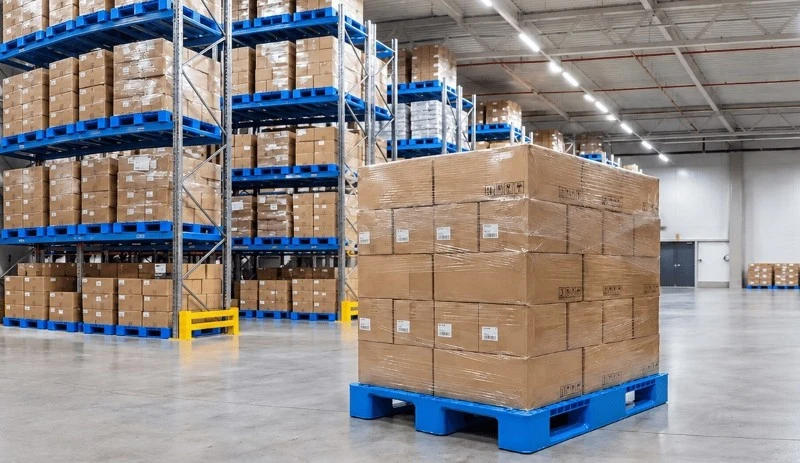
How to Calculate How Many Boxes Fit on a Pallet
To calculate the number of cartons per pallet, start with the pallet footprint, carton dimensions, and maximum permitted loading height.
Step 1: Determine Box and Pallet Dimensions
Box Dimensions: Measure the external length, width, and height of each shipping carton. Include any packaging that increases the finished dimensions.
Pallet Dimensions: A standard 48×40-inch (1219×1016 mm) pallet is widely used in North American logistics and retail distribution. Other common sizes include 1200×1000 mm, 1200×800 mm, and 1100×1100 mm.
For a comparison of regional pallet sizes, read Understanding Standard Pallet Size Dimensions.
Step 2: Calculate Boxes Per Layer
For a basic rectangular arrangement, use the following formula:
Boxes Per Layer = FLOOR(Pallet Length ÷ Box Length) × FLOOR(Pallet Width ÷ Box Width)
Calculate again after rotating the boxes 90 degrees, then compare both layouts.
For example, on a 48×40-inch pallet with 12×12-inch boxes:
Along the 48-inch side: 48 ÷ 12 = 4 boxes
Along the 40-inch side: 40 ÷ 12 = 3 complete boxes
Boxes per layer: 4 × 3 = 12 boxes
Therefore, the pallet can accommodate 12 boxes per layer in a regular grid.
For rectangular cartons, combining both orientations within one layer may fit more boxes than either simple grid arrangement. A pallet-loading layout should be checked before finalizing the quantity.
Step 3: Calculate the Number of Layers
The available stacking height determines how many layers of cartons can be placed on the pallet.
Number of Layers = FLOOR((Maximum Loaded Pallet Height − Pallet Height) ÷ Box Height)
For example:
Maximum loaded pallet height: 72 inches
Pallet height: 6 inches
Carton height: 12 inches
Available carton stacking height: 66 inches
Number of complete layers: 5
A 48×40-inch pallet carrying 12 cartons per layer can therefore hold 60 cartons across five layers, assuming the load is stable and permitted by weight limits.
Step 4: Calculate Total Boxes Per Pallet
Total Boxes = Boxes Per Layer × Number of Layers
This calculation provides a starting estimate. The final loading quantity must also satisfy carton compression strength, pallet load capacity, stability, and transport restrictions.
For mixed carton sizes or irregular stacking patterns, a pallet calculator or palletizing software can help evaluate more efficient arrangements.
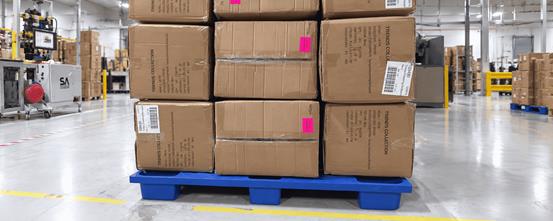
How Many Boxes Fit on Different Pallet Sizes?
Standard pallet sizes affect how many cartons fit into each layer. The following examples use cartons measuring 400×300×250 mm, with no overhang.
|
Pallet Size |
Boxes Per Layer |
Layers |
Total Boxes |
|
1200×1000 mm |
10 |
6 |
60 |
|
1200×800 mm |
8 |
6 |
48 |
Calculation assumptions: Both pallets are 150 mm high, maximum loaded height is 1650 mm, and cartons may be rotated 90 degrees. Results are geometric estimates, not verified safe load plans.
On a 1200×1000 mm pallet, a mixed-orientation arrangement can accommodate 10 cartons in each layer. On a 1200×800 mm pallet, eight cartons fit using two rows of four cartons with the 300 mm carton side aligned along the 1200 mm pallet dimension.
These examples show why carton orientation and pallet dimensions should be evaluated together rather than relying only on surface area.
For bulk warehouse orders, buyers can compare available plastic pallet sizes and structures to identify a suitable footprint for their packaging.
Pallet Stacking Patterns for Better Space Utilization
The arrangement of boxes affects loading capacity, stability, and handling efficiency. Three common pallet stacking patterns are used in warehouses and distribution centers.
Block Stacking
Boxes are arranged in aligned rows, with each layer following the same orientation.
Simple to calculate and load
Suitable for uniform cartons
Supports straightforward automated palletizing
Allows direct vertical alignment of carton edges
Block stacking is often useful when cartons are designed to carry compressive loads through their corners and vertical walls.
Brick Stacking
Boxes are arranged with staggered positions, similar to a brick pattern.
Can improve load interlocking
Reduces continuous vertical gaps between cartons
May improve stability for suitable packaging
However, staggered loading can reduce compression strength for some corrugated cartons. Buyers should confirm whether the packaging can support the selected arrangement.
Pinwheel Stacking
Rectangular cartons are rotated in different directions within the same layer.
Can improve pallet surface utilization
Helps accommodate particular carton dimensions
Offers another option for balancing load geometry
Pinwheel patterns are especially useful when a single carton orientation leaves substantial unused pallet space.
Selection Tip: Choose the stacking pattern based on both carton geometry and packaging strength. More cartons per layer do not always mean a safer or more economical pallet load.
Weight Capacity and Safe Pallet Loading
Besides carton dimensions, the weight of the goods determines how many boxes can safely be loaded.
For plastic pallets, buyers should distinguish between three load ratings:
|
Load Rating |
Meaning |
Typical Application |
|
Static Load |
Maximum rated load when the pallet rests on suitable level support |
Floor storage |
|
Dynamic Load |
Maximum rated load during specified handling conditions |
Forklift transportation |
|
Racking Load |
Maximum rated load under specified rack support conditions |
Warehouse pallet racking |
For example, a plastic pallet with a dynamic load rating of 1,500 kg should not automatically be considered suitable for supporting the same load in an unsupported warehouse rack.
Before loading, calculate:
Total Carton Weight = Number of Boxes × Gross Weight per Box
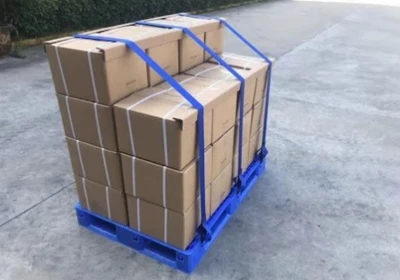
A pallet carrying 60 boxes weighing 15 kg each has a total cargo weight of 900 kg. This must remain within the applicable load rating, and the pallet's own weight must be included when checking forklift, rack-system, and vehicle load limits.
Buyers should also evaluate:
Weight distribution across the pallet surface
Carton compression strength
Storage and handling temperature
Forklift and pallet jack compatibility
Rack beam spacing and pallet support
Dynamic forces during transportation
For further information, read How Much Do Plastic Pallets Weigh? and How Many Types of Plastic Pallets Are Available in the Market?.
Choosing the Right Plastic Pallet for Carton Storage and Shipping
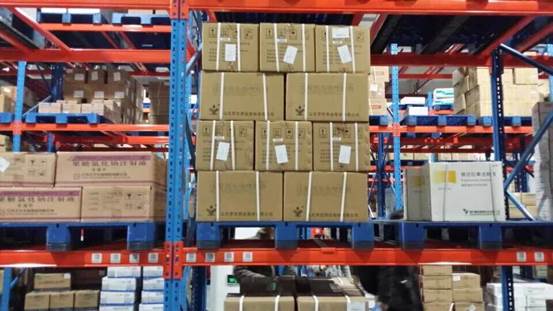
The right plastic pallet should accommodate the carton footprint while meeting warehouse and transport requirements.
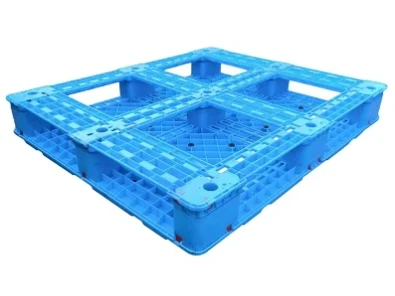
48×40-Inch Plastic Pallets for Distribution
A 48×40-inch plastic pallet is a common choice for North American distribution networks, grocery logistics, and industrial storage.
Enlightening Pallet offers a48×40 HDPE plastic pallet with a four-way forklift entry design and a vented deck.
This pallet is suitable for buyers seeking a standard footprint for repeated warehouse handling and carton transportation.
1200×1000 mm Plastic Pallets for Industrial Warehouses
The 1200×1000 mm footprint is commonly used for industrial products, packaged goods, and manufacturing logistics.
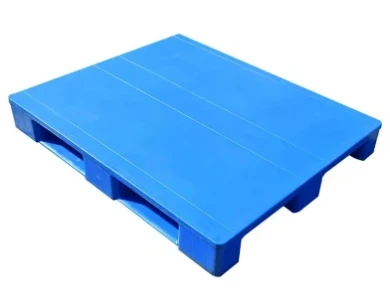
For operations that require regular cleaning, a 1200×1000 mm hygienic plastic pallet provides a closed-deck structure and three-runner base.
Buyers should confirm the required pallet structure, load rating, and compatibility with their material-handling equipment.
Full Perimeter Plastic Pallets for Repeated Handling
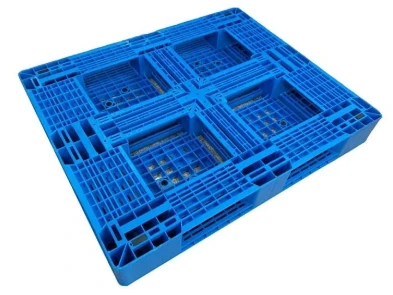
A full-perimeter pallet has a continuous bottom support structure that can provide a stable base for compatible handling systems.
Enlightening Pallet supplies Full Perimeter HDPE Plastic Pallets for industrial storage and repeated handling applications.
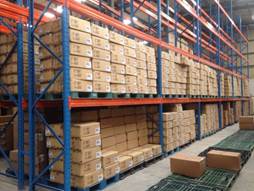
For any proposed rack installation, confirm the specific pallet's racking rating, support orientation, and rack dimensions before ordering.
Practical Considerations for Bulk Pallet Purchasing
Warehouse operators and procurement teams should calculate more than the number of boxes per pallet when selecting pallets for regular shipments.
1. Carton Dimensions and Weight
Provide the external dimensions and gross weight of each carton. This allows suppliers to estimate loading quantities and assess pallet load requirements.
2. Handling Equipment
Confirm whether the pallets will be moved by forklifts, manual pallet trucks, electric pallet jacks, or automated conveyors. Fork openings and bottom structures must match the equipment.
3. Warehouse Storage
Specify floor storage, stacked pallet loads, or pallet racking. Rack loading requires additional structural checks.
4. Transportation Requirements
Confirm the truck or container dimensions, total loaded pallet height, destination warehouse requirements, and any restrictions on carton overhang.
5. Repeated Use and Customization
For reusable logistics systems, consider pallet durability, cleaning requirements, consistent dimensions, and optional color or logo customization.
Enlightening Pallet is a China plastic pallet manufacturer supplying standard and customized plastic pallets for wholesale buyers. We offer HDPE and PP pallet designs for various storage, handling, and transportation requirements.
Request a Pallet Loading Recommendation
Calculating how many boxes fit on a pallet is the first step in selecting the right shipping and warehouse pallet.
Enlightening Pallet can help bulk buyers compare pallet dimensions, structures, and load ratings based on their carton specifications and handling conditions.
For a pallet recommendation, please provide:
Carton length × width × height
Gross weight per carton
Maximum loaded pallet height
Required pallet quantity
Forklift, pallet jack, or racking conditions
Destination country and application
Our team can recommend suitable standard plastic pallets or discuss OEM/ODM options for qualified orders.
Contact Enlightening Pallet for Pallet Selection and Pricing
Conclusion
The number of boxes on a pallet depends on carton dimensions, pallet size, stacking arrangement, height restrictions, and load capacity. Accurate calculations help warehouses improve space utilization, reduce handling problems, and choose suitable pallets for shipping.
After determining the carton quantity per pallet, the next step is planning truck space. Read How Many Pallets Fit in A Box Truck? to continue your shipment planning.
Frequently Asked Questions
Q: How many boxes fit on a standard 48×40 pallet?
A: A 48×40-inch pallet can hold 12 cartons measuring 12×12 inches per layer. With five layers, it can accommodate 60 cartons, subject to weight, height, and stability restrictions.
Q: How do I calculate cartons per pallet?
A: Calculate the number of cartons per layer using the pallet and carton dimensions, then multiply by the permitted number of layers. Check alternative carton orientations and relevant weight limits before confirming the total.
Q: Can boxes overhang a pallet?
A: Carton overhang is generally best avoided because it can increase the risk of packaging damage and load instability. Any permitted overhang should be confirmed against transport, warehouse, and customer requirements.
Q: Does the pallet height count toward shipping height?
A: Yes. When a carrier or warehouse specifies maximum overall palletized height, both the pallet and stacked cartons must be included.
Q: Which plastic pallet is suitable for heavy cartons?
A: Choose a plastic pallet with sufficient static, dynamic, or racking capacity for the intended use. Pallet size, bottom structure, weight distribution, and handling equipment should also be checked.
Q: Can I customize plastic pallet sizes for my cartons?
A: Yes. Enlightening Pallet offers standard pallet models and OEM/ODM solutions for eligible bulk projects, subject to tooling, technical feasibility, and minimum order requirements.


