How To Plan And Design An AS/RS Automated Warehouse?
Leave a message
When planning an AS/RS (Automated Storage and Retrieval System) warehouse, I believe the most critical step is not determining the height of the racking or the number of stacker cranes to purchase; rather, it is first defining the specific operational requirements the warehouse must fulfill on a daily basis.
Some companies build automated warehouses because they have run out of storage space; others aim to reduce reliance on forklifts and improve the efficiency of inbound and outbound processes; still others turn to automation because manual operations can no longer keep pace with the demands of their production lines or distribution centers.
While these companies might ultimately employ similar automated equipment, I would not recommend identical warehouse designs for each of them.
An automated warehouse typically integrates racking, stacker cranes, shuttle systems, conveyors, pallets, and warehouse management software (WMS) to enable the automated storage and retrieval of goods based on system instructions.
These components must work in perfect harmony. If the racking has a high storage capacity but the outbound handling equipment is too slow, the warehouse will inevitably face bottlenecks. Conversely, if the automated equipment operates at high speeds but the pallet dimensions are inconsistent, the system may suffer from frequent downtime.
Therefore, I prefer to view an AS/RS warehouse as a comprehensive logistics system, rather than merely a collection of automated machinery.
What Is an AS/RS Automated Warehouse?
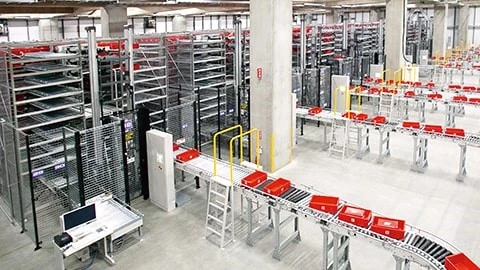
AS/RS is the abbreviation of Automated Storage and Retrieval System, which is usually called automatic storage and retrieval system in Chinese.
Simply put, its function is to allow the equipment to automatically deliver goods to designated storage locations according to computer instructions, and to take out the goods when needed.
In traditional warehouses, forklift drivers need to find the cargo space, put the goods on the shelves, and then complete the pickup again according to the outbound order.
In an AS/RS warehouse, much of this work can be done by automated equipment.
For example, after a batch of plastic pallets containing goods enters the warehouse, the conveyor will send the pallets to the incoming inspection location. After the system confirms that the size, weight and cargo status of the pallet meet the requirements, it will arrange a stacker or other equipment to deliver the pallet to the designated cargo location.
When the production line requires raw materials, or customer orders need to be shipped out of the warehouse, the system will arrange for the equipment to take out the corresponding pallets, and then send them to the designated location through conveyor lines or other handling equipment.
A typical AS/RS (Automated Storage and Retrieval System) warehouse generally consists of the following components:
- Storage Racking: A racking system used to store pallets, totes, or other unit loads.
- Storage and Retrieval Machines: Equipment such as stacker cranes or shuttle systems responsible for placing goods into storage locations or retrieving them.
- Conveyor Systems: Used to transport goods between warehouse entry/exit points and various pieces of equipment.
- Pallets and Load Units: Pallets or totes that carry the goods and come into direct contact with the handling equipment.
- Warehouse Software: Manages inventory, storage locations, operational tasks, and the operation of automated equipment.
In my view, the most significant difference between an AS/RS and a traditional warehouse lies in how goods are stored and retrieved.
Traditional warehouses rely heavily on manual labor and forklifts. While this offers greater flexibility in adjusting operational workflows, it is often constrained by human limitations and operating conditions-particularly when it comes to high-bay storage, large-scale repetitive handling, and precise inventory management.
An AS/RS can reduce manual handling, increase storage density, and improve the traceability of inventory locations. However, it also demands more rigorous upfront planning, standardization of goods, consistent equipment maintenance, and high system stability.
If a company's goods vary significantly in size, feature irregular packaging, or lack consistent patterns in inbound and outbound operations, I would recommend evaluating the level of standardization before deciding on the appropriate degree of automation.
Key Factors to Consider Before Designing an AS/RS Warehouse
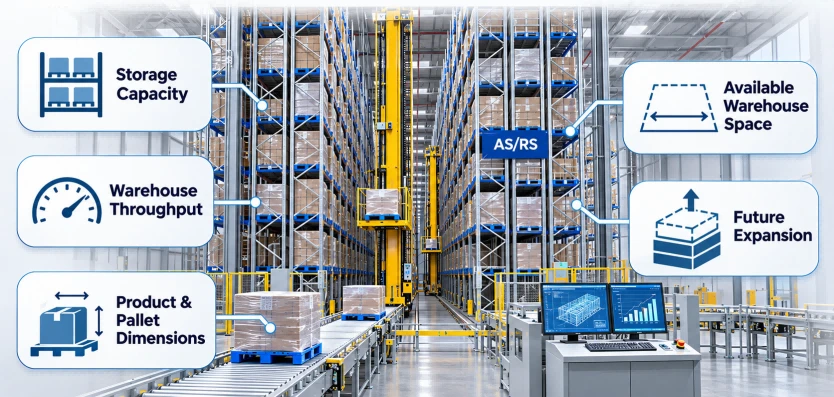
Storage Capacity
When designing an automated warehouse, I typically begin by determining the actual number of storage positions required, rather than estimating the number of racking slots based solely on the building's floor area.
For instance, if a facility needs to store 8,000 fully loaded pallets daily, I would not simply design the warehouse to accommodate exactly 8,000 storage positions.
This is because, beyond standard inventory, one must account for peak inventory levels, slot allocation, storage rules for different SKUs, and projected business growth.
If the system requires specific products to occupy dedicated storage positions, the actual space utilization may be lower than it would be under a fully mixed-storage strategy.
Therefore, I focus on three key figures: normal inventory levels, peak inventory levels, and the total number of effective storage positions required.
The number of effective storage positions is not necessarily the same as the total number of installed slots; maintaining smooth warehouse operations often requires reserving a certain amount of space for operational maneuvering.
Warehouse Throughput
In my view, throughput is more critical than many people realize.
While the number of storage positions determines how much inventory a warehouse can hold, throughput dictates how quickly it can process that inventory.
Consider a warehouse with 10,000 pallet positions that must handle 1,200 pallet movements (inbound and outbound) per day.
If the majority of these tasks are concentrated within just a few hours, the equipment must be capable of meeting peak-period demand, rather than simply handling the daily average.
I calculate inbound and outbound volumes separately, while also considering whether the equipment is tasked with replenishment, internal relocation, or inventory consolidation.
For automated storage and retrieval machine (AS/RS crane) systems, I also look at single-cycle versus dual-cycle operations.
A single-cycle operation typically involves the equipment performing one task-either an inbound or an outbound move-whereas a dual-cycle operation combines an inbound and an outbound move into a single trip, thereby reducing empty travel time.
However, actual efficiency depends on factors such as slot distribution, equipment travel distances, task scheduling, and system control logic; one cannot simply equate theoretical cycle times with actual throughput.
Product and Pallet Dimensions
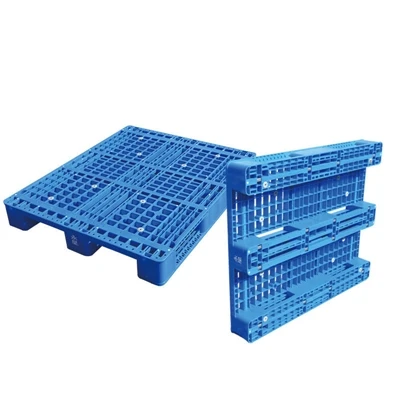
In my opinion, the dimensions of the products and pallets serve as a fundamental basis for designing an automated warehouse. Before designing a warehouse, it is essential to determine the dimensions (length, width, and height) and weight of the goods, as well as the specific types of pallets or containers (totes) to be used.
For instance, pallets measuring 1200 × 1000 mm versus 1200 × 800 mm may require different racking dimensions, conveyor widths, and configurations for storage and retrieval mechanisms.
Even if two pallets share the same external dimensions, differences in their bottom structure can affect whether they can be handled by the same automated conveyor system.
I also pay close attention to whether the goods overhang the edges of the pallets.
If cartons protrude beyond the pallet edge, they may collide with adjacent storage positions when being placed into high-bay racking.
For highly automated warehouses, I prefer to standardize pallets and load units early on, while clearly defining dimensional tolerances based on equipment requirements.
This is far easier than attempting to resolve pallet compatibility issues after the warehouse equipment has already been installed.
Available Warehouse Space
I look beyond just the total floor area of the warehouse.
Factors that truly influence the design of an Automated Storage and Retrieval System (AS/RS) include the clear building height, column grid spacing, floor load-bearing capacity, floor flatness, and space allocated for fire safety and maintenance.
For example, two warehouses might have the same total floor area, but if one has a clear height of 20 meters while the other has only 10 meters, the racking height and equipment configuration for each could be entirely different.
If a warehouse contains numerous structural columns, the racking aisles and conveyor lines must be planned around these obstacles.
For high-bay automated warehouses, I place particular emphasis on the floor and foundation conditions. Stacker crane rails, racking uprights, and high-bay storage systems all have specific engineering requirements regarding foundation settlement, levelness, and structural load-bearing capacity.
These issues should be addressed during the building and equipment design phases-rather than discovering that the floor is inadequate only when the racking is being installed.
Future Expansion
An automated warehouse is typically a long-term investment.
Therefore, I advise against basing all design parameters solely on current inventory levels and order volumes. Suppose a company currently handles 500 pallets per day, but expects this volume to grow to 800 in the coming years; in the design phase, it is essential to consider which equipment can be scaled up and what infrastructure needs to be provisioned in advance.
For instance, is there space to add more racking aisles? Can the conveyor system accommodate additional spurs? Is the software capable of managing more equipment? Do the power supply and network systems have the capacity for future expansion?
In my view, it is not necessary for every project to procure all the equipment that might be needed in the future right from the start.
A more sensible approach is to incorporate provisions for expansion into the master plan, and then phase investments according to the actual growth of the business.
How to Design an AS/RS Warehouse Step by Step
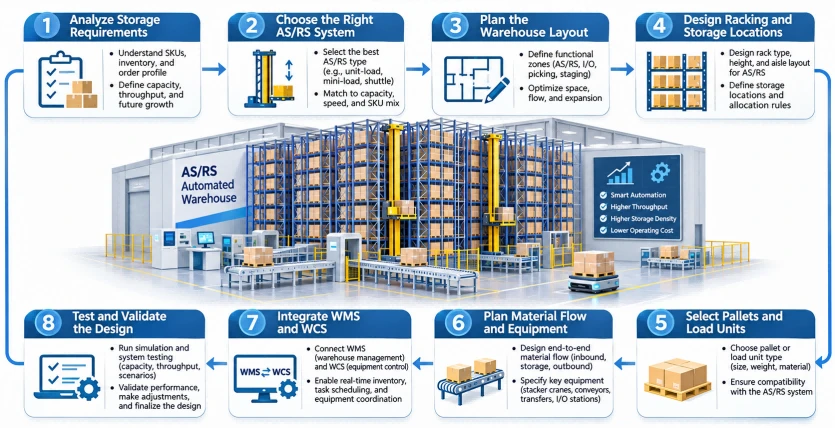
Step 1 - Analyze Storage Requirements
I usually start my analysis with the inventory and incoming and outgoing records of the existing warehouse.
What you need to know is not only how many pallets are currently stored, but also how many SKUs there are, the turnover speed of different goods, inventory peaks, and the daily receipt and delivery patterns.
If a warehouse has a large number of products of the same specifications and the demand for incoming and outgoing warehouses is relatively stable, then a high-density pallet storage system may be suitable.
However, if the warehouse has thousands of SKUs, and the inventory of each product is very small, and scattered picking is performed frequently, then the system design must pay more attention to the access efficiency of a single location.
I would make a special distinction between full pallet outbound and broken down picking. Because these two operating methods have different requirements for equipment type, outbound site and software control.
Step 2 - Choose the Right AS/RS System
Only after determining my actual needs do I start comparing different AS/RS systems.
If primarily storing full pallets, I would give priority to a Unit Load AS/RS or an automated pallet shuttle system.
If working primarily with plastic totes, parts and small products, I would compare the Mini-Load AS/RS and Tote Shuttle systems.
I don't simply think that shuttles are more advanced than stackers, or that more equipment means greater processing power.
Different systems have their own advantages. When selecting, comparison should be made based on the weight of the goods, the number of SKUs, the storage density, the frequency of incoming and outgoing shipments, and the investment budget.
Step 3 - Plan the Warehouse Layout
When designing a warehouse layout, I focus more on how goods actually flow.
How should the storage area be connected to automated shelves? How far is the outbound area from the loading dock? Do goods need to be weighed, dimensionally inspected and barcoded? Are there any unusual shipments that require manual handling?
These problems will directly affect the conveyor line and equipment location.
I usually draw the complete flow of goods first, and then arrange the shelf channels, entrances and exits, and equipment sites.
If the inbound and outbound tasks frequently overlap, I will consider whether it is necessary to separate some of the conveyor lines to prevent goods from different directions from blocking each other.
In addition, automated warehouses cannot use all available space for storage. Space is also required for equipment maintenance, personnel passage, fire-fighting facilities and abnormal cargo handling.
Step 4 - Design Racking and Storage Locations
When designing racks, I consider pallet size, cargo height, and actual weight together.
For example, if the height of the pallet itself is 150mm and the cargo loading height reaches 1300mm, then the cargo space design cannot only be calculated based on 1300mm.
There are also pallet heights, working clearances for handling equipment, cargo placement tolerances, and the space requirements of the racking structure itself that need to be considered.
For heavier pallets, I would look at the load-carrying capacity of the rack beams, the actual support locations at the bottom of the pallet, and the column structure.
Different AS/RS systems have different requirements for racks, and rack spans and support conditions must match the equipment design.
I would also not use the static load value of a pallet to directly determine whether it can be placed on a high shelf. Because the pallet is stressed differently on the ground, on the forklift, and on the shelf.
Step 5 - Select Pallets and Load Units
I think pallet selection should be done simultaneously with automation equipment design.
In a traditional warehouse, a company may make a selection based solely on load capacity and pallet price.
But in the AS/RS system, I also need to check whether the pallet can pass smoothly through the conveyor line, elevator, stacker fork or shuttle support mechanism.
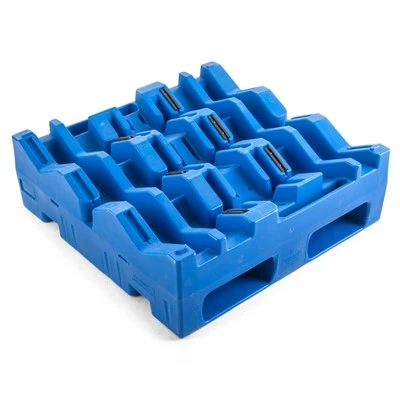
For example, some plastic pallets use a Sichuan-shaped bottom structure, while others use a Tian-shaped bottom structure. They may differ in their support position, bottom opening and contact with the conveying equipment.
No substructure is guaranteed to be suitable for all automation equipment.
I would ask the pallet supplier and system integrator to jointly confirm the equipment interface and test it with actual loaded samples if necessary.
For pallets stored in high shelves for a long period of time, attention should also be paid to the deformation problem under continuous load.
If the load capacity is larger or the support span is longer, I would compare plastic pallets with steel pipe reinforcement, but whether the structure needs to be strengthened still needs to be based on the actual load and test results.
Step 6 - Plan Material Flow and Equipment
An AS/RS warehouse may include conveyors, elevators, stackers, shuttles, AGVs or AMRs and other equipment.
I'm more concerned about whether these devices can work together at a similar processing pace.
For example, the warehousing conveyor line can deliver 150 pallets per hour, but the stacker can only complete 100 corresponding warehousing tasks, so the extra goods need to wait.
Without adequate buffer zones, inbound conveyor lines may become clogged, further affecting receipts.
Similarly, if the speed of the outbound equipment is higher than the subsequent sorting or loading capacity, it may also lead to concentrated accumulation of goods.
Therefore, I will examine the entire cargo flow based on peak workloads, find the locations where bottlenecks are most likely to form, and consider necessary caching and exception handling capabilities.
Step 7 - Integrate WMS and WCS
I think the role of software systems in automated warehouses is often underestimated.
WMS (Warehouse Management System) is mainly responsible for inventory, cargo location, receipt and delivery, and warehouse operation task management.
WCS (Warehouse Control System) focuses more on the control and coordination of automated equipment, such as allowing conveyors, stackers and shuttles to operate according to tasks.
Some large projects also use WES (Warehouse Execution System) to coordinate job distribution and execution.
During the planning phase, I focus on identifying how these systems will exchange information.
For example, WMS requires a certain pallet to be shipped out of the warehouse, and WCS needs to convert the task into equipment action. After the equipment is picked up, the actual status must be reported back in time.
If the data between systems is inconsistent, there may be duplicate tasks, incorrect storage location records, or the equipment may have completed the action but the inventory status has not been updated.
I also focus on the process after barcode recognition failures, pallet size anomalies, and temporary equipment shutdowns.
An automated warehouse cannot always be exception-free. The key is whether the system can safely stop, identify the problem, and resume operation when an exception occurs.
Step 8 - Test and Validate the Design
I would not consider the completion of equipment installation as the end of an automated warehouse project.
What really needs to be verified is whether the entire warehouse can stably complete actual operations in accordance with the design requirements.
During testing, I will focus on the loading and unloading of fully loaded pallets, peak tasks, abnormal pallet detection and system recovery.
For throughput, I prefer to use continuous running tests close to real production conditions, rather than just looking at the theoretical processing speed of a single device.
In addition, pallets and cargo should also be included in the test.
For example, are pallets of different weights stable on a conveyor line? Is there any deformation or positioning error during the stacker crane access process? Can abnormal trays be intercepted correctly?
Only when these issues are verified will I consider the system to be ready for formal operation.
How to Choose the Right AS/RS System
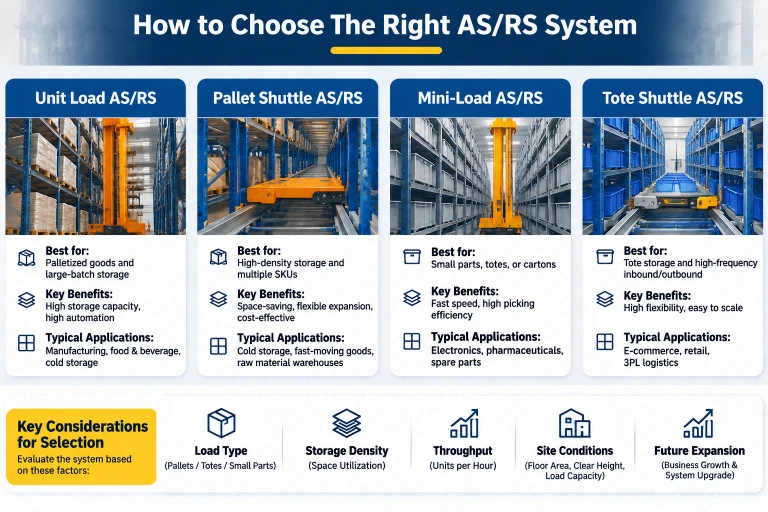
Unit Load AS/RS
If the warehouse primarily stores full pallet loads, I would usually give Unit Load AS/RS priority.
This type of system usually uses a stacker to operate in the shelf aisle, storing full pallets into designated cargo locations, and then picking up the goods according to system instructions.
It is more suitable for factories, raw material warehouses and finished product distribution centers where pallets are the basic logistics unit.
I would pay attention to the operating height of the stacker, the weight of the goods, the rack layout, and the amount of inbound and outbound tasks that each aisle needs to handle.
For enterprises with large inventory and relatively uniform cargo specifications, this type of system can achieve high space utilization.
However, if the demand for inbound and outbound warehouses is very concentrated, it is also necessary to check whether the processing capacity of a single channel meets the requirements.
Pallet Shuttle AS/RS
The automated pallet shuttle system is more suitable for projects that want to increase the density of pallet storage.
The shuttle can enter the interior of the shelf and transport the pallets to designated locations. Depending on the system design, the shuttle may be used in conjunction with a hoist, parent truck, or other handling equipment.
I think this solution is particularly worth comparing in scenarios where a large number of identical products are stored together.
For example, in a food and beverage factory that produces large quantities of finished product pallets of the same specifications every day, a dense storage solution may help reduce shelf aisle occupancy.
However, I will focus on confirming how the system manages different SKUs and whether the actual order of entry and exit meets first-in-first-out or batch management requirements.
If there are many types of goods and the quantity of each SKU is small, simply pursuing high density may not be the most appropriate choice.
Mini-Load AS/RS
For small parts, tools and tote storage, I would consider the Mini-Load AS/RS.
This type of system usually handles cargo units of smaller size and weight, and can deliver totes to designated locations through automated storage and retrieval equipment.
Compared with the whole pallet system, it is more suitable for multi-SKU, small batch and frequent picking applications.
I would look at tote box size, single box weight and picking site throughput.
If a warehouse frequently needs to pick up thousands of small parts, a Mini-Load system may make more sense than using full pallet storage.
Tote Shuttle AS/RS
The Tote Shuttle system mainly uses shuttle vehicles to transport plastic turnover boxes in the shelves.
I think it is more suitable for warehouses with a large number of SKUs, frequent orders, and the need to quickly deliver turnover boxes to picking stations.
An important feature is that the system can provide different processing capabilities depending on the rack layout and shuttle configuration.
But I wouldn't judge the efficiency of the entire system based solely on the number of shuttles.
Also check that elevators, conveyor lines and picking stations can match the shuttle's handling capabilities.
For warehouses that use plastic turnover boxes, the bottom structure of the turnover box, box deformation, dimensional consistency and loading weight will also affect the normal operation of the automation equipment.
How to Select Pallets for an AS/RS Warehouse
In my view, within an automated warehouse, a plastic pallet is more than just a platform for carrying goods; it serves as a standardized handling unit for the entire automated system.
If a pallet cannot move reliably through conveyors, stacker cranes, and racking systems, it is not necessarily suitable for an AS/RS (Automated Storage and Retrieval System) warehouse-regardless of how high its load capacity might be.
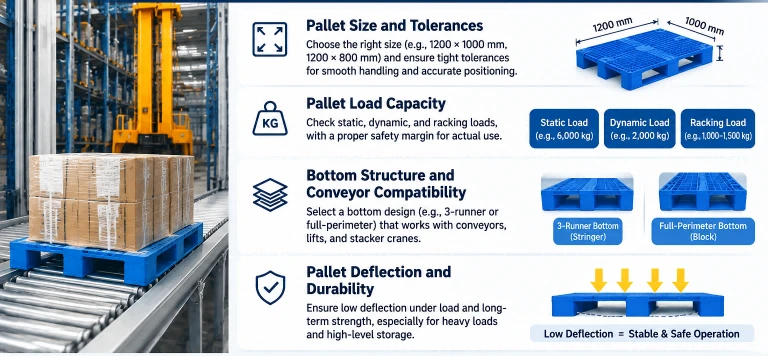
Pallet Size and Tolerances
Pallet dimensions are the first parameters I determine.
Common industrial pallet sizes include 1200 × 1000 mm, 1200 × 800 mm, and 1100 × 1100 mm; however, no single size is universally applicable to all automated warehouses.
I define the appropriate pallet specifications based on factors such as the dimensions of the product packaging, the design of the warehouse racking, the width of the conveyor lines, and the interface requirements of the equipment.
Furthermore, I pay close attention to dimensional tolerances.
For instance, if two pallets-both with a nominal size of 1200 × 1000 mm-exhibit significant discrepancies in their actual length, width, or the flatness of their base, it could disrupt conveying or positioning processes.
Therefore, when procuring pallets for an automated warehouse, I require suppliers to provide specific dimensional tolerances and verify that their production consistently meets these standards.
Pallet Load Capacity
Pallet load capacity is generally categorized into static load, dynamic load, and racking load.
These three parameters should not be conflated.
Static load refers to the weight a pallet can support under defined, stationary conditions.
Dynamic load typically describes a pallet's capacity under specified handling or transport conditions.
Racking load must be evaluated based on how the pallet is actually supported within the racking system.
In the context of an AS/RS, I consider racking load to be particularly critical.
This is because a pallet may remain in a fixed position for an extended period, supported only by two beams or other limited contact points, rather than having its entire base supported.
If a supplier claims that a plastic pallet has a static load capacity of 6000 kg, I would not automatically assume that it can support the same weight when placed on automated racking. I will further verify the rack support span, load distribution, operating temperature, and long-term deformation characteristics.
Bottom Structure and Conveyor Compatibility
The bottom structure of a plastic pallet directly affects its compatibility with automated handling equipment.
For instance, "three-runner" (or "H-frame") pallets feature three primary bottom support runners, while "full-perimeter" (or "picture-frame") pallets typically have a more complete, interconnected base structure.
Different designs may result in varying contact points when used with conveyors, lifts, racking systems, or automated shuttle carts.
I pay particular attention to whether the pallet's base can be stably supported by the conveyor system.
If a roller conveyor is used, the pallet's bottom support structure must align with the roller arrangement and the direction of travel.
If a chain conveyor is used, it is necessary to verify that the chains align correctly with the support points on the pallet's underside.
Some pallets may convey smoothly in one direction but not necessarily in another.
Therefore, I advise against relying solely on labels like "four-way entry" or "rackable" to determine compatibility.
The only truly reliable approach is to conduct equipment testing using the actual pallets and the specific loads they are intended to carry.
Pallet Deflection and Durability
In my view, pallet deflection is a critical factor to consider when designing automated warehouses.
Simply put, deflection refers to the bending or deformation that occurs when a pallet is subjected to a load.
Plastic materials can undergo "creep"-a phenomenon where deformation gradually increases over time under sustained stress.
While this may not immediately impact operations in a standard floor-stacking environment, it is a different story in automated high-bay racking. Excessive sagging at the bottom of a pallet can encroach upon the clearance required for automated handling equipment, potentially leading to interference with the racking structure or other components.
I focus on comparing how much a pallet deforms under specific load weights, support spans, and storage durations.
For heavier loads, some plastic pallets are reinforced with steel tubes to enhance their structural rigidity.
However, I do not assume that simply adding steel tubes is a universal solution. The placement of these reinforcements, the overall design of the pallet, and the actual load conditions must all be evaluated through testing. If the warehouse requires long-term storage of heavy palletized goods, I recommend conducting load-bearing and deflection verification-tailored to your specific operational conditions-before proceeding with any large-scale procurement.
Safety and Maintenance in AS/RS Warehouses
While automated warehouses reduce the need for manual handling, this does not mean that safety management can be overlooked.
On the contrary, factors such as equipment operating speeds, rack heights, and automated control systems make safety-focused design even more critical.
Regarding racking, I focus on structural load-bearing capacity, the connections between uprights and beams, base anchoring, and compliance with seismic requirements applicable to the project site.
For projects in the United States, the design of industrial steel storage racks must typically be evaluated against relevant building codes and standards, such as ANSI MH16.1. The specific version to be applied should be confirmed based on local regulations.
For automated equipment, I require that project plans include necessary safety fencing, interlocks, emergency stop systems, maintenance isolation procedures, and access control for personnel.
Fire safety must also be addressed well before the warehouse is completed.
Factors such as the type of stored goods, packaging materials, rack height, spacing between items, and building conditions all influence the fire protection strategy.
In particular, when plastic pallets or plastic totes are used, I advise project stakeholders to consult with fire safety designers in advance-rather than assuming that these items carry the same fire safety requirements as wooden pallets.
Regarding routine maintenance, I focus on three key areas:
- First, the system's ability to promptly detect anomalies, such as conveyor jams, sensor malfunctions, or errors in locating storage positions.
- Second, the existence of a clear inspection and maintenance schedule for the racking, rails, and material handling equipment.
- Third, the ability of staff to safely access maintenance areas in the event of an equipment failure and to restore operations following established, compliant procedures.
In my view, the value of an automated warehouse lies not only in its speed during normal operation but also in its ability to resume production safely and promptly after a malfunction occurs.
How Much Does an AS/RS Warehouse Cost?
Regarding the cost of AS/RS automated warehouses, I would not recommend directly using a fixed price per square meter.
Because the equipment configuration, warehouse height, automation level and processing capacity of different projects may vary greatly.
For example, an automated warehouse that only needs to store a few thousand pallets may have a completely different investment structure than a distribution center that needs to handle a large number of SKUs and high-frequency orders at the same time.
I usually think about investing in parts.
Building and Infrastructure Costs
Including warehouse buildings, ground foundations, structural modifications, power supply, networks and related fire protection facilities.
If a new high-rise warehouse is required, the building structure and foundation works may form a significant part of the investment.
Racking and Automation Equipment
Including high-level racks, stackers, shuttles, conveyors, elevators and automatic inspection equipment.
This part is usually closely related to the number of cargo spaces, storage height, equipment performance and throughput requirements.
Software and Integration
Including WMS, WCS, necessary system interfaces, and integration with the enterprise's existing ERP or production management system.
Installation and Commissioning
Including equipment installation, system commissioning, actual load testing, operational training and project acceptance.
Operating and Maintenance Costs
Long-term expenses such as electricity, equipment maintenance, software services, spare parts, replacement parts and personnel training also need to be considered.
When evaluating return on investment, I wouldn't just count the number of fewer warehouse workers.
I also consider warehouse space utilization, inventory accuracy, damage, inbound and outbound efficiency, operating time, and system maintenance costs.
For example, if an automated warehouse allows a business to store more goods within the same floor space, it may reduce the need for future warehouse expansions.
If automation can reduce duplicate handling and incorrect outbound shipments, it may also improve operating costs.
However, the specific cost savings need to be calculated based on the operating data of the company's original warehouse.
I prefer to use the complete total cost of ownership (TCO) to compare options rather than just comparing equipment purchase quotes.
Common Mistakes in AS/RS Warehouse Design
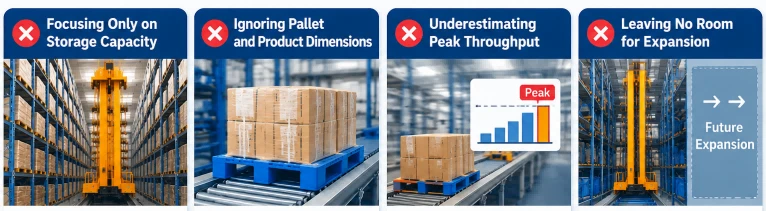
Focusing Solely on Storage Capacity
In my view, one of the most common mistakes is focusing exclusively on calculating the number of pallets a warehouse can store.
If a warehouse has a high storage capacity but the inbound and outbound handling equipment lacks sufficient throughput, a large volume of goods may still end up in a queue during peak periods.
I recommend verifying both storage capacity and throughput during the planning phase, rather than treating them as separate, unrelated issues.
Ignoring Pallet and Product Dimensions
Some companies wait until after they have selected their warehouse equipment to seriously consider pallet dimensions and product packaging.
I believe this approach is flawed.
Factors such as pallet footprint, bottom structure, cargo weight, and load height all directly influence the design of automated equipment and racking systems.
If a warehouse is designed around a specific pallet specification, switching to a different type later could necessitate re-verifying equipment compatibility-or even requiring structural modifications.
Underestimating Peak Throughput
I would never rely solely on average daily inbound/outbound volumes to determine equipment capacity requirements.
For instance, a warehouse might need to ship 800 pallets over the course of a day, but 500 of those might be concentrated within just a few hours.
If equipment is selected based only on the daily average, the system may fail to meet actual operational demands.
Therefore, I pay close attention to order peaks, production shifts, and periods when vehicles arrive for concentrated loading.|
Leaving No Room for Expansion
Another significant issue arises when a warehouse is built with its space and equipment capacity pushed to the absolute limit.
Should the company later decide to expand its product range, increase production output, or adjust its distribution model, retrofitting the existing system could prove extremely difficult.
I advise incorporating provisions for future expansion during the planning phase-this includes space for additional racking, interfaces for new equipment, scalable software capabilities, and the necessary underlying infrastructure.
That said, I would not advocate for blindly installing a large amount of idle equipment; rather, expansion capacity should be determined based on the company's foreseeable business evolution.
Frequently Asked Questions
How much space does an AS/RS warehouse need?
There is no single standard area that applies to every project.
The space required for an AS/RS (Automated Storage and Retrieval System) warehouse depends on factors such as the number of storage positions, cargo dimensions, rack height, equipment aisles, and the specific requirements for inbound and outbound operations.
I typically begin by determining the required pallet storage capacity, then calculate the actual building space needed based on rack height, the type of equipment used, and the facility layout.
For projects with height restrictions, increasing storage density doesn't necessarily require adding more rack levels; alternatives like high-density storage configurations or shuttle systems can also be effective.
What is the best pallet size for an AS/RS?
There is no single "best" pallet size that works for every AS/RS warehouse.
While 1200 × 1000 mm, 1200 × 800 mm, and 1100 × 1100 mm are common industrial pallet dimensions, the choice depends on factors such as product packaging, warehouse equipment, transportation requirements, and local industry standards.
What matters most is consistency in pallet dimensions, as well as ensuring that the pallets meet the specific tolerance and load-bearing requirements of the automated equipment.
Can plastic pallets be used in an AS/RS?
Yes. When properly designed and validated, plastic pallets can be used in many automated storage and retrieval systems.
One advantage of plastic pallets in automated environments is that the injection-molding process ensures a high degree of consistency in both structure and dimensions.
However, not all plastic pallets are suitable for automated equipment.
I always evaluate key factors such as the pallet's bottom structure, dimensional tolerances, load capacity, long-term deflection (sagging), and compatibility with conveying equipment.
For heavy loads, it is also necessary to verify whether a reinforced structure is required.
What is the difference between an AS/RS and a shuttle system?
"AS/RS" is a broad term for Automated Storage and Retrieval Systems, while a shuttle system is one specific type of implementation within that category.
I generally view an AS/RS as the overall automated storage system, whereas a shuttle system is a specific technical solution used for handling and transporting goods.
For example, an automated warehouse might use stacker cranes to store and retrieve pallets, or it might employ a combination of shuttles and lifts to perform the same tasks. The specific choice depends on factors such as cargo dimensions, storage density, throughput requirements, and budget constraints.
How much does an AS/RS system cost?
There is no single price range that applies to all AS/RS projects.
Costs are influenced by variables including the number of storage positions, equipment type, warehouse height, handling capacity, site conditions, and software requirements.
I recommend that companies prepare comprehensive data covering cargo specifications, inventory details, inbound/outbound requirements, and warehouse layouts before requesting quotes, so that the proposals provided by system integrators can be effectively compared.
Furthermore, it is important to account for long-term costs, such as ongoing maintenance, equipment upgrades, and the potential risks associated with system downtime.
How long does AS/RS installation take?
The installation timeline depends on the complexity of the project.
The project duration for installing a small-scale automation system within an existing warehouse will differ significantly from that of constructing a new, high-bay automated storage and retrieval facility.
Beyond equipment manufacturing and installation, one must also consider building construction, software integration, system testing, staff training, and formal acceptance.
I advise clearly defining the delivery criteria for each project phase within the contract, rather than focusing solely on the completion date for equipment installation.
Final Thoughts
If I were to plan an AS/RS automated warehouse, I would focus on the actual business needs rather than deciding which automation equipment to purchase at the outset.
How much goods the warehouse needs to store, how many pallets it handles every day, what sizes the goods come in, and whether it needs to be expanded in the future will all affect the final design.
I would also pay special attention to the standardization of pallets and cargo loading units.
Although the equipment of automated warehouses is complex, what actually enters the shelves, conveyor lines and handling mechanisms are still pallets or turnover boxes loaded with goods.
If these basic handling units are unstable, even the most advanced equipment may be affected.
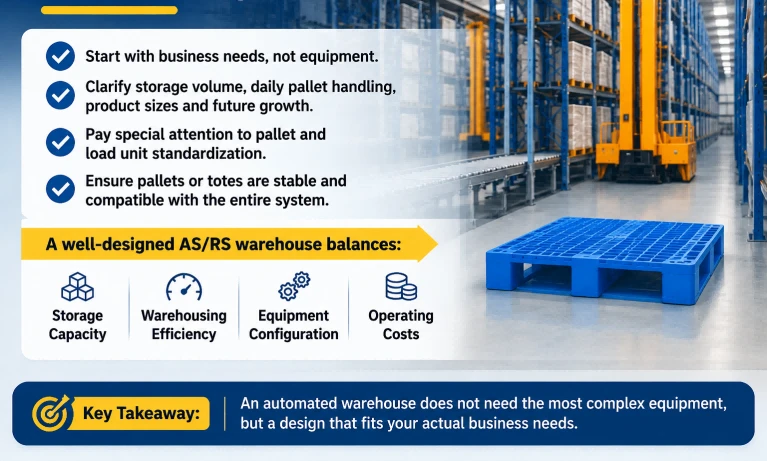
To me, a reasonable AS/RS warehouse solution should balance storage capacity, warehousing efficiency, equipment configuration and operating costs.
Automated warehouses do not necessarily require the most complex equipment, but they do require a design that meets actual business needs.