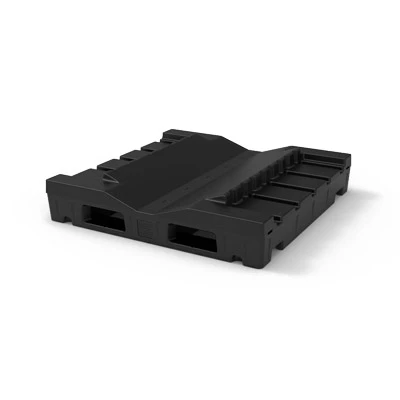
Plastic Pallets For Automated Warehouses: Types, Design And Requirements
Leave a message

Automated warehouses depend on stable pallet movement. A poorly designed pallet can jam conveyors, bend under heavy loads, and disrupt warehouse operations. Choosing the wrong pallet structure can also increase equipment maintenance costs.
Plastic pallets for automated warehouses are designed to meet specific dimensional tolerances, control deflection under load, and provide suitable bottom runners. Unlike standard warehouse pallets, they must match the contact points of conveyors, stacker cranes, and shuttle systems to support stable automated operations.
A pallet that works well with a manual forklift may not perform properly inside an automated storage system. You need to look closely at pallet structure, size consistency, load limits, and machine compatibility before placing an order.
What Are Plastic Pallets for Automated Warehouses?
Standard warehouse pallets may cause problems on automated lines when their dimensions vary or their bottoms bend under heavy loads. These issues can affect sensor positioning, conveyor transfers, and storage operations.
Automated warehouse pallets are designed to carry heavy goods while working with automated handling equipment. Their length, width, and diagonal dimensions must meet specified tolerances. Their structures must also control bending on warehouse racks and align bottom runners with roller conveyors, chain drives, and shuttle tracks.

In my daily work at Enlightening Pallet, I often meet buyers who assume any heavy-duty pallet will work in an automated storage and retrieval system (AS/RS). That assumption can create problems. When we evaluate automated warehouse pallets, we do not just consider how much weight the plastic can hold. We focus on four core questions: does the bottom match the machine contact points, do the dimensions stay consistent across the entire batch, how much does the pallet bend under full load, and can it withstand repeated machine handling?
Standard pallets are often handled by forklift drivers who can adjust for slight positioning differences. Automated machines follow fixed paths and programmed positions. Even a small dimensional difference or structural deformation may affect a conveyor transfer.
|
Comparison Item |
Standard Warehouse Plastic Pallets |
Automated Warehouse Plastic Pallets |
|
Handling Method |
Manual forklifts and floor stacking |
Automated conveyors, cranes, and shuttles |
|
Dimensional Tolerance |
General molding tolerances |
Specific length, width, height, and diagonal limits |
|
Bottom Structure |
Nine-leg, three-runner, or full-perimeter |
Designed to match specific conveyor and rack support points |
|
Deflection Control |
Meets general static and dynamic load requirements |
Requires controlled bending under rack loads |
|
Batch Weight |
Some weight variation may be acceptable |
Consistent weight across production batches |
|
Equipment Fit |
Built mainly for standard fork entry |
Requires verification for roller, chain, crane, and shuttle interfaces |
An automated pallet is never a one-size-fits-all product. We need to match its design to your specific warehouse machines, cargo weight, and handling route.
Types of Plastic Pallets for Automated Warehouses

Choosing the wrong bottom structure can cause pallets to become unstable on chain tracks or fail to move smoothly on roller conveyors. Each machine type has specific support and handling requirements.
The main types of plastic pallets for automated warehouses include three-runner, six-runner, double-face, and steel-reinforced pallets. Three-runner and six-runner designs provide different support arrangements, double-face pallets offer two usable loading surfaces where equipment allows, and steel-reinforced pallets help control bending under specified rack loads.
When I help clients review pallet structures, I never tell them that one design is the best for every automated warehouse. Each structure has different characteristics. You must check how your conveyors and racks support the pallet from underneath before choosing a base style.
A three-runner plastic pallet features three continuous strips running along the bottom. From a manufacturing view, this structure gives you a clear and predictable support path. It can work well on chain conveyors because we can align the three runners with the chain tracks. It can also run on roller conveyors when the roller direction, spacing, and pallet support conditions are suitable. However, having three runners does not automatically make a pallet ready for automation. We still need to verify runner width, height, and spacing against your equipment drawings. We also manufacture 3 runner rackable plastic pallets for warehouse storage and handling applications.
A six-runner plastic pallet adds extra bottom strips to increase the contact area between the pallet and the supporting equipment. A six-runner base is different from a full-perimeter base, so you should not mix them up. More runners can improve stability during certain transfer steps, but adding runners does not always improve conveyor performance. If the extra runners do not line up with your chain tracks or shuttle rails, they may add weight without improving equipment compatibility.
Double-face plastic pallets have usable top and bottom decks, which allows you to load goods on either side. We manufacture double-face pallets with structures designed to provide support on both surfaces.
While some automated systems can use double-face pallets, others may not accommodate them. First, the double-deck structure can increase pallet weight. Second, the bottom structure may not fit certain chain tracks or shuttle forks. Always confirm your machine clearance, support positions, and sensor requirements before choosing a double-face model. You can also explore our double face plastic pallets for applications that require two usable loading surfaces.
Steel-reinforced plastic pallets help control bending on warehouse racks. We integrate galvanized steel bars inside the molded plastic body to increase bending stiffness.
For example, our steel-reinforced three-runner pallet measures 1200 × 1200 × 150 mm, uses virgin HDPE with internal steel tubes, and weighs 20.5 kg compared with 13.5 kg for the standard version. Its rated loads are 6,000 kg static, 1,500 kg dynamic, and 1,000 kg racking.
Still, adding steel does not give a pallet unlimited strength. Tube placement, beam span, and cargo weight distribution all affect the final performance. For heavy-duty warehouse storage, we offer steel reinforced rackable plastic pallets with integrated galvanized steel reinforcement.
Key Requirements for Plastic Pallets in Automated Warehouses
A single passing sample does not guarantee that a bulk order will have consistent dimensions and weight. Automated systems need pallets that meet the agreed technical specifications throughout production.
Automated warehouse pallets require dimensional accuracy, controlled deflection under rack loads, machine-matched bottom decks, and consistent batch weight. Buyers must check diagonal measurements, separate racking capacity from static capacity, and verify that bottom runners align with conveyor contact zones.
In our factory, producing pallets for automated storage requires careful process control. Automated sensors and handling equipment operate according to fixed specifications. If a pallet does not meet the required dimensions or structural conditions, it may affect the operation of the warehouse system.

Dimensional Accuracy and Tolerances
Automated cranes and conveyors follow fixed coordinates. When we inspect plastic pallets, we consider length, width, height, runner position, and overall flatness. We also check the diagonal dimension. Even if length and width meet the specifications, a large diagonal difference may mean the pallet is out of square. This can affect positioning inside AS/RS rack bays. Your system supplier must provide the required tolerance limits so we can evaluate the product against those specifications.
Load Capacity and Deflection
Many buyers look only at static and dynamic load ratings, which can lead to incorrect pallet selection. You must separate three distinct load types:
|
Load Type |
Practical Meaning in Warehouse Operations |
|
Static Load |
Maximum weight a pallet holds while resting flat on a solid floor |
|
Dynamic Load |
Maximum weight a pallet holds while moving on a forklift or conveyor |
|
Racking Load |
Maximum weight a pallet holds while supported by rack beams |
Our steel-reinforced pallet is rated for 1,000 kg on a rack, but that rating depends on beam spacing, cargo distribution, storage time, and operating temperature. You must also control deflection, which is how much the pallet bends downward under weight. If the center sags too much, it may interfere with shuttle arms or conveyor transfers.
Bottom Deck Design and Runner Configuration
The bottom deck is where the pallet meets your machinery. Each transport system needs a suitable bottom layout:
|
Equipment Type |
Critical Bottom Structure Checkpoints |
|
Roller Conveyor |
Roller contact areas, roller pitch, and correct travel direction |
|
Chain Conveyor |
Continuous runners aligned with chain track positions |
|
Shuttle System |
Bottom support areas, entry clearance, and loaded deflection |
|
Stacker Crane |
Handling positions, pallet dimensions, and structural stability |
If a runner does not align with a chain track, the pallet may become unstable during movement.
Weight and Structural Stability
Pallet weight affects motor loads and energy use across your automated lines. More importantly, weight consistency helps us monitor the stability of our injection molding process. If pallet weights vary significantly within one batch, the difference may come from material usage, wall thickness, or production conditions. For steel-reinforced models, we also check the internal steel bar positions and fixing conditions to reduce the risk of movement during repeated handling.
How to Choose Plastic Pallets for Different Automated Warehouse Systems
Buying a pallet without checking your machine layout can lead to costly rework. A design that runs well on rollers may not work properly on a shuttle track.
You must match the pallet structure directly to your warehouse equipment: consider stiff, low-deflection pallets for crane-based AS/RS racks, suitable bottom support for shuttles, and track-aligned runners for conveyors. Always share your equipment drawings with the pallet manufacturer before finalizing your choice.
I always advise buyers to map out the exact path a pallet travels through their facility. A pallet rarely stays on one machine. It might ride a chain conveyor, transfer to a roller line, and enter a high-bay rack through a stacker crane. You must select a pallet that meets the requirements of every machine along that route.

In a crane-based AS/RS, a stacker crane lifts the pallet and places it onto high rack beams. The beam support positions determine how the pallet carries its load. Excessive bending is one of the main risks.
Before I recommend a pallet for an AS/RS project, I ask for three details: the exact span between the two rack beams, the maximum cargo weight, and the allowable deflection set by the equipment supplier. For heavy loads across wide beam spans, steel-reinforced plastic pallets are one option worth evaluating to control bending. The final choice still depends on the reinforcement design, support conditions, and actual load distribution.
Our rackable plastic pallets for automated warehouse systems feature a three-runner base and internal steel reinforcement.
Shuttle systems move pallets inside deep rack lanes using low-profile carts that travel on rails. These carts support or lift the pallet from underneath, so bottom flatness and clearance are important.
Any unexpected ribs or uneven projections on the bottom deck may interfere with the shuttle cart. If you use a four-way shuttle system, we must check fork clearance and runner support in both directions. Both six-runner and three-runner pallets can work with certain shuttle systems, provided the bottom layout matches the shuttle support platform and the pallet does not sag beyond the permitted limit under full load.
Conveyors move pallets horizontally between warehouse zones, and each type contacts the pallet differently.
Roller conveyors support the pallet across multiple rotating rollers. The pallet runners and deck must receive sufficient support as the pallet moves across the rollers. Roller spacing and pallet running direction both affect stability.
Chain conveyors carry pallets on two or more parallel chains. A three-runner pallet can work well when its continuous runners align with the moving chains. We still need to confirm runner width, spacing, and the direction of movement.
Never request a quote using only length and width. Always send your roller spacing or chain center distances so the manufacturer can evaluate the bottom structure.
How to Test Plastic Pallets for Automated Warehouses

Relying on paper specifications alone does not confirm that a pallet is suitable for your automated warehouse. Testing under relevant support and handling conditions helps identify structural and compatibility problems before bulk production.
Before bulk production, automated warehouse pallets should undergo load and deflection tests, dimensional inspections, conveyor running trials, and repeated handling tests. Standards like ISO 8611 provide a testing reference, but buyers should also verify pallet compatibility with their actual equipment.
In my experience, testing is an important step before a large pallet order. A static load rating alone cannot show whether a pallet will move smoothly through a conveyor system or remain stable on rack beams. I recommend discussing the required tests with the pallet manufacturer and automation equipment supplier before confirming the final design.
Load and Deflection Testing: The pallet is placed on supports that match the required rack beam spacing and loaded according to the specified cargo weight. The test records initial dimensions, loaded deflection, and permanent deformation after removing the load. Reference standards like ISO 8611-1 outline bending and compression tests, though project-specific simulation is also important.
Dimensional Inspection: Production samples are measured against the approved engineering drawing. The inspection covers length, width, height, diagonal squareness, runner placement, flatness, and unit weight to evaluate batch consistency.
Conveyor Running Tests: Passing a static weight test does not guarantee smooth conveyor movement. A project-specific running test can check loaded pallets across roller and chain sections, including entry transitions, track alignment, vibration, and sensor compatibility.
Repeated Handling Tests: Automated pallets may go through many lifting and transfer cycles. A repeated handling test can check for cracked runners, loose steel bars, damaged fork entries, and gradual deformation over time.
Plastic Pallets vs Wooden Pallets in Automated Warehouses
Wooden pallets usually have a lower initial purchase price, so many buyers consider them for warehouse projects. However, wood can absorb moisture, develop splinters, and lose structural consistency during repeated use.
Plastic pallets offer advantages in automated warehouses through consistent dimensions, stable weight, clean surfaces without exposed nails, and controllable structural design. Wooden pallets still offer a lower upfront cost and can be repaired in some cases, but their material variations may require additional inspection in automated operations.

I never tell clients that plastic pallets are cheaper than wood on day one. If you run a manual warehouse with simple floor stacking, wooden pallets can make good financial sense. However, automated systems need consistent pallet dimensions and suitable surface conditions. Moisture can change wood weight, broken boards may affect sensor detection, and loose nails can damage conveyor components.
|
Comparison Factor |
Plastic Pallets |
Wooden Pallets |
|
Dimensional Consistency |
Consistent dimensions can be maintained through controlled injection molding |
Varies due to wood cutting and moisture changes |
|
Weight Consistency |
More stable when resin and molding conditions are controlled |
Changes based on wood density and water absorption |
|
Surface Condition |
No wood splinters or exposed nails |
May develop wood splinters, loose nails, and cracked boards |
|
Structural Stability |
Structural design and steel reinforcement can help control deflection |
Depends on timber grade, nail quality, and joint strength |
|
Maintenance Needs |
Usually requires limited routine maintenance; damaged units need replacement evaluation |
May require board repairs and nail checks |
|
Moisture Resistance |
Resists moisture and does not absorb water like wood |
Absorbs moisture, swells, and may develop mold |
|
Initial Purchase Cost |
Usually higher upfront investment per pallet |
Usually lower upfront purchase price |
When you calculate the total cost in an automated facility, you should also consider line downtime, inspection frequency, repair costs, and replacement rates. The best choice depends on the warehouse operating conditions and long-term handling requirements.
How to Choose the Right Plastic Pallets for Automated Warehouses
Sending an incomplete inquiry to pallet suppliers can waste time on repeated emails. Missing machine measurements may also lead to inaccurate quotations and unsuitable pallet designs.
To choose the right automated warehouse pallet, confirm seven key factors first: exact dimensions and tolerances, load capacity, allowable deflection, runner layout, conveyor compatibility, plastic material, and operating temperature. Always verify your machine interfaces before selecting a pallet model or resin type.
When buyers contact our team at Enlightening Pallet, the most efficient projects usually start with clear technical data. If you organize your requirements before requesting quotations, you can reduce the risk of buying pallets that fail during installation.

|
Selection Factor |
What Buyers Need to Confirm |
|
Pallet Dimensions |
Exact length, width, height, and allowable tolerance limits |
|
Load Capacity |
Maximum cargo weight and how the load sits on the pallet |
|
Allowable Deflection |
Maximum downward bend allowed under full rack load |
|
Runner Configuration |
Three-runner, six-runner, or custom base needed for support |
|
Conveyor Compatibility |
Roller spacing, chain track centers, and shuttle clearance |
|
Material |
Virgin HDPE, PP, or special additives like anti-static agents |
|
Operating Temperature |
Minimum freezer temperature and maximum warehouse heat |
Before reaching out to suppliers, gather these six documents and details:
Technical pallet specifications from your automation system integrator.
Rack beam spacing and support ledge drawings.
Roller conveyor pitch or chain conveyor center distances.
Maximum unit load weight and cargo base dimensions.
Pallet travel direction and fork entry orientation.
Warehouse temperature range and cleaning conditions.
Follow a simple order: confirm machine interfaces first, select the bottom structure second, and verify load ratings and resin materials last.
Why Choose Enlightening Pallet for Automated Warehouse Pallets?

Many pallet suppliers offer standard catalog products. However, automated warehouse projects may need specific dimensions, bottom structures, and reinforcement designs. You need a manufacturer that can evaluate your requirements and discuss suitable pallet configurations.
Enlightening Pallet manufactures plastic pallets using injection molding technology and offers HDPE and PP material options, steel-reinforced structures, and customized runner designs. We inspect product dimensions, appearance, and structural performance, and can discuss additional testing according to your project requirements.
At Enlightening Pallet, we have more than 20 years of experience manufacturing industrial plastic products. With more than 60 injection molding machines and an experienced quality control team, we focus on producing consistent plastic products for B2B buyers.
Injection Molding Production: Our injection molding production supports integrated pallet structures, consistent runner positions, and controlled product dimensions across bulk orders.
HDPE and PP Material Options: We offer HDPE and PP materials for different warehouse applications. Buyers can also discuss anti-static, low-temperature-resistant, and other functional additives based on operating conditions.
Steel-Reinforced Structures: We integrate galvanized steel bars into selected plastic pallet structures to improve bending stiffness and help control deflection under specified rack-loading conditions.
Customized Pallet Design: We customize dimensions, bottom runner layouts, deck surfaces, colors, and logos based on your product and warehouse requirements. Buyers can provide conveyor and rack drawings so we can evaluate a suitable structure.
Quality Inspection: Our quality control process includes raw material checks, product dimension and appearance inspections, and structural performance checks. We can discuss additional load, dimensional, and conveyor compatibility tests according to your project specifications.
You can explore our complete plastic pallet product range to compare different pallet structures, materials, and applications.
We believe the right pallet solution comes from matching manufacturing capabilities with the actual working conditions of your warehouse.
Frequently Asked Questions
Q: What Type Of Plastic Pallet Is Best For An Automated Warehouse?
A: Three-runner, six-runner, and steel-reinforced pallets are common options. The best choice depends on your conveyor track layout, rack beam spacing, cargo weight, and shuttle or crane design.
Q: Can Standard Plastic Pallets Be Used In AS/RS Systems?
A: Some standard plastic pallets can work in AS/RS systems, but only if they meet your system's dimensional tolerances, runner positions, and deflection limits. Pallets designed only for floor stacking may not be suitable.
Q: What Load Capacity Do Automated Warehouse Pallets Need?
A: Required capacity depends on your heaviest unit load and how the pallet is supported. You must check static, dynamic, and racking load ratings separately.
Q: Why Is Pallet Deflection Important In Automated Warehouses?
A: Excessive deflection causes the pallet center to sag, which may interfere with shuttle arms, conveyor transfers, and sensors. Pallets must stay within the deflection limit set by your equipment supplier.
Q: Are Steel-Reinforced Plastic Pallets Suitable For Automated Storage Systems?
A: Yes, steel-reinforced plastic pallets can be suitable for automated storage systems when their dimensions, runner positions, load ratings, and deflection meet the equipment requirements.
Conclusion
Choosing plastic pallets for automated warehouses means matching bottom runners, dimensional tolerances, and deflection limits to your equipment. Always verify compatibility before bulk purchasing.

Looking for Plastic Pallets for Your Automated Warehouse?
We manufacture plastic pallets with customized dimensions, runner structures, and steel reinforcement options. Share your warehouse equipment specifications with us, and our team will help you evaluate a suitable pallet solution.